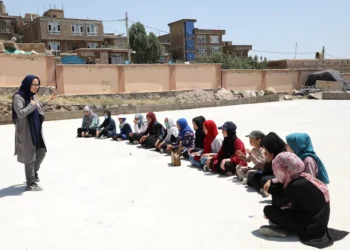
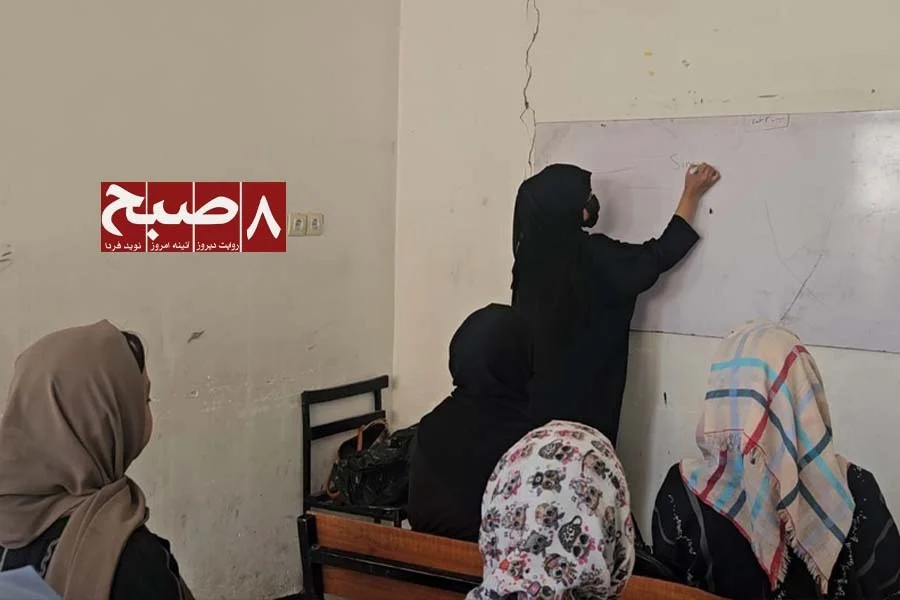
Coinciding with World Teachers’ Day, a number of teachers at public schools in Kabul are complaining about low salaries. They say that salary cuts and rising living costs have made their livelihoods difficult and have forced some teachers to quit their jobs or take up a second job. These teachers add that low pay has increased their economic and psychological pressure and has also affected their concentration while teaching.
Speaking to the Hasht-e Subh Daily, the teachers say that long working hours, a heavy workload, and delays in salary payments are among their other problems. According to them, a shortage of books and teaching aids, along with the worn-out condition of some textbooks, has made the teaching process difficult. Teachers stress that having 60 to 70 students in some classes has limited their ability to address students’ learning needs and assess every student. They say the lack of motivation and interest among some students has also added to the difficulties of their work.
Sohaila (pseudonym), a teacher who has taught at a public school for six years, says teachers’ salaries do not match their living costs. She adds that teachers who live far from their schools spend part of their salaries on car fares, while also paying for household expenses, medical care, rent, utilities, and other daily needs.
The teacher says: “Just once, the officials should compare teachers’ salaries with the cost of living and see how a teacher can cover daily expenses with this salary. A teacher who pays transport fares every day and also has expenses for the household, illness, clothing, rent, utilities, and other costs faces great difficulties with the current salary.”
Sohaila calls for an improvement in teachers’ living conditions and says that, at the very least, the salaries that were previously reduced should be restored to their former level. She also calls for a standard limit on the number of students in each class and for the provision of textbooks and teaching materials to schools.
Isra (pseudonym), another teacher who has been teaching for eight years, says low salaries have reduced teachers’ concentration during lessons. She adds that the economic pressure resulting from low pay, together with a shortage of teaching facilities and growing workloads, has made teaching harder for teachers. According to her, this situation could also affect the quality of students’ education.
This female teacher says: “When the economic situation is not good, the pressures of life increase and a teacher cannot teach with full concentration. Alongside the economic problems, the shortage of books, teaching aids, and necessary facilities means we cannot apply many practical teaching methods in class as we should.”
In the view of this female teacher, having a large number of students in one class makes it difficult to attend to their different needs and to involve everyone in lesson activities. According to Isra, there are some training opportunities for teachers, but more time and more programs are needed for regular capacity building and for practical training in modern teaching methods.
Isra says: “If I had only one wish on Teachers’ Day, it would be that our working conditions improve and that schools’ educational facilities increase. Regular and practical capacity-building programs should be held for teachers so that we can work with newer methods. Despite all the difficulties, when I see the progress and success of my students, that is what makes me continue my work.”
Salima (pseudonym), another teacher, says that despite a calm work environment and cooperation among colleagues, the salary cuts and repeated payment delays have created major economic problems for teachers. She adds that these delays have placed financial and psychological pressure on teachers and made it hard for them to cover their living costs.
This teacher says: “Sometimes we do not receive our salary for up to 70 days, and there is no clear schedule for when it will be paid. This situation has put great financial and psychological pressure on teachers and has made our daily lives difficult.”
Shams (pseudonym), a male teacher at a public school, says that since the Taliban returned to power, teachers’ problems have increased and a number of them have been dismissed from their posts for various reasons. He adds that in some cases, other people have been appointed in place of the dismissed teachers, and that delays in salary payments have further worsened their livelihood problems. According to Shams, low salaries and delayed payments have left teachers struggling even to cover daily expenses and to buy goods on credit from shops.
This teacher says: “We demand that teachers’ situation be addressed without bias and that their salaries be paid on time. When a teacher’s salary is delayed for months, even the shopkeeper no longer gives him credit and tells him to pay his previous debt first. If teachers are not looked after, the consequences do not affect only the teacher; when a teacher faces difficulties, a whole society suffers from the consequences.”
The teachers’ complaints about low salaries come as the Taliban’s Ministry of Education (MoE) has changed the structure of teachers’ salaries in recent years. According to a report published by the Hasht-e Subh Daily, the salaries of some teachers have been reduced based on their work experience and rank, and in some cases between 800 and 1,300 Afghanis have been deducted from their pay.
By contrast, published reports about the salaries of employees at the Taliban’s jihadi madrasas indicate that higher salaries have been set for some posts in these schools. According to an order by Hibatullah Akhundzada, the salary of a Quran memorizer (Hafiz) in jihadi madrasas was set at 20,000 Afghanis, and the salary of a religious scholar at the rank of Sheikh al-Hadith was set at 25,000 Afghanis.
This disparity comes as public school teachers complain about low salaries, delays in payment, and rising living costs, and call for improvements in their livelihood and working conditions.
You can read the Persian version of this report here:
روز جهانی آموزگار؛ کاهش معاش و فشار اقتصادی، آموزگاران را بیانگیزه کرده است