Over the past half-century, Afghanistan has repeatedly been confronted with grand promises. Each time, those promises arrived under a different name: salvation, revolution, jihad, democracy, state-building, the war on terror, peace, stability, or Sharia. Every era began with a new language, but in many cases ended with the same old result: an unstable system, a wounded society, an unfinished state-building project, and a nation that has still not been given the chance to define itself as a shared political will.
Afghanistan’s problem has not only been that governments have collapsed. The deeper problem is that many of those governments were never rooted in society in the first place. Ideas imported from outside, or imposed from above, have often become part of the illness rather than a cure for people’s suffering. Afghanistan has repeatedly been turned into a testing ground for ready-made models that did not emerge from the lived reality of its people and had little connection to the village, the land, poverty, women, religion, ethnicity, markets, education, and justice.
This is the recurring scenario: power is defined from above, while the people remain below. Society, instead of being the source of legitimacy, becomes an object to be administered, controlled, or mobilized. The language has changed: at times leftist, at times jihadist, at times democratic, at times emirate-based, and today, increasingly, federalist. But in many cases, the underlying logic has remained the same: seizing power before building society, introducing a system before building trust, and speaking in the name of the people without listening to them.
The Taliban are the most brutal and naked expression of this historical crisis. But Afghanistan’s crisis is deeper than the Taliban. The Taliban came, and one day they will go. Yet if the same old assumptions about power, ethnicity, religion, women, the state, and citizenship remain after them, the country will once again enter the same cycle of repetition. The great danger is that after the Taliban, others may also arrive in the name of rescue, only to build another system that is not founded on the people; a structure more concerned with power-sharing, factional competition, and the division of authority than with shared values, justice, and a social contract. The central question is this: can a generation that has already witnessed so many repeated failures, and that is now determined to change the Taliban, endure the collapse of yet another political system?
This is where the question of an “unfinished transition” begins. Afghanistan has experienced many transfers of power, but not a real transition. Transition does not simply mean power moving from one group to another. It means changing the relationship between people and power. It means the Afghan person must no longer be treated as a subject, a follower, a fighter, a refugee, or a victim, but as a citizen. It means women must no longer be treated as bargaining chips in political deals, but as holders of rights and agency. It means religion must return from being a tool of fear and monopoly to becoming a language of ethics, justice, and service. It means the state must change from an instrument of domination into a network of accountability, services, and public trust.
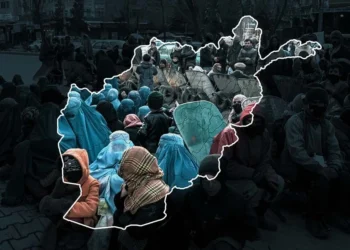
Afghanistan today is not only facing a crisis of governance. It is facing a crisis in the very structure of collective life. A large part of the population lives in rural areas: scattered, poorly connected, and deprived of services, education, markets, and accountable institutions. Any political project that ignores this reality, no matter how ambitious its slogans may be, will ultimately remain detached from the real Afghanistan. Afghanistan cannot be built only from Kabul, from meetings abroad, from political statements, or from competition among familiar figures. Afghanistan is made up of villages, land, schools, clinics, farmers, women denied education, young people without a future, local markets, and living social institutions.
If Afghanistan’s political elite truly cares about the future, it must move beyond a politics limited to power, the capital, and exile circles, and build a real connection with the silent majority of society. The village must not be remembered only during war, elections, mobilization, or legitimacy-building. The village is the foundation of Afghanistan’s life, production, memory, and society. But that same village must be brought out of isolation and connected to education, healthcare, markets, services, law, and citizenship. Without connecting the village to towns, cities, schools, clinics, regional markets, and accountable institutions, no sustainable transition is possible.
Many political forces still imagine that introducing a new system, forming a council, announcing a front, or writing a roadmap is itself the solution. But a structure without shared thinking is an empty shell. Law without trust is lifeless paper. Elections without citizens are a performance of legitimacy. Religion without ethics becomes an instrument of control. A state without society is a building that collapses at the first serious crisis.
Before Afghanistan needs a new name for its political system, it needs an intellectual break: a break from imported, imitative, transactional, and exclusionary politics. This does not mean cutting Afghanistan off from the world. It means ending intellectual dependency. Afghanistan must learn from the world, but it must not borrow its future from the world. It must build modern institutions, but those institutions must be rooted in the real society of Afghanistan. Freedom, justice, human rights, equality between women and men, education, and human dignity must be translated into the language of people’s lives: the language of the village, the city, the mosque, the school, the market, and the historical memory of this land.
One of the greatest crises today is the fragmentation of anti-Taliban forces and the absence of a shared horizon. Opposition to the Taliban alone is not enough, because the absence of the Taliban does not automatically mean the presence of justice, freedom, and stability. If political forces unite only in rejecting the Taliban but fail to agree on the principles of the future, their unity will remain fragile. It must be made clear what kind of country Afghanistan will be after the Taliban: citizen-centered or ethnicity-centered? Accountable or monopolistic? Justice-oriented or driven by compromise at any cost? Supportive of women’s equal participation, or still willing to bargain away their rights?
The issue is not that all groups and movements must agree on every political, historical, and ideological question. Such an expectation is neither possible nor compatible with Afghanistan’s plural reality. But without agreement on a few basic principles, no sustainable transition can take shape. Political and social forces must at least agree on rejecting authoritarianism, accepting equal citizenship, defending women’s right to education and social participation, respecting ethnic, linguistic, and religious diversity, ensuring justice for victims, distributing power fairly, and building an accountable system. Disagreement over details can be handled through politics. But the absence of agreement on these foundations will make every alliance fragile from the beginning and every future system vulnerable to collapse.
In the end, the fundamental question is this: are the groups and peoples who live within this political geography called Afghanistan willing to remain loyal to this land, to a shared destiny, and to a common life? Are they willing to recognize one another’s existence and build the future together? Or does each group still want to redefine Afghanistan only through its own desires, memories, and claims?
Real unity is not built through shared hatred. It is built through shared values. These values must be clear: rejection of Taliban authoritarianism and every other form of authoritarianism; equal citizenship; the right of women to education, work, and social participation; respect for ethnic, linguistic, and religious diversity; justice for victims; decentralization of power; rule of law; government accountability; and the creation of a political order from within society, not one imposed from above.
The Afghanistan of the future will not be built by one group, one leader, one ethnicity, one language, one ideology, or one imported model. The future of this country becomes possible only when politics changes from the ownership of power into responsibility toward human beings. We must ask ourselves: why do we want power? To return to the past, seek revenge, and divide the spoils? Or to build a society in which the Afghan person can live without fear, learn, work, speak, believe, criticize, and build a future?
Our problem has been that we have repeatedly built systems, but not meaning; brought governments, but not built a nation; written laws, but not institutionalized justice; raised flags, but not recognized the citizen. That is why, each time a system has collapsed, society has been thrown back into helplessness.
Afghanistan no longer has the capacity for another failed experiment. The people of this land are tired of rescue projects that ended in captivity. They are tired of leaders who spoke in the name of the people but never listened to them. They are tired of systems with grand names that did not change the small, difficult lives of ordinary people.
The recurring scenario of Afghanistan’s future will only be broken when we refuse to allow any power, domestic or foreign, to turn this land into a laboratory for ready-made ideas and unstable systems. Afghanistan’s future must not be imported, imposed, or negotiated behind closed doors. It must be built from the suffering, wisdom, resistance, dialogue, justice, and shared will of its people.
If we do not think for ourselves, others will think for us. If we do not build shared values, others will build systems for us. If we do not organize society from within, power will be imposed on us from outside. And if we do not learn from repetition, the future will be nothing more than a new name for the failures of the past.