
My name is Zainab. I am young, but the pain I carry feels as old as a lifetime. At a time when everyone spoke of love and happiness, I was living with a grief that had become my companion through the nights.
Everything began on that cruel day. A devastating incident took everything we had. It took my mother and my baby sister from me, leaving only my father and me alive. From that day on, my heart felt as though it had collapsed along with our home. Now, living as a stranger in Kabul, I spend my nights walking through its streets in search of their memories. I miss my mother’s warm embrace. How could they leave without saying goodbye?
One morning, my father and I went to court to claim my mother’s inheritance. My maternal uncle looked at us with a mocking smile and told us that we were putting our lives at risk. My father calmly and firmly responded to him. Fortunately, the court ruled in our favor. When we left the courthouse, my father smiled for the first time since the incident. He was not happy only because of the land and grapevines. He was happy because the promise he had made to my mother was finally being fulfilled.
That evening, when we returned home, my father prepared food for me with the same kindness he had always shown. He was a white-bearded man whose eyes carried a world of love. As I looked at the sky and stars in the loneliness of the night, I wondered what would become of my future. How would I stand on my own without them?
Two years had passed since we moved to Bamiyan. One night, my father, worried about my future, said, “Zainab, you have grown up and you need to start a new life. I will not be here forever, and my heart longs for your mother. You need someone who will stand beside you through happiness and sorrow.”
I was still struggling with my own pain. I laughed and said, “Father, I can barely put up with myself!” But my father looked at me with a fatherly wisdom and said, “A husband can become a source of strength and hope for a woman. He can help you become the strongest person in the world during the hardest times. Remember this, so that when I am gone, you never say that your father did not tell you.”
That night, my father’s words echoed in my mind. He was not only talking about marriage. He was talking about hope and continuing with life, something I had forgotten for a long time.
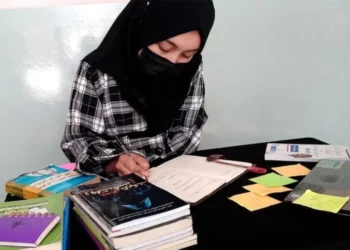
Our life in Bamiyan was slowly taking on a new shape. My father had found work, while I devoted all my time to studying for the university entrance exam, determined to keep the promise I had made to my parents. At night, I stayed awake until dawn studying and talked with Leila, a friend I had met at a course, about our dreams. Amid all these efforts, my only source of comfort was a mysterious book I had bought called My Little God. It seemed to tell the story of a girl’s real life, and with every line I read, I felt a new kind of pain.
But fate once again took me back to the place I had been trying to escape: Kabul. I had to return to my hometown to obtain my university entrance exam card. Hearing the name of that place brought all the painful and beautiful memories of the past rushing back. The home that no longer existed, the innocent laughter, and the warmth of my mother’s embrace that I could now find only in my dreams.
When my father and I set out for Kabul, a heavy silence settled between us. My father, that patient and kind man, appeared calm on the outside, but his eyes carried a sea of pain.
Amid the cold autumn wind, as we approached our hometown, I could no longer hold back my tears. We cried in each other’s arms. There, in the same place where our home had been destroyed, I once again faced my old pain. It felt as though fate was taking me back to the very beginning, to the place where my cries reached the sky but no one heard me.
The journey to Kabul was not simply a return to a place. It was a return to the nightmares that had repeated themselves in my dreams every night. As we approached our hometown, all those memories came alive again: the tragedy that had brought my world to an end during the government of Ashraf Ghani, at a hospital in Dasht-e-Barchi, Kabul.
My mother and my baby sister, who had just been born, were killed in a brutal attack at that hospital simply because they were women and mothers. Many innocent lives were lost that day, and in that moment, I left a part of my soul behind in that hospital. The pain is not merely a memory. It is a wound that remains deeply painful, and I will never forget that dark day.