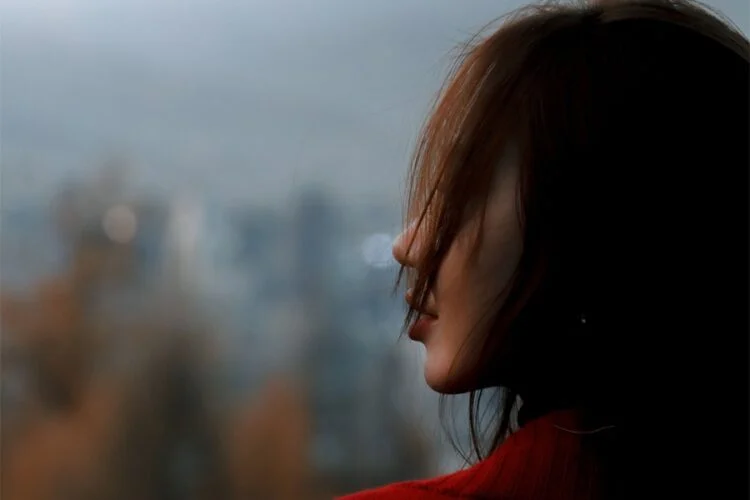
There was no electricity that night. The alley lay in darkness, and only the faint light of the moon filtered through the clouds, falling across the mud walls. In an old house in the city, a girl sat beside an oil lamp, listening to the sound of the rain. Her name was Sara. She was thirteen years old and had a strange habit: every night before going to sleep, she imagined her future. Not the future she had seen on television or the one others had described to her, but a future she had created herself.
In her imagination, there was a morning when she would wake up to the sound of the school bell, put on her school uniform, walk through the alley, and talk with her friends about exams and lessons. After school, she would go to the library and spend hours reading. But whenever she opened her eyes, she would see the same small room again: the same walls, the same lamp, the same silence, and the same dream that had yet to find a way out.
Sara rarely spoke about her dream. Not because she had none, but because some dreams, when spoken of too often, become a source of pain rather than hope. Sara dreamed of becoming a journalist one day. She wanted to be the voice of people no one listened to. She wanted to write about villages whose names appeared only on maps. She wanted to tell the stories of children who continued to smile despite all their hardships. She wanted to write about mothers who woke up early in the morning and went to bed late at night. She dreamed of a day when, writing about Afghanistan, she would not speak only of its suffering but also of its hopes.
But life had taken Sara down a different path. The days passed one after another. Sometimes, bitter news came through the radio. Sometimes, someone spoke of a family leaving for another country. Sometimes, a neighbor worried about a child’s future. And sometimes, Sara saw a young person with great talent who had no idea how to build a future.
Amid all these conversations, Sara grew quieter. She spoke less about her dreams, talked less about the future, and became more accustomed to silence. One day, her mother noticed that Sara no longer talked about becoming a journalist.
“Do you still want to be a journalist?” she asked.
Sara remained silent for a few moments before replying, “I don’t know.”
Her mother said nothing, but those two words were enough for her to understand that her daughter had not abandoned her dream; she was simply tired. Sometimes, people do not give up on their dreams. They grow tired of fighting for them. There is a difference.
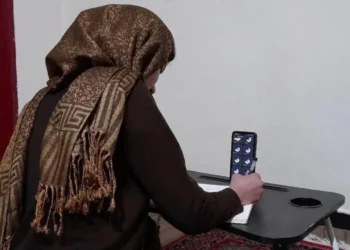
Sara still wrote, but she did not show her work to anyone. On sheets of paper she kept tucked away in a corner of her room, she wrote about the things she had seen: an old man who opened his shop every morning, a child playing in the alley with a plastic ball, a woman who baked bread for her children every day, a boy who wanted to become an engineer but had been forced to work, and a girl who dreamed of becoming a teacher but had no idea what her future held.
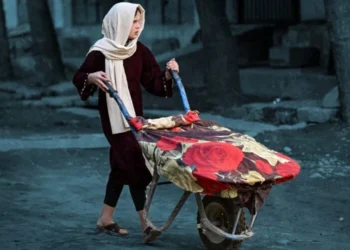
Sara had come to understand that Afghanistan was more than a collection of news stories. It was home to millions of stories, some of which had never been written. One day, she decided to write one of them: the story of a child who woke up every morning before sunrise, put on their shoes, and left home not to go to school, but to work.
Sara wrote the story. Then she wrote another, and then another. Each time she wrote, she felt that a part of her dream was breathing again. She was not a journalist yet, but she was learning how to turn people’s voices into words.
Months passed. One day, Sara sent a piece of writing to a magazine. She did not expect much. She was not even sure anyone would read it. A few days later, she received news: her piece had been accepted for publication.
For a few moments, Sara simply stared at the screen. Then she ran to her mother.
“What happened?” her mother asked.
Sara replied, “I think my dream is still alive.”
Her mother smiled, but her eyes filled with tears.
Perhaps Sara had not yet achieved her greatest dream that day, but she had learned something important: sometimes, reaching a dream does not begin with a giant leap. Sometimes, it begins with a sentence, a small effort, trying one more time, or a decision that says, “It is not over yet.”
Today, there may be thousands of Saras in Afghanistan: children carrying a world of hopes in their hearts. One wants to become a doctor, another a teacher, another an engineer, another a writer, another an artist, while someone else simply dreams of one day being able to decide their own future without fear. But many walls stand between these dreams and reality: poverty, insecurity, a lack of resources, migration, restrictions, and sometimes nothing more than exhaustion.
These circumstances cause many dreams to fall silent, little by little. But silence does not always mean the end of a story. Some dreams are simply waiting for an opportunity, like a seed that remains beneath the soil for a long time. No one can see it, but life is still growing inside it.
I believe Afghanistan’s silenced dreams are much the same. Perhaps they cannot be seen today. Perhaps their names have never been written anywhere. Perhaps their owners do not even dare to speak about them. But they are still alive.
They live in the heart of a child who wants to become a scientist, in the heart of a girl who dreams of becoming a teacher, in the mind of a young person who wants to do something for their country, in the hope of a mother who wants her child to have a more peaceful future, and in the eyes of a father who, despite his exhaustion, continues to work for his family’s tomorrow.
Perhaps the greatest tragedy for a society is not that people lose their dreams, but that they reach a point where they no longer dare to dream at all.
That is why we must protect dreams, not through grand words, but by creating opportunities, providing education, listening to young people, supporting children, and building pathways that allow people to show their talents. No country is built by tall buildings alone. Countries are built by people who believe that a better tomorrow is possible.
Afghanistan may be full of silenced dreams today, but I do not want to consider them dead. I believe every silenced dream is a voice waiting to be heard. It may not have been heard yet, but one day it will be.
Perhaps the child sitting in the corner of a house today will become someone who opens doors for hundreds of other children tomorrow. Perhaps the girl who can only imagine her future today will help build that future one day. And perhaps the young person who does not know where to begin today will eventually take the first step.
A dream always begins in a place where nothing has changed yet, in that very moment when, despite having every reason to lose hope, a person says quietly to themselves, “Maybe I can.”
That little word, “maybe,” may seem small, but sometimes an entire future lies hidden within it.
Maybe I can. And perhaps one day, Afghanistan will become a land where no child has to hide their dreams; a land where dreams do not remain silent in people’s hearts but are given the chance to become reality.
Until that day comes, perhaps our responsibility is to keep the light of our own dreams from going out, even if it is small, even if the road is long, and even if no one believes in it today. Because the future always begins somewhere, and sometimes that beginning is nothing more than a dream. Perhaps hidden among these silenced dreams is a future waiting for Afghanistan.