By Anne-Marie El-Hage, L’Orient-Le Jour.
“Had I known that this is what marriage would be like, I never would have gotten married so young.” The words of Nariman, the 22-year-old mother of children ages five and six, sound like an admission of failure. She regrets having married Alaa, her senior by one year, at age 15, and not having pursued her education, which prevented her from getting job skills that could help lift her family out of poverty.
According to Human Rights Watch, Lebanon does not have national laws regulating the marriage age of its citizens. Instead, this matter is left to different religious courts, who set the age based on 15 personal status laws, some of which allow girls as young as 14 to marry.
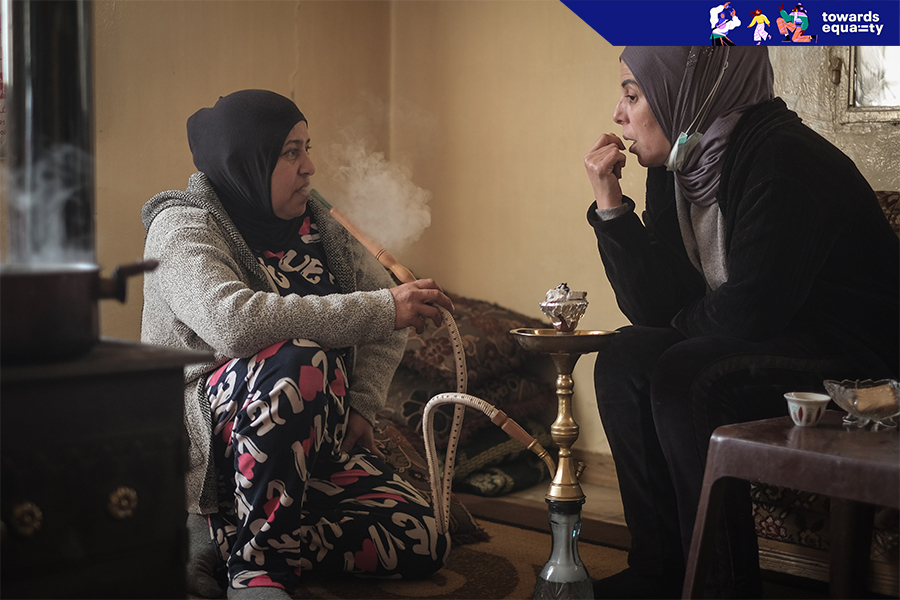
In the only heated room of a modest house in Faour, a village in Lebanon’s Bekaa Valley, Nariman and other women, their children and grandchildren gather around a wood stove. They pass around hookah, coffee and sweets. The discussion revolves around the increasing number of child marriages against the backdrop of a multifaceted crisis that has paralyzed Lebanon since 2019.
According to the United Nations, the crisis has pushed more than 80 percent of the population below the poverty line. Nada Ragheb, a Faour resident committed to her community, leads the conversation. She has been campaigning for years to educate girls and women on the disadvantages of teen marriages — an initiative that has run headlong into the state’s indifference, family ignorance and taboos that hinder the empowerment of women.
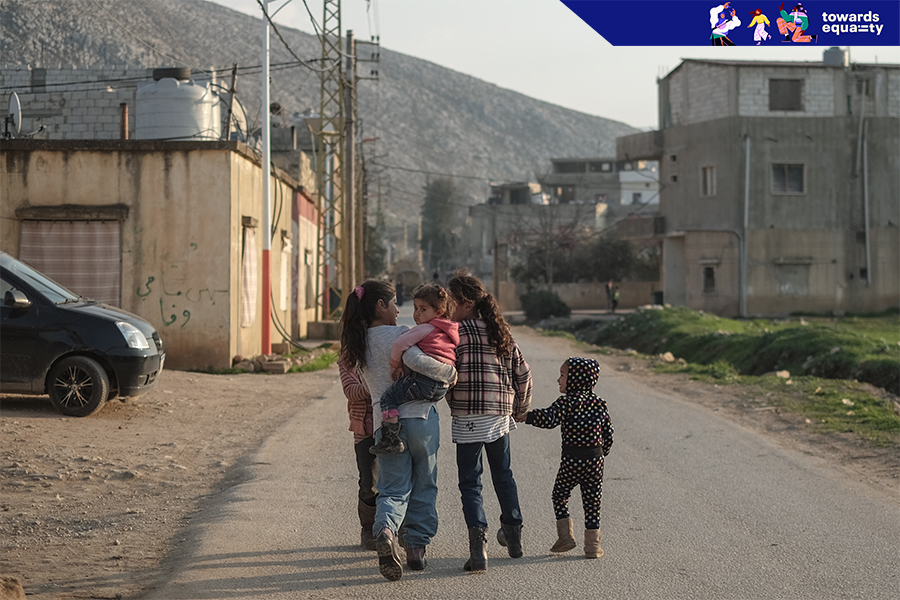
Faour sits on a hillside in the eastern Bekaa Valley. Litter, potholes and open sewers line the streets, alongside small homes with crumbling facades. Idle children roam up the streets. The village is home to Lebanese sedentary Bedouins who originally came from Syria. They often face discrimination for their ancestral customs, tribal laws and Syrian origins; Lebanese people from surrounding villages often refer to them demeaningly as “Arab Bedouin” or “Faour Arabs”, dismissing their Lebanese identity. Rifaat al-Nemer, the village mukhtar, says that “Out of about 28,000 naturalized inhabitants, 9,000 are voters,” and are fed lofty promises during election campaigns. And then nothing happens. “Promises to build a public school for us have never been fulfilled.”
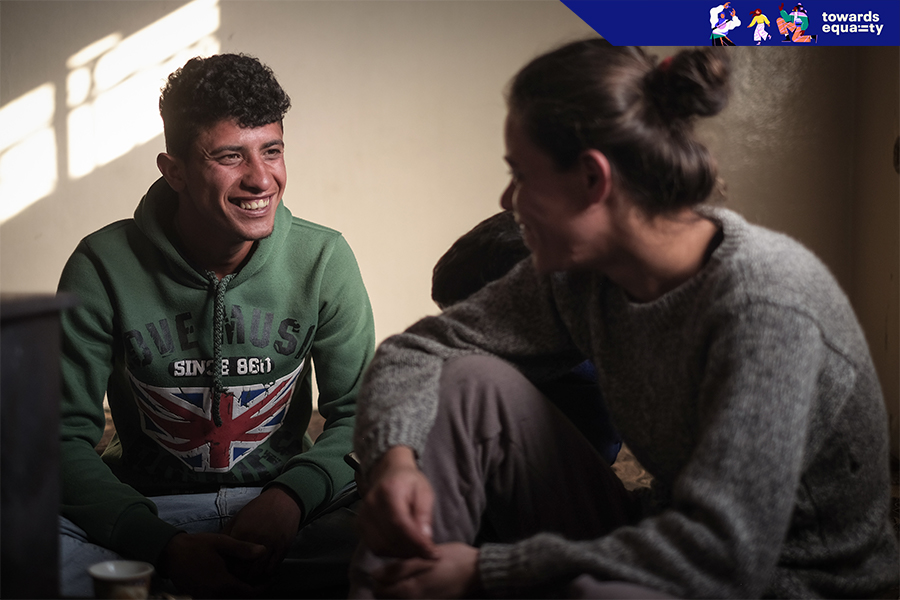
“We were teenagers. We loved each other,” recalls Nariman. “Getting married was the worst decision of our lives.” Her husband nods in agreement. Life is so hard in these times of economic crisis. Slumped on cushions, their sons are bored stiff. They do not go to school and have not yet learned to read. “Just like half of the 1,500 school-age children in the village,” says Nemer.
The nearest school is half an hour away by car — an insurmountable obstacle for families living in poverty. “We can barely feed them, let alone cover the cost of school transportation, which has exploded since the lira collapsed,” says their father.
Men in Faour are mainly agricultural workers, day laborers, drivers, or otherwise unemployed, straining under the collapse of the national currency, which has lost more than 90 percent of its value in three years.
“My husband works one day out of 10. I would do anything to lend him a hand, learn a trade, receive training. But there’s nothing for me,” Nariman says. Nothing that doesn’t involve exploitative work in the fields, or in the households of wealthy families in neighboring villages.
Faour has seen better days. There was a time when international donors backed many projects to support this village ignored by the state. But that aid dried up. Since 2011, the focus has shifted to Syrian refugees.
“We try hard to encourage families to educate their daughters, but they are so poor that they marry them off as teenagers,” says Nawal Moudallali, founder of the local association Sawa for Development which campaigns for the rights of girls. “All we can do now is teach them small jobs, like hairdressing and manicures.”
At one point, the mukhtar opened a free school but had to close it 10 years later due to a lack of funds. “We had 680 students,” he says. They had to be relocated to schools in neighboring villages or they dropped out of school because of a lack of financial resources.
Ragheb, now in her 40s, says she is the first woman in the village to have completed lower secondary education. She now works for an NGO dedicated to women’s reproductive health. She volunteered at Sawa for a long time and currently leverages her experience to raise awareness about the importance of education for girls.
Whether there’s a budget for it or not, she continues to raise awareness among the women of Faour about the dangers of early marriage. She goes from house to house, starting with her loved ones, tirelessly explaining the risks of teen pregnancy, the lack of maturity in underage couples and the importance of education for the empowerment of women. The mukhtar follows closely behind, joined by the mothers of families who have been won over by the initiative.
Above all, Ragheb leads by example: Her two eldest children are continuing their education and entering the world of work, while her two youngest are focused on their studies.
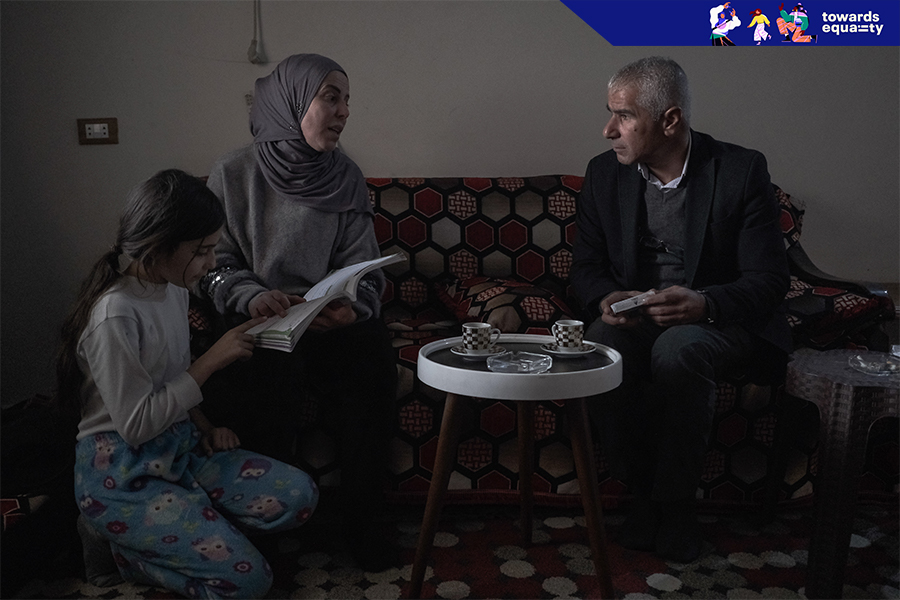
Ragheb’s efforts are bearing fruit. Anwaar, 21, a student in Arabic literature, is full of ambition and already dreaming of earning a master’s degree in psychology and a PhD. “I want to become an exceptional member of society and contribute to the development of my village,” she says. Even if it means she must withstand social pressure.
“‘Get married,’ they say. ‘A woman’s place is in the kitchen, not at the university, which requires so much money for transportation, clothing and food.’” But the young woman persists, supported by a mother who was never taught to read and a father who is worried but proud. Already socially involved, she created a free library and she teaches private lessons to sustain herself.
Anwaar’s ambition is not unreasonable. But in Faour, “few residents have received even a secondary education,” says Douha, a 22-year-old nursing school graduate.
“It’s so difficult — there are the long distances between the village and the university, the high cost of transportation, the teacher strikes and the challenges of online learning during the Covid-19 pandemic.”
If this young woman has stood firm, it’s thanks to the support of her family, convinced by the arguments made by Ragheb. It is also thanks to the encouragement of two other female students who are working hard like she is.
Women like Anwaar and Douha are setting examples for the girls of Faour. Ragheb is frustrated, however, that “the economic crisis, youth idleness and the conservative social norms that prohibit young people from dating outside marriage are once again causing teen marriages to soar.”
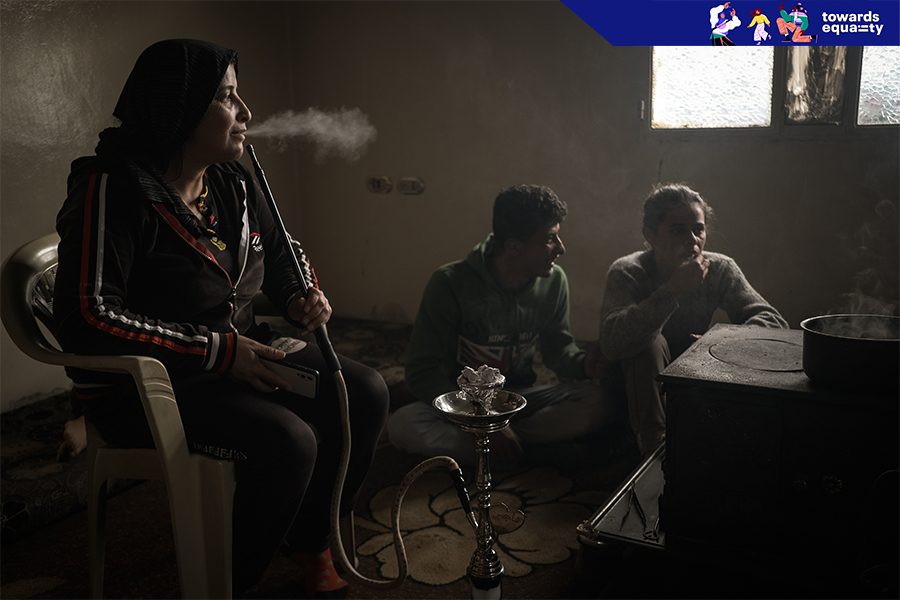
A case in point is 16-year-old, baby-faced Elham, who takes a drag on her hookah. She says she married five months ago “out of love.” Her mother-in-law, Mariam, says, “I fought tooth and nail to prevent them from marrying so young. They didn’t listen to me, and my son took her away.”
After failing at school and unsuccessful attempts to study accounting, Elham had no choice but to settle down with her husband, Issa. The young couple doesn’t have a cent to their name. Her husband is a laborer for a lathe operator. She spends her days at her in-laws’ house, where she and her husband are living, awaiting his return. “Of course, I regret it,” the young wife lets slip.
But there is still hope for better days, if a sympathetic country’s promise to finance the construction of a public school in Faour actually comes to fruition.