• 8AM.MEDIA
  • ویب‌سایت فارسی
  • پښتو ویب‌پاڼه
  • اۉزبېکچه ویب‌سایت
  • Podcast
Tuesday, November 3, 2026
Hasht-e Subh
  • Home
  • News
    • Afghanistan News
    • World News
  • Opinion
    • Editorial
    • Analysis
  • Reports
    • Daily Reports
    • Investigative Reports
  • Society
    • The story of people
  • Women’s Word
  • Columns
    • Three Years After Afghanistan’s Fall: The Taliban’s Resurgence
    • Towards Equality
    • The Resurgence of the Taliban: Two Years Since Afghanistan’s Fall
    • Hebatullah Report Special Edition
    • Resistance for Education Special Edition
    • Special Column on Taliban’s Education Curriculum
    • Nawroz
  • Interviews
  • Contact Us
    • About Us
    • 8AM MEDIA Annual Awards
    • Submit an Article to Hasht-e-Subh
  • 8am.mediaBack
Subscribe
No Result
View All Result
  • Home
  • News
    • Afghanistan News
    • World News
  • Opinion
    • Editorial
    • Analysis
  • Reports
    • Daily Reports
    • Investigative Reports
  • Society
    • The story of people
  • Women’s Word
  • Columns
    • Three Years After Afghanistan’s Fall: The Taliban’s Resurgence
    • Towards Equality
    • The Resurgence of the Taliban: Two Years Since Afghanistan’s Fall
    • Hebatullah Report Special Edition
    • Resistance for Education Special Edition
    • Special Column on Taliban’s Education Curriculum
    • Nawroz
  • Interviews
  • Contact Us
    • About Us
    • 8AM MEDIA Annual Awards
    • Submit an Article to Hasht-e-Subh
  • 8am.mediaBack
No Result
View All Result
Hasht-e Subh
No Result
View All Result

National Oppression: When People’s Language Is Ignored in Their Own Land

Translated by Farhad Farhaad | Originally written in Persian by Mahmood Badakhshi

Mohammad Farhaad Mohammad Farhaad
3 November 2026 - Solar Hijri Date: 1405/08/12 [t_time:1793728708]
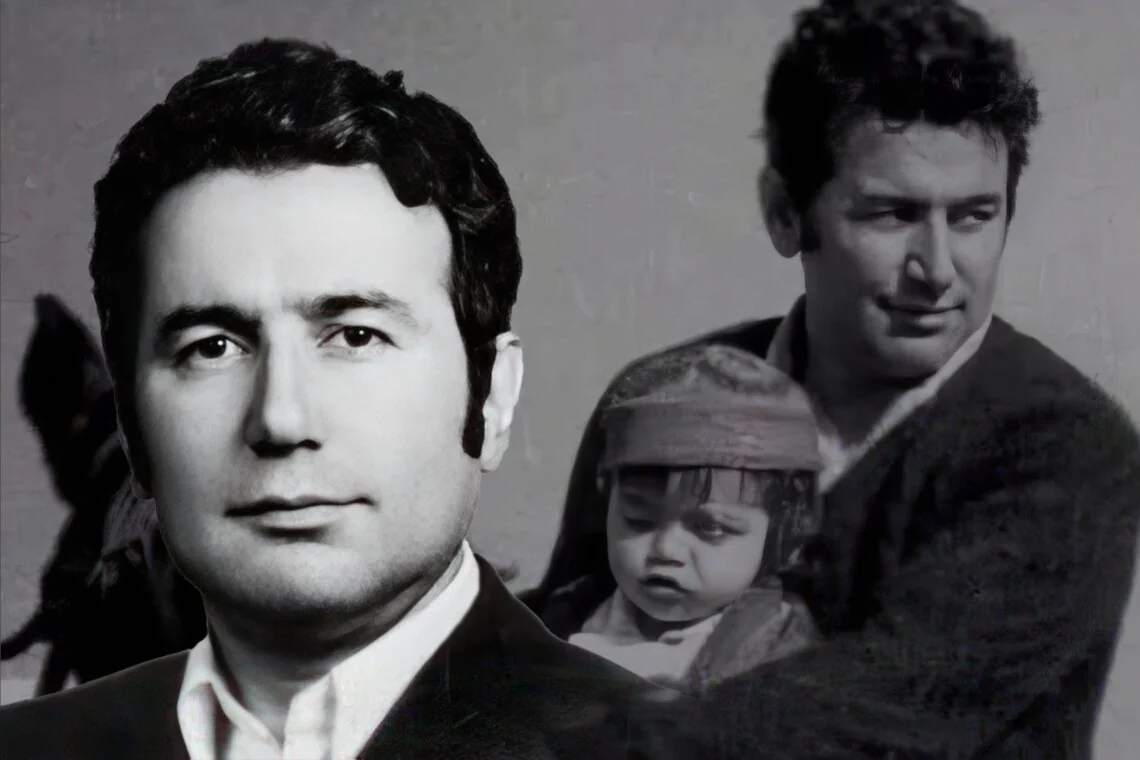
A collage of archival photographs shows Taher Badakhshi, a political figure and advocate of justice in Afghanistan’s contemporary history, with his child. (Photo credit: Wikipedia + Social Media)

Wikipedia + Social Media

Language is not merely a means of conversation. It is identity, culture, historical memory, and an inseparable part of a society’s character. Respecting people’s language is, in truth, respecting their identity and human dignity. For this reason, whenever the language of a community is ignored in the public sphere, and another language is imposed on its people without regard for their needs and comprehension, questions must be raised about linguistic justice and the equality of citizens.

Today, one of the serious questions in Badakhshan is this: Why are speeches, banners, and public messages in many cases delivered and displayed in Pashto, when the dominant language of a large portion of the people of this land is Persian, and Uzbek is also spoken among some of its residents? Why are messages intended for the people of a region not composed in languages that the people of that same region can read, understand, and engage with?

This question does not mean opposition to the Pashto language or its speakers. Pashto, like Persian and Uzbek, deserves respect and preservation. The issue is not about elevating one language over another. The issue is the disregard for the language and identity of the indigenous people in their own land. Just as Pashto-speaking people have the right to receive public messages in their own language, the Persian-speaking and Uzbek-speaking people of Badakhshan enjoy the same right.

If the purpose of putting up banners and holding cultural programs is to raise awareness and communicate with the people, why is the language of the main audience not taken into consideration? A public message gains real meaning only when people can read and understand it. Putting up banners that a large part of the local population cannot read is, at the very least, a sign of indifference to the linguistic needs of the community, and if this practice continues in a systematic and discriminatory manner, it could amount to linguistic and national oppression.

Tahir Badakhshi and the Struggle Against National Oppression

Tahir Badakhshi was a political figure and advocate of justice in the contemporary history of Afghanistan who raised the issue of national oppression as one of the fundamental problems of Afghanistan’s society. He believed that social justice cannot be achieved without national equality and the elimination of discrimination among the country’s ethnic groups and nationalities.

In an account of his conversation with Mohammad Daoud Khan, when he was asked about the reason for his struggle and the meaning of national oppression, he did not reduce the issue to political slogans alone. He pointed instead to inequality in the power structure and the unbalanced share of regions and nationalities in running the country. In this account, he speaks of the difference between the presence of governors and government officials in provinces such as Maidan Wardak, Logar, and Laghman and in large provinces such as Badakhshan, Balkh, and Herat.

The message of this account is clear: when the people of a region, despite their population, history, and social and cultural capacities, do not have an equal share in the country’s administration and decision-making structure, questions must be raised about justice and equality.

Of course, Tahir Badakhshi’s thought should not be limited to a single account or a single example. The importance of his outlook lay in raising a fundamental issue: no ethnic group, language, or region should be pushed to the margins, and no citizen should be deprived of equal rights because of their ethnic or linguistic affiliation.

Badakhshan and the Right to Respect for the People’s Language

Badakhshan is a land with an ancient cultural and civilizational heritage, a land where Persian holds a broad historical and social standing and where Uzbek also forms part of its linguistic diversity. Respecting this reality is neither a demand for privilege nor opposition to the country’s other languages. It is an acceptance of diversity and respect for the rights of the people.

The duty of cultural institutions is not limited to holding ceremonies and putting up banners. Safeguarding languages, cultures, and the identity of the people is also part of their responsibility. It is also expected that elders, cultural figures, writers, university lecturers, and civil society institutions in Badakhshan will express their views on this matter. Silence in the face of the disregard for the people’s language is not the solution to this problem. Protest against linguistic discrimination should also not turn into hostility between ethnic groups and languages, because the main demand is equality and mutual respect.

The solution is clear: in banners, speeches, cultural programs, and public messages in Badakhshan, the Persian language, and in the relevant areas and on relevant occasions the Uzbek language as well, must be used appropriately. Pashto can also be present alongside these languages, but not at the cost of eliminating or ignoring the other languages.

Concluding Remarks

If Tahir Badakhshi stood against discrimination and national inequality in his time, then today one cannot honor his name and ideas while remaining silent in the face of the disregard for the people’s linguistic rights. Honoring a justice-seeking figure does not gain meaning merely by holding memorial ceremonies and publishing his photographs. Loyalty to his ideas finds meaning in practice and in the defense of justice, equality, and the dignity of all people.

We do not demand the removal of the Pashto language, just as we do not demand the removal of any other language. Our demand is that the language of no people be given precedence over the language of other people, and that no community feel like a stranger in its own land.

If the people of Badakhshan cannot read public messages in their own language, if their language and identity are ignored in official programs, and if cultural officials remain silent in the face of this situation, then one must ask: Is this disregard for the people’s linguistic rights not an example of national oppression?

National justice begins with respect for the language and identity of the people, and Badakhshan asks for nothing less than equal rights, respect, and human dignity.


You can read the Persian version of this article here:

ستم ملی؛ وقتی زبان مردم در سرزمین خودشان نادیده گرفته می‌شود

ShareTweetSendSendShare

Related Posts

A bulldozer operates near mud-brick houses as residents look on in a village in Sar-e Pol Province, where the Taliban demolished homes. (Photo credit: Social Media)
Daily Reports

Forced Displacement: Taliban Demolish Homes in a Sar-e Pol Province Village

1 November 2026 [t_time:1793529756]
A scenic aerial view of Badakhshan Province, Afghanistan, featuring the Kokcha River winding through the valley, surrounded by lush greenery, mountain landscapes, and local communities (Photo:Social Media | Representational Image)
Afghanistan News

Taliban Arrest 40 People Over Music at Wedding Ceremony in Badakhshan

31 October 2026 [t_time:1793443859]
A Talib overlooks the city of Faizabad in Badakhshan Province amid a rise in nighttime thefts and home break-ins. (Photo credit: Wikipedia + AI)
Daily Reports

Surge in Thefts in Badakhshan as Thieves Break Into Homes at Night

31 October 2026 [t_time:1793439996]

Latest

Loading latest news...

Popular stories

  • Iran’s flag is seen with a ship in the background amid reports of a US attack on Larak Island in the Strait of Hormuz. (Photo credit: Fox News)

    Iran Cuts Strait of Hormuz Reopening Plan Timeline to Two Days

    Share
    Share Tweet
  • UN Report Reveals Shifts in Family Attitudes and Rise in Domestic Violence in Afghanistan

    Share
    Share Tweet
  • Israel’s Election Leaves Path to a Coalition Government Unclear

    Share
    Share Tweet
  • Trump Claims the US Did Not Start the War with Iran

    Share
    Share Tweet
  • Taliban and Pakistan Confrontation: Real or Staged?

    Share
    Share Tweet

Podcast

Insights
Insights

Join Lynne O’Donnell for 8AM’s podcast series, Insights.
Lynne talks with generals, diplomats, soldiers, journalists, politicians, activists, people who have front row seats for conflicts around the world, and citizens with a story to tell, happy or sad. For this first series, Afghanistan is the focus. Lynne and her guests talk about the collapse of the republic in August, 2021, and the impact since — for the people of Afghanistan, for the security of the region, for the safety of the world. It’s important, interesting and insightful.

Insights/22: Controlling the Narrative with Mina Sharif
byinsights8am

Controlling the Narrative

Lynne O’Donnell talks with Mina Sharif, author, activist, women’s rights campaigner, educator and mentor. They discuss who controls the narrative and who speaks for Afghanistan’s people when the Taliban appear to have seized control not only of the country but of the message, too.

Have a listen

Insights/22: Controlling the Narrative with Mina Sharif
Episode play icon
Insights/22: Controlling the Narrative with Mina Sharif
Episode Description
Episode play icon
Insights/21: Media Meltdown with Zahra Joya
Episode Description
Episode play icon
Insights/20: Terror Inc with Scott Richards
Episode Description
Episode play icon
Insights/19: Busting Stereotypes with Bushra Gohar
Episode Description
Episode play icon
Insights/18: Media Matters with Waliullah Rahmani
Episode Description
Episode play icon
Insights/17: What Goes Around Comes Around with Sima Samar
Episode Description
Search Results placeholder
Hasht-e Subh

8AM Media, also known as Hasht-e-Subh Daily, stands as Afghanistan's premier independent and non-profit newspaper, resonating as a beacon of journalistic integrity since its establishment in June 2007 by esteemed Afghan journalists and human rights advocates. With a steadfast commitment to citizen journalism and civic education, Hasht-e-Subh Daily has earned its place as the most esteemed publication in the nation.

Publisher: Sanjar Sohail
Email: [email protected]
Executive Director: Parwiz Kawa
Email: [email protected]

Read More

National Oppression: When People’s Language Is Ignored in Their Own Land

Needy Women in Helmand: Taliban Ban Them from Working and Begging

OCHA: Hunger and Malnutrition on the Rise in Southern Afghanistan

WHO Announces EU Support to Strengthen Diagnostic Services in Bamyan

Faiq Raises Alarm Over Decline of General Education and Expansion of Religious Madrasas in Afghanistan

Editor’s Choice

Every Saturday morning, 8AM MEDIA English Services Department will guide you through the week’s biggest stories from Afghanistan and the international community.

Subscribe

© 2026 - ©Hasht-e Subh Daily

No Result
View All Result
8am.Media
پښتو ویب‌پاڼه
ویب‌سایت فارسی
اۉزبېکچه ویب‌سایت
  • Home
  • News
    • Afghanistan News
    • World News
  • Opinion
    • Editorial
    • Analysis
  • Reports
    • Daily Reports
    • Investigative Reports
  • Society
    • The story of people
  • Women’s Word
  • Columns
    • Three Years After Afghanistan’s Fall: The Taliban’s Resurgence
    • Towards Equality
    • The Resurgence of the Taliban: Two Years Since Afghanistan’s Fall
    • Hebatullah Report Special Edition
    • Resistance for Education Special Edition
    • Special Column on Taliban’s Education Curriculum
    • Nawroz
  • Interviews
  • Contact Us
    • About Us
    • 8AM MEDIA Annual Awards
    • Submit an Article to Hasht-e-Subh
  • 8am.media

© 2026 - ©Hasht-e Subh Daily