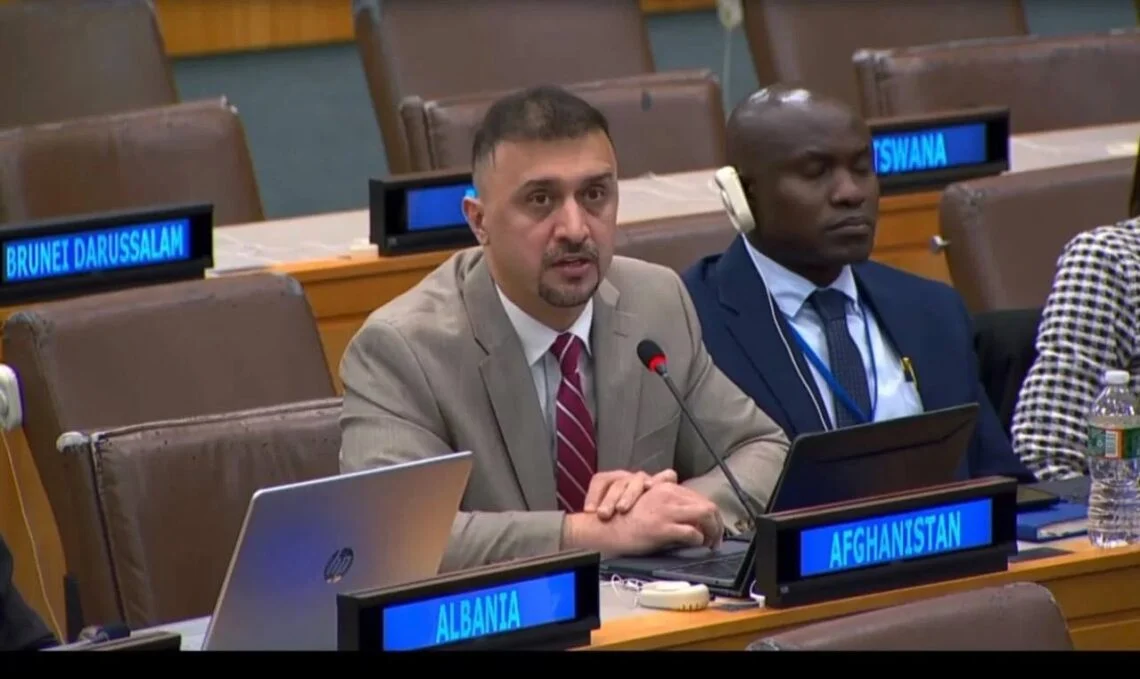
Naseer Ahmad Faiq, Afghanistan’s Permanent Representative to the United Nations, says the expansion of religious madrasas and the removal of subjects such as foreign languages and civic education from the curriculum have posed challenges to the educational future of young people in Afghanistan.
Faiq said on Tuesday, October 3, that the growing number of religious madrasas and their replacement of the general education system had raised concerns about the state of education in Afghanistan.
He added that, as of September 2025, more than 23,000 religious institutions had been registered, converted or established by the Taliban.
Afghanistan’s Permanent Mission to the United Nations said that, given the expansion of artificial intelligence and changes in education and the labour market, young people in the country need scientific knowledge, digital skills and critical thinking.
According to Faiq, young people in Afghanistan must have opportunities to learn and participate in a changing world so that they can play an effective role in the future.
Referring to the existing challenges, he said that despite restrictions, young people in Afghanistan continue to strive for education, employment and service to their communities, and that these efforts require practical support.
Faiq stressed that international engagement should support equal educational and employment opportunities for girls and boys and avoid normalising policies that deprive an entire generation of progress.