Following the Taliban’s takeover of Afghanistan, girls and women in the country, particularly in Badakhshan province, are experiencing the harsh reality of not being able to attend school or university and the violence perpetrated by the group. These factors have led to an increase in forced marriages and mental health issues among girls and women.
Several girls in Badakhshan report that their economic problems are worsening daily. According to them, many families in the province are compelled to accept forced marriages for their daughters due to financial hardships.
Shakila (pseudonym), a 20-year-old who was a student in the 11th grade at the Makhfi Badakhshi Girls’ High School, tells the Hasht-e Subh Daily that since schools closed and after her marriage, she has been in a poor mental state and is experiencing the worst conditions of her life.
Shakila adds that she has lost hope for the reopening of schools for girls and was pressured by her father to accept a marriage to her cousin. She says, “I became a victim of forced marriage. I had no intention of getting married; I wanted to finish school and attend university, but after three years of school closures, I was forced into marriage due to my father’s pressure.”
She further explains that she now spends most of her time helping her mother-in-law with household chores to learn the skills necessary for a married woman. “Since my marriage, my misfortune has begun. I am now suffering from mental health issues. Not only me, but my two other sisters also have poor mental health.”
Zarmeena recounts her experience of not being able to attend school and expresses her wish to become a doctor to serve the women and girls of Badakhshan. She states, “My classmates and I had big dreams. One wanted to become a judge after finishing school, another wanted to be a teacher, and I always said I would become a doctor. But everything was suddenly destroyed. Now that I am married at such a young age, I have lost my chance to achieve my dreams.”
Tarina Azadmanesh (pseudonym), another student from the Makhfi Badakhshi Girls’ High School, says that with the Taliban’s control, all her dreams and those of thousands of other girls in Afghanistan have been shattered. She was a 12th-grade student but now works at a carpet-weaving workshop in Fayzabad, the provincial capital of Badakhshan. Azadmanesh adds, “We are in complete despair. It has only been a few months since I started learning carpet weaving.”
She further notes that most of her friends and classmates have fallen into depression after the school closures and are extremely worried about their education and future under Taliban control.
Nooria Badakhsh, another student working at a women-only restaurant in Fayzabad City, says that she has developed mental health issues since schools closed. She adds that she started working at her friend’s restaurant to cope with her mental health problems. She says, “Every day I face new restrictions; I can’t even make decisions about my life. Like other girls, I am also forced by economic problems and my father’s fears to accept a marriage proposal and have become engaged.”
Increase in Mental Health Issues
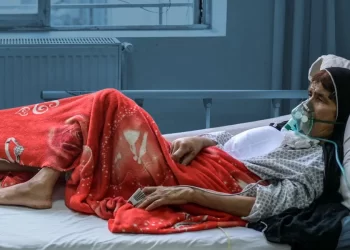
Several doctors in Fayzabad report that the number of mental health cases among housewives, especially female students, has risen in the past three years due to the increasing restrictions imposed by the Taliban.
One psychotherapist at the Badakhshan Provincial Hospital, who wished to remain anonymous, states that since the Taliban’s takeover, the number of mental health patients and their visits to the hospital has increased. According to him, at least 20 to 30 people visit the hospital daily for mental health treatment.
He adds, “The Taliban’s restrictions and pressures on women’s lives have led to an increase in mental health disorders among women and girls in Badakhshan. One of the issues contributing to mental health problems is the violence and forced marriages of girls.”
This psychotherapist further explains that the Taliban’s restrictions on education, training, and work for women over the past three years have left women in a state of hopelessness about the future.
Meanwhile, despite international pressure, the Taliban have yet to provide a clear response regarding the reopening of schools for girls. In the most recent statement, Neda Mohammad Nadeem, Taliban Minister of Higher Education, has prohibited questions about girls’ education until further notice. Speaking on Sunday, August 25, 2024, during a media briefing in Kabul, Nadeem stated that no Taliban order is against Sharia law and that questioning about girls’ education and training is also prohibited until further notice.
You can read the Persian version of this daily report here:
نگرانی زنان بدخشانی از افزایش ازدواجهای اجباری و بیماریهای روانی