Tensions between the Taliban and Pakistan have once again escalated. The Taliban spokesperson said yesterday that as a result of Pakistan’s airstrikes on parts of Khost and Kunar provinces, 10 people were killed and four others were injured. However, the Pakistani military has denied carrying out airstrikes on Khost, Kunar, and Paktika, saying that whenever the country conducts an attack, it also accepts responsibility for it. Meanwhile, the United Nations Assistance Mission in Afghanistan (UNAMA), without naming Pakistan, announced that 10 civilians were killed and six others were injured in airstrikes in Khost and Kunar. These attacks have triggered widespread reactions from officials of the former government as well.
Local media, quoting Shah Hussain Masjidi, the Taliban head of Information and Culture in Khost, reported that at around 12:00 a.m. on Monday, Pakistani forces conducted airstrikes in the Mughul Gai area of Gurbuz district, Khost, as a result of which 10 members of a family, most of them women and children, were killed and three others were injured.
Meanwhile, Zabihullah Mujahid, the Taliban spokesperson, also announced yesterday that Pakistani forces had once again attacked parts of Khost province. He wrote on his X page that Pakistani forces targeted the home of a civilian in Gurbuz district, Khost. According to him, in this incident, nine children, including five boys and four girls, along with one woman, were killed, and the family’s house was destroyed. He also confirmed that airstrikes were carried out in Kunar and Paktika provinces as well, resulting in four civilians being injured.
In reaction to these attacks, the Taliban spokesperson also claimed that the group would give an appropriate response to Pakistan at the right time. He called this action a “crime by the Pakistani military” and said such attacks have no achievements and are based on incorrect information. According to him, these actions will only lead to further crisis and disgrace for the Pakistani government.
Ahmad Sharif Chaudhry, the spokesperson for the Pakistani military, yesterday denied that Pakistan had carried out airstrikes on Khost, Kunar, and Paktika provinces. He said: “No attack has taken place. Whenever we carry out an attack, we accept responsibility for it.” Chaudhry also stressed that civilians were not targeted.
At the same time, the United Nations Assistance Mission in Afghanistan (UNAMA), without naming Pakistan, wrote on its X page that at least 10 civilians were killed and six others were injured in airstrikes in Khost and Kunar provinces. According to UNAMA, most of the victims were children. The organization has called for adherence to international laws for the protection of civilians and the prevention of harm to them.
Pakistan last targeted parts of Kabul, Khost, Nangarhar, and Paktika with airstrikes in October 2025. Following those attacks, the Taliban and Islamabad declared a ceasefire with mediation by Turkey and Qatar, but the next round of talks between the two sides in Turkey ended without result.
Reactions
Following Pakistan’s airstrikes on parts of eastern Afghanistan, several senior officials from the former government, including Hamid Karzai, Abdullah Abdullah, some ministers from previous administrations, and other political figures, reacted and condemned the attacks.
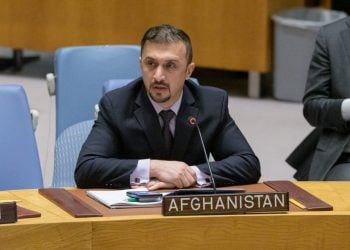
Naseer Ahmad Faiq, the acting head of Afghanistan’s mission to the United Nations, condemned Pakistan’s airstrikes on Khost, Paktika, and Kunar, calling these actions a violation of Afghanistan’s territorial integrity, the UN Charter, and international humanitarian law, and urged Pakistan to immediately halt its attacks on Afghanistan. He stressed that targeting civilians can never be considered part of the fight against terrorism.
The acting head of Afghanistan’s mission to the United Nations called on the Security Council to take urgent action to prevent the recurrence of such attacks. He emphasized that a sustainable solution to ensuring peace, security, and stability in Afghanistan and the region requires coordinated international efforts to support the establishment of a responsive, inclusive, and responsible government in Afghanistan.
Richard Bennett, the UN Human Rights Council’s Special Rapporteur for Afghanistan, in reaction to Pakistan’s airstrikes in the east of the country, said that Pakistan and the Taliban must return to the negotiating table. He stressed that respect for international law and the protection of civilians must be observed. According to Bennett, the presence of women in negotiation processes can help reduce tensions and contribute to more effective problem-solving.
Meanwhile, amid the ongoing tensions with the Taliban, Pakistan has intensified the process of arresting and deporting asylum seekers from Afghanistan. After the suspension of the visa extension process for asylum seekers from the fourth month of the year, Pakistani police have widely engaged in extortion, intimidation, and the arrest of individuals who fled to Pakistan out of fear of Taliban retaliation or who are awaiting the completion of their migration documentation to Western countries.
In addition to intensifying the arrests of asylum seekers, late Tuesday night, Pakistani police raided “Argentina” Park in Islamabad, where dozens of asylum seekers from Afghanistan had been camping and protesting for months, violently arresting all of them and deporting them to Afghanistan. Video footage from the arrests shows that police also used violence against women and children.
Previously, on October 22, 2025, Pakistan’s Ministry of Interior had announced that it would protect human rights activists, former government employees, political figures, artists, religious minorities, and families with relocation cases to Western countries. However, asylum seekers from Afghanistan in Pakistan say that no such protection is provided and that, on the contrary, they are constantly subjected to police harassment and arrest.
You can read the Persian version of this report here:
تنشهای خونین؛ غیرنظامیان که در منازعات طالبان و پاکستان جان میبازند