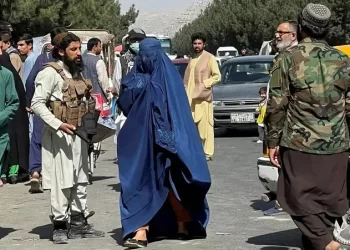

On May 30, 2017, a powerful explosion occurred at Zanbaq Square in Kabul, resulting in approximately 150 deaths and over 400 injuries. No group claimed responsibility for the attack at the time, but the National Directorate of Security (NDS) of the former government attributed it to the Haqqani network and Pakistan’s intelligence agency. Marking the eighth anniversary of the incident, several Afghan citizens stated that they associate the Taliban with such acts and will never forget these atrocities. This comes as the Haqqani network announced last year that it had carried out 1,050 suicide attacks over the past 20 years.
Citizens say that May 30, 2017, will remain one of the darkest and bloodiest days in Afghanistan’s history. According to them, the Taliban, by detonating a tanker filled with explosives at Zanbaq Square, killed and injured hundreds, leaving a lasting legacy of grief for the families of the victims.
These citizens assert that the Zanbaq Square explosion was one of the Taliban’s overt crimes against the people of Afghanistan over the past 20 years and will never be forgotten.
Zohra (pseudonym), a resident of Kabul, said the Zanbaq Square incident was one of the Taliban’s most heinous crimes and should not be erased from the collective memory of the people. She emphasized that she could never forget the atrocities committed by the Taliban. Zohra added, “The Taliban are the true thieves and traitors of this land. Through their suicide attacks, they deprived a girl of her father and a woman of her husband.”
Omid (pseudonym), another Kabul resident, was injured in 2013 during a series of suicide attacks in multiple locations across Kabul, including in front of the parliament, Darulaman Road, Shurpur, Kabul-Pul-e-Charkhi Road, and Paktia Kot. He was paralyzed after a bullet from one of the suicide attackers struck his spinal nerves.
This victim of a Taliban suicide attack said, “I vividly remember that day. Civilian vehicles targeted by gunfire were scattered in all directions—some hit the median, others landed on the sidewalk, and one crashed into rocks by the roadside. The cries and screams of people mingled with the sound of gunfire, creating a terrifying atmosphere.”
Aziz, another Kabul resident, said that suicide attacks over the past 20 years have claimed numerous lives, particularly in Kabul. He added, “I don’t know which holy book claims that killing innocent people, spreading terror, and ultimately committing suicide will lead the perpetrators to paradise and the embrace of heavenly maidens.”
Citizens emphasize that the Taliban have shown no mercy over the past 20 years. Through suicide and explosive attacks in public places, hospitals, schools, streets, and government institutions, they have killed hundreds and injured or maimed thousands. Additionally, the group has caused extensive damage to the country’s infrastructure by destroying bridges, culverts, roads, and numerous government facilities.
Meanwhile, doctors say that pollution from explosives and residual gunpowder from conflicts can even affect fetuses. According to them, the Taliban’s suicide attacks will have devastating effects on future generations.
Ashraf (pseudonym), a doctor, said that children born in such conditions are more prone to developmental issues, anxiety, learning disorders, and mental health problems.
He added, “Pollution from gunpowder and explosives contains heavy metals, which can lead to respiratory issues, heart disease, and nervous system disorders. For pregnant women, this pollution, combined with the stress of insecurity, increases the risk of miscarriage, premature birth, and low-birth-weight babies or congenital abnormalities.”
Meanwhile, Sirajuddin Haqqani, the Taliban’s Interior Minister and leader of the Haqqani network, stated during a gathering in Kandahar in 2021 that 1,050 members of the Haqqani network had carried out suicide attacks over the past 20 years. He also met with the families of suicide attackers at Kabul’s Intercontinental Hotel, describing them as “heroes of the homeland.”
Over the past 20 years, the Taliban have claimed responsibility for numerous suicide attacks in Kabul and other provinces, resulting in the deaths of children, women, and civilians, as well as thousands of former security forces.
Since taking control of Afghanistan, the Taliban have imposed widespread restrictions and suppression, depriving women and girls of all their human rights and systematically excluding them from society. These actions have been described as “gender apartheid” by human rights organizations and women’s rights activists.
The Taliban have continued arbitrary detentions, killings, and extrajudicial executions of former military personnel and civilians associated with the previous government. During this period, dozens have been shot individually or in groups and forcibly disappeared. The UN Special Rapporteur on Human Rights and the United Nations Assistance Mission in Afghanistan (UNAMA) have documented this situation in multiple reports, stating that the Taliban detain individuals, particularly former military personnel and those who worked with the previous government, without adhering to legal processes. Cases of targeted and extrajudicial killings of political opponents and former military personnel have also been recorded.
Furthermore, the International Criminal Court (ICC) announced on Thursday, January 23, 2025, that it has formally requested arrest warrants for Hibatullah Akhundzada, the Taliban Supreme Leader, and Abdul Hakim Haqqani, the head of the group’s Supreme Court, due to the persecution of women and girls in Afghanistan. The court stated, “Following comprehensive investigations and based on collected evidence, there are reasonable grounds to believe that Hibatullah Akhundzada and Abdul Hakim Haqqani bear criminal responsibility for crimes against humanity and widespread gender discrimination under the Rome Statute.”
You can read the Persian version of this report here:
حمله خونین چهارراهی زنبق؛ مردم قتل و جنایت طالبان را فراموش نمیکنند