The Center for Human Rights Advocacy (CHRA), in collaboration with Cambridge University in Britain, has published a research report that examines violations of international human rights treaties by the Taliban in Afghanistan. This report, prepared by researchers from Cambridge University’s “Pro Bono” project, evaluates the current performance and limitations of the United Nations and treaty bodies and provides practical and innovative solutions to address the human rights crisis in Afghanistan. According to this report, the Taliban have committed widespread violations by breaching seven major UN human rights treaties, including conventions related to women’s rights, children, torture, and civil, social, and cultural rights.
The authors of this report stated that the effectiveness of existing procedures of treaty bodies and previous efforts for reparations have been examined. This report also identifies innovative solutions that relevant institutions and civil society partners can use to strengthen accountability and prevent human rights violations.
The Center for Human Rights Advocacy has announced that the authors of this report have not traveled to Afghanistan and the information used has been collected from credible sources such as treaty bodies, UN fact-finding missions, credible media, and civil society organizations. According to this institution, the goal of the report is not to predict cooperation or non-cooperation of the Taliban regime with treaty bodies in implementing the proposed solutions.
The report states: “What links these recommendations together is a commitment to placing the voices of the people of Afghanistan at the center of attention, preventing the re-marginalization of survivors, and emphasizing the principle that prevention and accountability are two sides of the same coin.”
CHRA added in its report: “The Cambridge Pro Bono initiative presents this analysis not as a definitive roadmap, but as an evolving toolbox. Its effectiveness will depend on the creativity, solidarity, and persistence of all stakeholders.”
The report states that Afghanistan is a member of several international human rights treaties including the Convention on the Elimination of All Forms of Discrimination Against Women (CEDAW), the Convention on the Rights of the Child (CRC), the International Covenant on Economic, Social and Cultural Rights (ICESCR), the International Covenant on Civil and Political Rights (ICCPR), the Convention on the Rights of Persons with Disabilities (CRPD), and the Convention Against Torture and Other Cruel, Inhuman or Degrading Treatment or Punishment (CAT) along with its Optional Protocol (OPCAT). According to the report, despite these commitments, women’s and children’s rights have been severely ignored by the Taliban, and civil, economic, social, and cultural freedoms have also been extensively restricted.
Torture, Cruel and Inhuman Treatment
The report states that since taking control of Afghanistan, the Taliban have implemented barbaric punishments, including arbitrary detention, extrajudicial executions, and corporal punishments such as flogging and stoning.
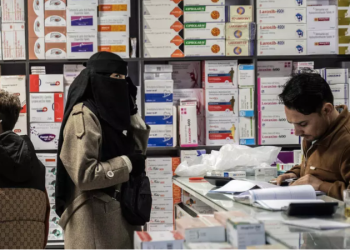
The Center for Human Rights Advocacy has announced that women and girls have been deprived of access to education beyond sixth grade, severe restrictions have been imposed on their freedom of movement and dress, and they have been banned from working in most sectors. Additionally, children face increased corporal punishment, changes in school curricula, growth in child labor, and their use in armed conflicts.
The report states that after the Taliban’s takeover, Afghanistan’s legal and judicial system collapsed, and Sharia laws with Taliban interpretation, which include punishments such as public executions and amputation of body parts, have been substituted.
According to the report, freedom of expression and the press have been severely suppressed, and journalists face intimidation, detention, and mistreatment. Additionally, ethnic and religious minorities, persons with disabilities, and LGBTQI individuals have been targeted for discrimination and violence.
Past Efforts for Reparation and Challenges
The Center for Human Rights Advocacy stated in its report that treaty bodies, the United Nations, and the UN Human Rights Council have made efforts to address these human rights violations. According to this report, these efforts have included reporting, providing concluding observations, and issuing urgent statements.
The report specifies that actions taken so far to address the human rights crisis in Afghanistan have been insufficient. Additionally, due to Afghanistan’s non-ratification of optional protocols of some treaties, the possibility of direct complaints by individuals to treaty bodies has been limited.
The report authors described the issuance of arrest warrants for Hibatullah Akhundzada, Taliban Supreme Leader, and Abdul Hakim Haqqani, Chief Justice of the Taliban Supreme Court, as an important step toward accountability for “targeted harassment against women.” They suggested that lobbying efforts should be increased to revive the Special Rapporteur’s office on Afghanistan affairs and ensure adequate resources for it, and greater coordination should occur with the International Criminal Court (ICC), the International Court of Justice (ICJ), and national courts (based on universal jurisdiction) for legal prosecution of Taliban leaders.
Adoption of the Concept of Gender Apartheid
The report states that the Convention on the Elimination of All Forms of Discrimination Against Women should explicitly recognize the concept of gender apartheid, which could lead to strengthening international normative frameworks and applying erga omnes obligations to all countries. According to the report’s suggestion, priority should be given to engagement and dialogue with religious and tribal leaders, and treaty bodies should also dialogue with religious and tribal leaders in Afghanistan and neighboring countries to create positive changes in attitudes. The report authors also suggested that extensive cooperation with civil society groups in Afghanistan should occur for a better understanding of human rights violations and effective actions.
External Diplomatic Leverage
The report states that using the influence of intergovernmental organizations such as BRICS and the Organization of Islamic Cooperation (OIC) to pressure the Taliban to respect human rights is essential. Also, according to the report, humanitarian and financial aid should be conditioned on specific and verifiable conditions to support children’s and women’s rights.
The report also suggests that there is a need for centralized incident data collection and improvement of reporting mechanisms to identify patterns of human rights violations. Additionally, coherence between civil society organizations and treaty bodies should be strengthened to enhance monitoring and reporting. Furthermore, establishing an independent international accountability mechanism to collect and preserve evidence of torture and other crimes in Afghanistan is essential.
The authors of this report recommend an “all tools” approach to address the human rights crisis in Afghanistan and emphasize that treaty bodies alone are not sufficient and must be coordinated with political, diplomatic, and protective actions.
You can read the Persian version of this report here:
گزارش مرکز دادخواهی و دانشگاه کمبریج؛ راهکارهای نوین برای مقابله با نقض حقوق بشر