• 8AM.MEDIA
  • ویب‌سایت فارسی
  • پښتو ویب‌پاڼه
  • اۉزبېکچه ویب‌سایت
  • Podcast
Monday, September 21, 2026
Hasht-e Subh
  • Home
  • News
    • Afghanistan News
    • World News
  • Opinion
    • Editorial
    • Analysis
  • Reports
    • Daily Reports
    • Investigative Reports
  • Society
    • The story of people
  • Women’s Word
  • Columns
    • Three Years After Afghanistan’s Fall: The Taliban’s Resurgence
    • Towards Equality
    • The Resurgence of the Taliban: Two Years Since Afghanistan’s Fall
    • Hebatullah Report Special Edition
    • Resistance for Education Special Edition
    • Special Column on Taliban’s Education Curriculum
    • Nawroz
  • Interviews
  • Contact Us
    • About Us
    • 8AM MEDIA Annual Awards
    • Submit an Article to Hasht-e-Subh
  • 8am.mediaBack
Subscribe
No Result
View All Result
  • Home
  • News
    • Afghanistan News
    • World News
  • Opinion
    • Editorial
    • Analysis
  • Reports
    • Daily Reports
    • Investigative Reports
  • Society
    • The story of people
  • Women’s Word
  • Columns
    • Three Years After Afghanistan’s Fall: The Taliban’s Resurgence
    • Towards Equality
    • The Resurgence of the Taliban: Two Years Since Afghanistan’s Fall
    • Hebatullah Report Special Edition
    • Resistance for Education Special Edition
    • Special Column on Taliban’s Education Curriculum
    • Nawroz
  • Interviews
  • Contact Us
    • About Us
    • 8AM MEDIA Annual Awards
    • Submit an Article to Hasht-e-Subh
  • 8am.mediaBack
No Result
View All Result
Hasht-e Subh
No Result
View All Result

Declining Reading Culture in Kabul: Unemployment and Restrictions Are Eroding the City’s Interest in Books

Avizha Khorshid Avizha Khorshid
11 December 2025 - Solar Hijri Date: 1404/09/20 [t_time:1765471373]
A quiet bookstore in Kabul reflects the declining reading culture as residents face unemployment, educational restrictions, and economic hardship that have diminished their motivation to buy and read books. (Photo Credit: 8am.media)

8am.media

Many residents of Kabul worry that the culture of reading is disappearing. They see fewer job opportunities, rising unemployment among educated youth, a lack of transparency in hiring, deepening poverty, and the strict educational and professional limits imposed by the Taliban as major reasons for this decline. They believe that rebuilding a community that values learning requires thoughtful planning and real, targeted action. Some also say that the family should be the starting point for encouraging reading because a love of books begins at home, in the small spaces where daily life unfolds.

People across the city repeat the same concerns. They explain how shrinking job prospects, growing poverty, and the restrictions placed on education have slowly drained the energy of Kabul’s readers. Without addressing these core problems, they say, it will be hard for reading to flourish again.

Dua, a young woman barred from continuing her studies, blames the fading reading culture on the Taliban’s bans. She lost her excitement for learning the day universities closed.

“I used to read every day,” she says. “I could not even rest without holding a book. Now I barely study. When I pick one up, I feel tired and sleepy. I do not know why. Maybe our minds are worn out, or maybe the sound of reading has gone quiet across society.”

Another young resident, Elham Ayoub, sees a different obstacle. He believes many young people have lost hope in education because even those with degrees cannot find jobs. He says the government must listen to young people, understand what they need, and give them learning and work opportunities that make reading meaningful again.

“The biggest problem is that young people feel no motivation to study,” he explains. “Most educated youth are unemployed, and many think working brings more success than studying. I believe the government must support young people and encourage them so that reading can become part of our lives again.”

Another Kabul resident adds that many families are too overwhelmed by daily survival to think about reading. “People are focused on finding food and necessities,” he says. “When you ask them why they do not read, they say they first need to feed their families. When basic needs are not met, people have no patience, energy, or money left for books. That is why many believe reading rarely leads to success in our country.”

Meanwhile, Zahir, a longtime bookseller, sees the decline from behind his stall. He says it has been months since he sold even one book. As he talks to three young women browsing titles, their faces show no spark of interest.

“In one or two months, only a couple of people come,” he says with a heavy sigh. “They look at the books and leave without buying. Many of our books are leftovers from the Republic. I even see young people trying to sell their own books, but no real buyers come. It feels like the passion for reading is disappearing, and people no longer value books the way they once did.”

But not everyone has turned away from reading. Haya, a young woman devoted to books, says that when schools and universities closed, her books became her escape from loneliness and sadness.

“Every time I read, I learn something new,” she says. “That keeps me motivated. I read two to three hours a day and never go a day without reading at least one page. I always turn to my books because they make life feel brighter.”

Haya also challenges those who say they have no time to read. “Some people say they are too busy,” she explains. “That is not a good excuse. If someone truly wants to read, they can find five or ten minutes a day, even right before bed.”

Rusta, a 16-year-old girl, believes that reading habits start with family. She says families play the biggest role in shaping children’s interests because they are the first people children look up to.

“When I saw everyone at home glued to the TV or their phones, I felt it was fine for me to do the same,” she says. “It made it hard for me to focus on reading. But when I see my family learning and reading, I feel pushed to improve myself too.”

Rusta shares another discovery. “I used to think I did not like reading because I always got sleepy. Later, I realized the problem was not me. It was the books. I tried reading titles like The Suicide Shop or Smile at Life, but they did not hold my attention. Then I found out I enjoy crime novels.”

In recent years, reading in Afghanistan has struggled to survive. The closure of schools and universities, high unemployment, financial hardships, and the growing hopelessness of young people have all combined to strip away the motivation needed to keep the culture of reading alive.

You can read the Persian version of this report here:

کاهش فرهنگ مطالعه در کابل؛ بیکاری و محدودیت‌ها انگیزه کتاب‌خوانی را کاهش داده‌اند

ShareTweetSendSendShare

Related Posts

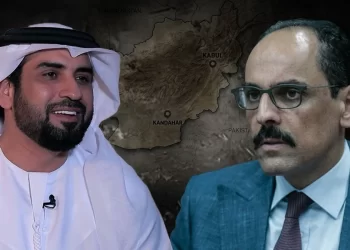
Qatar's Deputy National Security Adviser Hamad bin Khamis Al-Kubaisi (L) and Türkiye's intelligence chief Ibrahim Kalin (R) led separate delegations to Kabul and Kandahar for talks with senior Taliban officials. (Photo credit: Social Media)
Analysis

Two Mediators, One Case: Foreign Officials’ Visit to Kabul and Kandahar

20 September 2026 [t_time:1789925302]
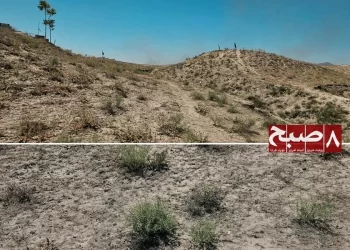
Sparse shrubs dot the dry, eroded hills of Ghazni province, where residents say uprooting for firewood has stripped the landscape of vegetation. (Photo credit: 8am.media)
Daily Reports

Ghazni Under Pressure of Poverty and Fuel Shortage: Shrub Uprooting Threatens Vegetation and Pastures

20 September 2026 [t_time:1789919894]
A young man, Shoaib, pictured on a sunny day in Kabul before he was killed by armed robbers. (Photo credit: Exclusive)
Afghanistan News

Young Man Killed by Armed Robbers in Kabul

20 September 2026 [t_time:1789918351]

Latest

Loading latest news...

Popular stories

  • Hamza bin Laden - the son of Osama bin Laden (Photo: Social Media)

    Al-Qaeda Releases Hamza bin Laden Message on 9/11 Anniversary

    Share
    Share Tweet
  • UN Report Reveals Shifts in Family Attitudes and Rise in Domestic Violence in Afghanistan

    Share
    Share Tweet
  • German Politician Calls for Faster Deportation of Undocumented Afghan Migrants

    Share
    Share Tweet
  • Pakistan Army Spokesperson: Afghanistan Has Become a Base for Dozens of Terrorist Groups

    Share
    Share Tweet
  • U.S. Defense Secretary Calls Washington Post Worse Than Iranian State Media

    Share
    Share Tweet

Podcast

Insights
Insights

Join Lynne O’Donnell for 8AM’s podcast series, Insights.
Lynne talks with generals, diplomats, soldiers, journalists, politicians, activists, people who have front row seats for conflicts around the world, and citizens with a story to tell, happy or sad. For this first series, Afghanistan is the focus. Lynne and her guests talk about the collapse of the republic in August, 2021, and the impact since — for the people of Afghanistan, for the security of the region, for the safety of the world. It’s important, interesting and insightful.

Insights/22: Controlling the Narrative with Mina Sharif
byinsights8am

Controlling the Narrative

Lynne O’Donnell talks with Mina Sharif, author, activist, women’s rights campaigner, educator and mentor. They discuss who controls the narrative and who speaks for Afghanistan’s people when the Taliban appear to have seized control not only of the country but of the message, too.

Have a listen

Insights/22: Controlling the Narrative with Mina Sharif
Episode play icon
Insights/22: Controlling the Narrative with Mina Sharif
Episode Description
Episode play icon
Insights/21: Media Meltdown with Zahra Joya
Episode Description
Episode play icon
Insights/20: Terror Inc with Scott Richards
Episode Description
Episode play icon
Insights/19: Busting Stereotypes with Bushra Gohar
Episode Description
Episode play icon
Insights/18: Media Matters with Waliullah Rahmani
Episode Description
Episode play icon
Insights/17: What Goes Around Comes Around with Sima Samar
Episode Description
Search Results placeholder
Hasht-e Subh

8AM Media, also known as Hasht-e-Subh Daily, stands as Afghanistan's premier independent and non-profit newspaper, resonating as a beacon of journalistic integrity since its establishment in June 2007 by esteemed Afghan journalists and human rights advocates. With a steadfast commitment to citizen journalism and civic education, Hasht-e-Subh Daily has earned its place as the most esteemed publication in the nation.

Publisher: Sanjar Sohail
Email: [email protected]
Executive Director: Parwiz Kawa
Email: [email protected]

Read More

UNICEF-Funded Reconstruction of Four Water Supply Networks Begins in Parwan

Afghanistan: When Pollution Becomes an Economy of Illness

Two Mediators, One Case: Foreign Officials’ Visit to Kabul and Kandahar

Body of Young Man Found Hanging in Farah Province

Criminal Incidents Increase: Dentist Killed in Badghis

Editor’s Choice

Every Saturday morning, 8AM MEDIA English Services Department will guide you through the week’s biggest stories from Afghanistan and the international community.

Subscribe

© 2026 - ©Hasht-e Subh Daily

No Result
View All Result
8am.Media
پښتو ویب‌پاڼه
ویب‌سایت فارسی
اۉزبېکچه ویب‌سایت
  • Home
  • News
    • Afghanistan News
    • World News
  • Opinion
    • Editorial
    • Analysis
  • Reports
    • Daily Reports
    • Investigative Reports
  • Society
    • The story of people
  • Women’s Word
  • Columns
    • Three Years After Afghanistan’s Fall: The Taliban’s Resurgence
    • Towards Equality
    • The Resurgence of the Taliban: Two Years Since Afghanistan’s Fall
    • Hebatullah Report Special Edition
    • Resistance for Education Special Edition
    • Special Column on Taliban’s Education Curriculum
    • Nawroz
  • Interviews
  • Contact Us
    • About Us
    • 8AM MEDIA Annual Awards
    • Submit an Article to Hasht-e-Subh
  • 8am.media

© 2026 - ©Hasht-e Subh Daily