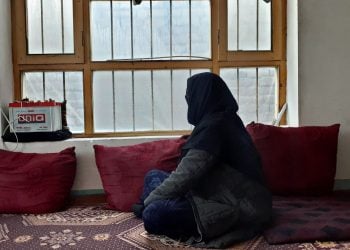

As winter approaches, disabled individuals in Takhar province are increasingly concerned about worsening economic conditions and the intensifying cold. They are calling on aid organizations to address their needs. These individuals accuse the Taliban of neglecting their plight, highlighting the lack of job opportunities, the deprivation of education for their children, and the absence of financial support for those unable to work as their major challenges.
Disabled residents in Takhar emphasize the economic hardships they face, including the non-receipt of disability allowances, limited employment opportunities, and the lack of educational services for their children. They are urging the Taliban to address their living conditions before the winter sets in.
Agha Mohammad, 57, a disabled resident of Lataband village in Taloqan, the capital of Takhar province, lost a leg during the 2000 conflict between the Taliban and the resistance forces led by Ahmad Shah Massoud. Speaking to the Hasht-e Subh Daily, he said:
“I have seven dependents. Winter has arrived, and I have neither food nor heating supplies. Since the Taliban took power, the Takhar Directorate for Martyrs and Disabled Affairs has not paid my disability allowance. Despite visiting their office multiple times, they have ignored my economic difficulties and refused to release my payments.”
Agha Mohammad also criticized the Taliban for treating disabled individuals from the previous government era unfairly compared to their affiliates. He added:
“The Taliban’s Directorate for Martyrs and Disabled Affairs in Takhar discriminates against those of us from the republic era. They have distributed cash assistance several times, but they gave all of it to their people.”
Abdul Wahab, a resident of Khwaja Bahauddin district in Takhar, told the Hasht-e Subh Daily:
“Who should we complain to? In my view, those who deny us our rights are oppressors. We call on the Taliban and relevant organizations to implement rehabilitation programs for us so that we can escape isolation, economic hardship, and poverty.”
He noted that only a small number of disabled individuals, registered during the previous government, have received their allowances this year. According to him, the Taliban continue to prioritize their affiliates:
“Since the Taliban took over, we haven’t received our payments. This year, only a few disabled individuals from the previous government received their allowances, but once again, the Taliban distributed funds to their people. When we raise complaints, they ignore us, and we return home empty-handed.”
Another disabled individual, Mohibullah, who is paralyzed from the waist down, has been unemployed since earning his bachelor’s degree from Takhar University three years ago. He told the Hasht-e Subh Daily:
“I graduated three years ago, but due to my disability, I haven’t been able to find a job in government or private institutions. I visited the Taliban governor’s office several times, but the guards didn’t allow me to meet the governor to discuss my issues.”
Concerned about worsening poverty and unemployment under the Taliban, Mohibullah added:
“There are seven dependents in my family relying on me. But with the meager income of 100 to 150 Afghanis per day from drafting petitions, I cannot afford firewood or coal to heat our home. We are living in misery.”
In response, Taliban officials in Takhar claim that their department has completed assessments to identify the problems faced by disabled individuals in the province. They say the findings have been forwarded to the central Ministry for Martyrs and Disabled Affairs.
However, a source within the province’s Directorate for Martyrs and Disabled Affairs told the Hasht-e Subh Daily that biometric data collected earlier this year indicates there are approximately 11,000 disabled individuals in Takhar, of which 6,561 are affiliated with the Taliban.
“According to the biometric data from March this year, those identified as eligible for allowances will receive a monthly payment of 3,500 Afghanis,” the source revealed.
Disabled individuals in Takhar, some of the most vulnerable members of society, have faced growing economic challenges under more than three years of Taliban rule. They are demanding timely payment of their allowances and equal access to humanitarian aid.
These complaints come as the World Food Programme (WFP) warns that this winter will be extremely cold, with Afghanistan requiring $3.06 billion in funding to meet the needs of vulnerable populations.
You can read the Persian version of this daily report here:
افراد دارای معلولیت در تخار از برخورد تبعیضآمیز طالبان شکایت دارند | روزنامه ۸صبح