Education in any society is not merely a means of transmitting information; rather, it is the most important tool for shaping human beings, forming the mindset of citizens, and determining the future direction of a country. Every educational system, consciously or unconsciously, transmits its values, beliefs, and worldview to the new generation. For this reason, the quality of education is not measured solely by the number of schools, universities, or graduates, but by the standard of what kind of human being that system produces: an inquisitive, creative, and responsible person, or an obedient, one-dimensional individual lacking the capacity for critique.
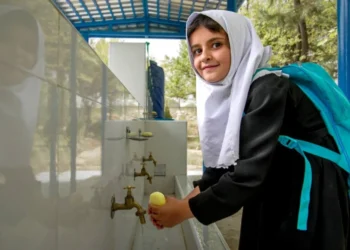
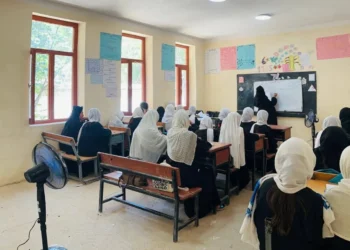
Afghanistan today faces one of the most difficult educational crises in its contemporary history. On the one hand, millions of girls have been deprived of their right to education beyond sixth grade, with the doors of schools and universities remaining closed to them. On the other hand, the education system for boys has also undergone extensive changes to its curriculum, changes that, in the view of many professors, researchers, and educational institutions, have reduced the share of modern humanities, social sciences, and certain contemporary subjects while increasing religious and ideological instruction. Under these circumstances, the question arises as to whether the continuation of such education, despite its restrictions and ideological orientations, can still benefit society, or whether its negative consequences outweigh its benefits.
The answer to this question is neither entirely positive nor entirely negative. Education, even when flawed, always retains some of its benefits. Literacy, basic skills, familiarity with mathematics, language, and certain sciences constitute an asset that can also prove useful to an individual in the future. A society that is completely deprived of education moves more rapidly toward poverty, dependency, and backwardness. From this perspective, the principle of education cannot be considered worthless.
However, when education departs from a scientific path and becomes a tool for reproducing a particular ideology, the matter becomes more complicated. The goal of education will no longer be to cultivate analytical ability, critical thinking, and creativity, but rather to create intellectual uniformity and unquestioning acceptance of the dominant viewpoint. In such an environment, students and pupils are less encouraged to ask questions, offer critiques, or compare different perspectives. This situation can diminish the scientific capacity of the next generation and widen the gap between the country and global scientific and technological developments.
The experience of various countries has shown that economic development, political stability, and social progress are directly related to the quality of education, not merely to the existence of schools and universities. A country in which universities become places for repeating a single narrative, rather than producing knowledge, will in the long run face a shortage of specialists, researchers, inventors, and competent administrators. The result of such a situation will be greater dependence on the outside world, diminished competitiveness, and the flight of skilled professionals.
But a more difficult question arises regarding girls. Does keeping schools and universities closed to women, despite concerns about ideological education, create a better situation?
It appears that the answer to this question is also negative. The complete deprivation of women from education carries consequences far more extensive than a mere change in educational content. Future mothers are the first teachers of any society. Their level of literacy, health awareness, parenting skills, and intellectual capacity directly affects the development of children. A woman deprived of education will have fewer opportunities to participate in the economy, improve family health, raise her children with a scientific outlook, and play a role in society. The denial of education to women does not halt progress for only one generation; its effects are also transmitted to subsequent generations.
At the same time, keeping schools and universities open can also play a positive role only when the educational environment provides the opportunity to become familiar with contemporary sciences, life skills, research methods, critical thinking, and respect for diversity of viewpoints. If education is reduced merely to conveying a narrow reading of the world, society will be deprived of the capacity for dialogue, innovation, and problem-solving.
Therefore, comparing ideological education with complete deprivation of education is, in fact, a choice between two undesirable conditions. Neither is a desirable option for the future of Afghanistan. A society that deprives half of its population of education will not have the capacity for sustainable development, just as a society with an educational system lacking scientific independence cannot secure an appropriate position in global competition.
The way out of this situation lies not in halting education, but in reforming it. Afghanistan needs an educational system in which religious sciences and contemporary sciences are not placed in conflict with one another, but are taught side by side, based on scientific standards and the actual needs of society. Universities should be places for producing knowledge, conducting research, and engaging in scholarly dialogue, not tools for ideological rivalries. Schools, too, must prepare children for life in today’s world, a world in which success requires knowledge, skill, creativity, and analytical ability.
The future of Afghanistan depends, more than anything else, on the quality of its educational system. If education can produce people who are informed, skilled, responsible, and possessed of an inquisitive spirit, the foundation for development and stability will be laid. But if education becomes a tool for restricting thought or excluding part of society from the right to learning, not only will the current crisis continue, but future generations will also bear its costs. The true wealth of any country lies not in its natural resources but in its educated people, people capable of thinking, learning, and making informed decisions to build their country’s future.
You can read the Persian version of this note here:
اگر آموزش ابزار تربیت شهروند نباشد، آیا رفتن به مکتب و دانشگاه هنوز هم ارزش دارد؟