• 8AM.MEDIA
  • ویب‌سایت فارسی
  • پښتو ویب‌پاڼه
  • اۉزبېکچه ویب‌سایت
  • Podcast
Thursday, October 15, 2026
Hasht-e Subh
  • Home
  • News
    • Afghanistan News
    • World News
  • Opinion
    • Editorial
    • Analysis
  • Reports
    • Daily Reports
    • Investigative Reports
  • Society
    • The story of people
  • Women’s Word
  • Columns
    • Three Years After Afghanistan’s Fall: The Taliban’s Resurgence
    • Towards Equality
    • The Resurgence of the Taliban: Two Years Since Afghanistan’s Fall
    • Hebatullah Report Special Edition
    • Resistance for Education Special Edition
    • Special Column on Taliban’s Education Curriculum
    • Nawroz
  • Interviews
  • Contact Us
    • About Us
    • 8AM MEDIA Annual Awards
    • Submit an Article to Hasht-e-Subh
  • 8am.mediaBack
Subscribe
No Result
View All Result
  • Home
  • News
    • Afghanistan News
    • World News
  • Opinion
    • Editorial
    • Analysis
  • Reports
    • Daily Reports
    • Investigative Reports
  • Society
    • The story of people
  • Women’s Word
  • Columns
    • Three Years After Afghanistan’s Fall: The Taliban’s Resurgence
    • Towards Equality
    • The Resurgence of the Taliban: Two Years Since Afghanistan’s Fall
    • Hebatullah Report Special Edition
    • Resistance for Education Special Edition
    • Special Column on Taliban’s Education Curriculum
    • Nawroz
  • Interviews
  • Contact Us
    • About Us
    • 8AM MEDIA Annual Awards
    • Submit an Article to Hasht-e-Subh
  • 8am.mediaBack
No Result
View All Result
Hasht-e Subh
No Result
View All Result

Escalating Power Struggles Within the Taliban Regime: Where Do the Opposition Politicians Stand?

Aamonpur Aamonpur
10 February 2025 - Solar Hijri Date: 1403/11/22 [t_time:1739212936]
Taliban Opposition

Social Media

In recent months, the Taliban regime has intensified its crackdown on dissenting clerics. These clerics have protested against the monopolization of power by the Kandahari faction of the Taliban and have called for the formation of an “inclusive government” a demand that has been repeatedly voiced over the past three and a half years but has been consistently ignored by the regime’s leadership in Kabul. The feasibility of expecting an inclusive government from the Taliban is not the focus of this discussion. However, the persistent calls for inclusivity, especially from within the Taliban’s ranks, highlight a deep-rooted and ongoing crisis that has not only persisted since the group’s return to power but has intensified. A significant and widening gap exists between the ideological framework of the Taliban’s religious doctrine and the realities on the ground in Afghanistan. The more the regime attempts to bridge this divide, its internal disagreements become apparent. These efforts continue to fail because only a faction within the Taliban fully grasps the existential threat posed by the ongoing crisis and seeks to resolve it before it spirals out of control. This faction, often referred to as the “moderate” or “pragmatic” Taliban, fears that if the current situation persists, the regime’s downfall will become inevitable. The dissenting clerics advocating for an inclusive government belong to this camp.

On the other hand, the “hardline” faction remains oblivious to the looming collapse, still reveling in their perceived victory over the “American occupiers.” As a result, the internal crisis is becoming increasingly visible, and the Taliban leadership’s attempts to downplay these divisions are proving futile. The very figures who once brazenly denied the existence of factional tensions, dismissing reports on the subject as “enemy” and “biased” media propaganda—are now pleading with Taliban officials to avoid publicizing their disagreements for the sake of preventing further instability. This is yet another indication of the deepening crisis within the Taliban regime: as long as tensions remain manageable, they deny their existence, but once the discord reaches a boiling point posing a threat to those with vested interests in maintaining the status quo—the same defenders of the regime resort to desperate pleas, warning that the survival of the Taliban government is at stake. However, when private grievances and internal criticisms are consistently ignored, dissenting Taliban officials find themselves left with no option but to make their concerns public. When the group’s “Amir al-Mu’minin” reaches such an extreme level of autocracy and unilateralism that he sees himself as God’s representative on Earth believing all his reactionary policies to be infallible—critics within the regime face two choices: either remain silent and enjoy the privileges of their positions or abandon their current status and openly challenge their leader, even if their objections fall on deaf ears.

If Mullah Hibatullah continues to ignore dissent within his ranks, tensions will inevitably escalate, potentially pushing the power struggle into a violent and lethal phase. Should that happen, Afghanistan will enter yet another cycle of crisis. This new phase could present both opportunities and challenges for the Taliban’s opposition forces. On the one hand, the more unstable the regime becomes due to internal conflicts, the greater the political maneuvering space for its adversaries—provided they possess the capacity and strategic acumen to capitalize on the situation. On the other hand, if the opposition remains weak, fragmented, and incompetent, these opportunities could quickly become insurmountable challenges, possibly leading to their complete political elimination. The exiled, corrupt warlords and non-warlord politicians, who spent the two decades of Western presence in Afghanistan perfecting the art of unbridled corruption, have already been sidelined from the political arena. They have become little more than parasitic and ineffectual relics. The only reason they are still occasionally discussed is the worsening internal crisis within the Taliban. In other words, these inept and discredited politicians continue to cling to relevance solely because the Taliban regime in Kabul lacks even the most basic political governance—far below the levels seen under Karzai or Ghani. If the current rulers had managed to establish even minimal internal and external legitimacy, the chapter on exiled political figures would have long been closed.

With the Taliban leader showing no interest in engaging with the world and the group’s internal power struggle growing fiercer by the day, there is a chance, however slim—that if the so-called “pragmatic” Taliban manage to defeat the hardliners, some of the exiled political figures might find an opening for a political comeback. But do the so-called moderates within the Taliban currently possess the strength and courage beyond rhetoric and hollow criticism to challenge Mullah Hibatullah? The answer is no. There are no credible signs suggesting they are capable of toppling their autocratic and self-righteous leader. As a result, the Taliban’s political opposition must remain patient, waiting for more favorable winds—enough to steer their shattered and sinking vessel toward the political shore. However, if the hardliners under Mullah Hibatullah, who already wield immense power and maintain control over the situation, achieve a decisive victory, it will mark the final nail in the coffin of Afghanistan’s exiled politicians. Over the past three and a half years, the hardliners have demonstrated in practice that they have no intention of sharing power with anyone outside their inner circle—let alone exiled politicians who have already lost all credibility. Yet, despite this, the exiled political figures will likely never abandon their wait-and-see approach. They will continue to pin their hopes on possible future developments perhaps another shift in the “international community’s” stance believing that fortune might once again smile upon them.

You can read the Persian version of this analysis here:

تشدید جنگ قدرت در رژیم طالبانی؛ سیاست‌بازان مخالف در چه حالند؟ | روزنامه ۸صبح 
ShareTweetSendSendShare

Related Posts

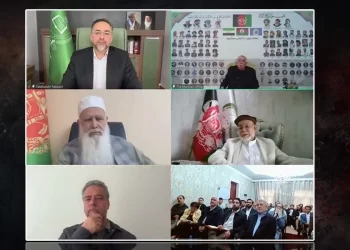
Anti-Taliban figures and supporters take part in a virtual meeting marking the anniversary of Ahmad Shah Massoud's assassination. (Photo credit: Afghanistan International)
Analysis

Virtual Meetings, Virtual Warnings: How Long Will the Taliban Opposition’s Cycle Continue?

15 September 2026 [t_time:1789498076]
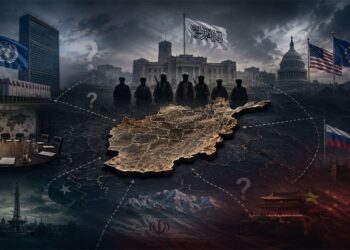
Afghanistan sits at the center of competing global powers, from the UN and Washington to Moscow, Beijing, Tehran, and Islamabad, as the world remains divided over how to handle the Taliban. (Photo credit: AI)
Analysis

Afghanistan Caught in Strategic Ambiguity: What Is the World Doing About the Taliban?

16 August 2026 [t_time:1786889025]
The Afghanistan Freedom Front accuses the Taliban of killing and wounding protesters demonstrating against mining operations in Takhar and Badakhshan provinces, claiming the group violently suppressed demonstrations against resource extraction. (Photo Credit: X/@AFF)
Afghanistan News

Five Years After the Fall, Afghanistan Freedom Front: Afghanistan Faces Deep Political Deadlock

15 August 2026 [t_time:1786797615]

Latest

Loading latest news...

Popular stories

  • An aerial view shows collapsed buildings and widespread damage following an earthquake in Panama (Photo: Reuters)

    More Than 200 Aftershocks Recorded in Panama Since Friday’s Earthquake

    Share
    Share Tweet
  • Axios: Trump Expects Ukraine Not to Attack Russian Oil Refineries

    Share
    Share Tweet
  • UN Report Reveals Shifts in Family Attitudes and Rise in Domestic Violence in Afghanistan

    Share
    Share Tweet
  • The Politics We Inherited: Rethinking Afghanistan’s Political Culture

    Share
    Share Tweet
  • Mujahid: Pakistan Should Address Its Internal Problems Instead of Making Accusations

    Share
    Share Tweet

Podcast

Insights
Insights

Join Lynne O’Donnell for 8AM’s podcast series, Insights.
Lynne talks with generals, diplomats, soldiers, journalists, politicians, activists, people who have front row seats for conflicts around the world, and citizens with a story to tell, happy or sad. For this first series, Afghanistan is the focus. Lynne and her guests talk about the collapse of the republic in August, 2021, and the impact since — for the people of Afghanistan, for the security of the region, for the safety of the world. It’s important, interesting and insightful.

Insights/22: Controlling the Narrative with Mina Sharif
byinsights8am

Controlling the Narrative

Lynne O’Donnell talks with Mina Sharif, author, activist, women’s rights campaigner, educator and mentor. They discuss who controls the narrative and who speaks for Afghanistan’s people when the Taliban appear to have seized control not only of the country but of the message, too.

Have a listen

Insights/22: Controlling the Narrative with Mina Sharif
Episode play icon
Insights/22: Controlling the Narrative with Mina Sharif
Episode Description
Episode play icon
Insights/21: Media Meltdown with Zahra Joya
Episode Description
Episode play icon
Insights/20: Terror Inc with Scott Richards
Episode Description
Episode play icon
Insights/19: Busting Stereotypes with Bushra Gohar
Episode Description
Episode play icon
Insights/18: Media Matters with Waliullah Rahmani
Episode Description
Episode play icon
Insights/17: What Goes Around Comes Around with Sima Samar
Episode Description
Search Results placeholder
Hasht-e Subh

8AM Media, also known as Hasht-e-Subh Daily, stands as Afghanistan's premier independent and non-profit newspaper, resonating as a beacon of journalistic integrity since its establishment in June 2007 by esteemed Afghan journalists and human rights advocates. With a steadfast commitment to citizen journalism and civic education, Hasht-e-Subh Daily has earned its place as the most esteemed publication in the nation.

Publisher: Sanjar Sohail
Email: [email protected]
Executive Director: Parwiz Kawa
Email: [email protected]

Read More

Ala al-Din Jahansuz: A King Fond of Poetry and Music

Saudi Arabia Versus the Houthis: A Test of Reliance on America

International Day of the Girl: Stories of Victims Cut Off from the World

Distrust in Banking System Pushes Many Citizens to Keep Their Money at Home

Two People Killed in Clashes with Taliban in Kandahar

Editor’s Choice

Every Saturday morning, 8AM MEDIA English Services Department will guide you through the week’s biggest stories from Afghanistan and the international community.

Subscribe

© 2026 - ©Hasht-e Subh Daily

No Result
View All Result
8am.Media
پښتو ویب‌پاڼه
ویب‌سایت فارسی
اۉزبېکچه ویب‌سایت
  • Home
  • News
    • Afghanistan News
    • World News
  • Opinion
    • Editorial
    • Analysis
  • Reports
    • Daily Reports
    • Investigative Reports
  • Society
    • The story of people
  • Women’s Word
  • Columns
    • Three Years After Afghanistan’s Fall: The Taliban’s Resurgence
    • Towards Equality
    • The Resurgence of the Taliban: Two Years Since Afghanistan’s Fall
    • Hebatullah Report Special Edition
    • Resistance for Education Special Edition
    • Special Column on Taliban’s Education Curriculum
    • Nawroz
  • Interviews
  • Contact Us
    • About Us
    • 8AM MEDIA Annual Awards
    • Submit an Article to Hasht-e-Subh
  • 8am.media

© 2026 - ©Hasht-e Subh Daily