• 8AM.MEDIA
  • ویب‌سایت فارسی
  • پښتو ویب‌پاڼه
  • اۉزبېکچه ویب‌سایت
  • Podcast
Sunday, October 11, 2026
Hasht-e Subh
  • Home
  • News
    • Afghanistan News
    • World News
  • Opinion
    • Editorial
    • Analysis
  • Reports
    • Daily Reports
    • Investigative Reports
  • Society
    • The story of people
  • Women’s Word
  • Columns
    • Three Years After Afghanistan’s Fall: The Taliban’s Resurgence
    • Towards Equality
    • The Resurgence of the Taliban: Two Years Since Afghanistan’s Fall
    • Hebatullah Report Special Edition
    • Resistance for Education Special Edition
    • Special Column on Taliban’s Education Curriculum
    • Nawroz
  • Interviews
  • Contact Us
    • About Us
    • 8AM MEDIA Annual Awards
    • Submit an Article to Hasht-e-Subh
  • 8am.mediaBack
Subscribe
No Result
View All Result
  • Home
  • News
    • Afghanistan News
    • World News
  • Opinion
    • Editorial
    • Analysis
  • Reports
    • Daily Reports
    • Investigative Reports
  • Society
    • The story of people
  • Women’s Word
  • Columns
    • Three Years After Afghanistan’s Fall: The Taliban’s Resurgence
    • Towards Equality
    • The Resurgence of the Taliban: Two Years Since Afghanistan’s Fall
    • Hebatullah Report Special Edition
    • Resistance for Education Special Edition
    • Special Column on Taliban’s Education Curriculum
    • Nawroz
  • Interviews
  • Contact Us
    • About Us
    • 8AM MEDIA Annual Awards
    • Submit an Article to Hasht-e-Subh
  • 8am.mediaBack
No Result
View All Result
Hasht-e Subh
No Result
View All Result

Ethnic Bias and Pretextual Obstructions: Persian-Speaking Citizens Face Harassment in Taliban Courts

Mohammad Farhaad Mohammad Farhaad
4 September 2024 - Solar Hijri Date: 1403/06/14 [t_time:1725457083]
Ethnic Bias and Pretextual Obstructions: Persian-Speaking Citizens Face Harassment in Taliban Courts

Some Afghan citizens who have sought official document processing at the Taliban-run courts in Kabul and various provinces have expressed dissatisfaction with the judges’ biased behavior. They report that Taliban judges treat applicants differently when issuing marriage certificates, marriage documentation, single status certificates, and inheritance documents. These citizens claim that judges appointed by the Taliban harass non-Pashtun applicants due to ethnic and regional differences. They urge the Taliban to abandon ethnic, regional, and linguistic biases and provide equal services to all applicants. Political analysts, however, believe such discriminatory practices will persist until the country’s judicial institutions are purged of unqualified and illiterate individuals.

Shekab (pseudonym), a native of Kapisa province who has lived in Kabul for about 25 years, told the Hasht-e Subh Daily that after five months of frustration, he finally obtained a marriage certificate from the Taliban-run court in Kabul. He explains that his wife lives abroad, and he needed this official document to join her.

Shekab, who managed to obtain the marriage certificate after five months, complains about the biased treatment he faced from the Taliban judges: “When I submitted my application to one of the courts, it took three months for my turn to come. I was delayed for about two months before receiving the marriage certificate. Initially, they requested my identity card confirmation from the Civil Registration Authority. When I responded, they required confirmation of my wife’s identity card. After responding to this request, they sent me to the airport to verify my wife’s travel to Kabul.” According to him, obtaining responses to these requests took 2 to 7 days each.

Shekab mentions that a friend from Logar province, who applied for a marriage certificate at the same time, received it just a week after his turn: “Since he was Pashtun, he was not asked for identity verification or sent to the airport. They only required a witness, and I was his witness, and he was simply told to come back the following week to collect the certificate.”

The citizen notes that every time he visited the court for his marriage certificate, he faced strange and insulting questions from the judge and administrative staff. He attributes this mistreatment to the judges’ bias against Tajiks, saying: “The court’s attitude disheartened me until I finally received the certificate. The judge asked me: ‘Is there no one in Afghanistan who would marry you that you had to get a wife from abroad?'”

Sayed Anwar (pseudonym), a resident of a district in Maidan Wardak province, needs a single status certificate to travel abroad. He says that the province courts refuse to issue such a document due to ethnic and religious differences: “Three months ago, I went to the primary court and submitted my application. They requested a confirmation from the mosque’s imam. I provided it, and when I met the judge, he asked why I needed this document. I told him it was for a trip to America. He raised his eyebrows and said: ‘You are single, and we don’t need to issue you a certificate.'”

Sayed Anwar adds that despite explaining and swearing that he is single but needs the official document, the judge ignored his explanations and ordered him to leave immediately and not return for the document. He attributes this treatment to the judge’s ethnic bias against non-Pashtun residents of the province, stating: “The court, passport office, Civil Registration Authority, and all government offices in Maidan Wardak province belong to Pashtuns, and if any work is done for Tajik or Hazara residents, it is either delayed or done with great difficulty.”

These citizens urge the Taliban to address such discriminatory practices in the courts and provide equal services to all applicants regardless of ethnic, regional, religious, or linguistic differences.

Political analysts describe the presence of ethnic, religious, and linguistic biases in Taliban-controlled institutions as unprofessional behavior and suggest that the only way to prevent such discrimination is by employing qualified and educated individuals in government positions.

Farmanullah Hoshmand, a political analyst, tells the Hasht-e Subh Daily: “After the fall of Kabul, the Taliban dismissed professional and educated judges and replaced them with individuals who had only attended religious schools and lacked professional training. Naturally, these individuals will treat people unprofessionally.” He adds: “In my opinion, as long as educated and professional judges are not appointed to the courts, discriminatory practices based on ethnicity, language, and religion will continue, and there will be little that the public can do.”

During their three years of rule, the Taliban have repeatedly been accused of ethnic, linguistic, and religious biases. Reports indicate that Tajik, Uzbek, and Hazara employees in government offices face the constant fear of dismissal and must tolerate the excuses of Taliban officials.

You can read the Persian version of this daily report here:
تعصبات قومی در قالب بهانه‌جویی؛ فارسی‌زبانان در محاکم طالبان توسط قاضیان آزارواذیت می‌شوند | روزنامه ۸صبح 

ShareTweetSendSendShare

Related Posts

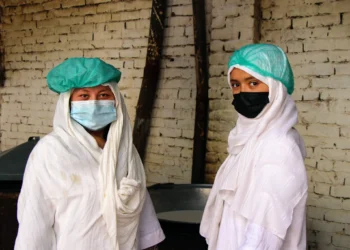
Two Afghan girls wearing face masks and protective hair coverings stand together in a food preparation area (Photo: UNDP)
Afghanistan News

UN Emphasizes Girls’ Role in Afghanistan’s Future

11 October 2026 [t_time:1791711791]
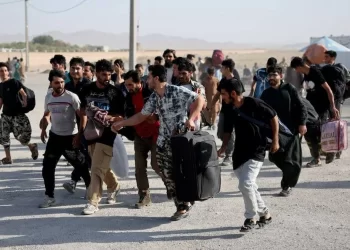
Afghan refugees carry their belongings as they move through a border crossing (Photo: REUTERS)
Afghanistan News

Taliban: More Than 100 Afghan Migrant Families Return to the Country

11 October 2026 [t_time:1791709281]
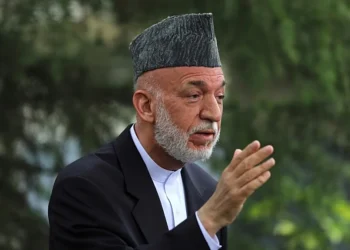
Hamid Karzai – Former President of Afghanistan (Photo: AP)
Afghanistan News

International Day of the Girl: Karzai Calls for Schools and Universities to Reopen to Girls

11 October 2026 [t_time:1791708573]

Latest

Loading latest news...

Popular stories

  • An Afghan woman gazes out of her home, reflecting the isolation and challenges faced by women in Afghanistan under Taliban rule. (Photo Credit: 8am.media)

    UN Report Reveals Shifts in Family Attitudes and Rise in Domestic Violence in Afghanistan

    Share
    Share Tweet
  • Pakistan and the Yemen War: Balancing Between Riyadh and Tehran

    Share
    Share Tweet
  • Iraq Reports Export of Two Million Barrels of Crude Oil Through Strait of Hormuz

    Share
    Share Tweet
  • Al-Qaeda Releases Hamza bin Laden Message on 9/11 Anniversary

    Share
    Share Tweet
  • Taliban Shoot Young Man from Herat After Torturing Him with Hands Tied

    Share
    Share Tweet

Podcast

Insights
Insights

Join Lynne O’Donnell for 8AM’s podcast series, Insights.
Lynne talks with generals, diplomats, soldiers, journalists, politicians, activists, people who have front row seats for conflicts around the world, and citizens with a story to tell, happy or sad. For this first series, Afghanistan is the focus. Lynne and her guests talk about the collapse of the republic in August, 2021, and the impact since — for the people of Afghanistan, for the security of the region, for the safety of the world. It’s important, interesting and insightful.

Insights/22: Controlling the Narrative with Mina Sharif
byinsights8am

Controlling the Narrative

Lynne O’Donnell talks with Mina Sharif, author, activist, women’s rights campaigner, educator and mentor. They discuss who controls the narrative and who speaks for Afghanistan’s people when the Taliban appear to have seized control not only of the country but of the message, too.

Have a listen

Insights/22: Controlling the Narrative with Mina Sharif
Episode play icon
Insights/22: Controlling the Narrative with Mina Sharif
Episode Description
Episode play icon
Insights/21: Media Meltdown with Zahra Joya
Episode Description
Episode play icon
Insights/20: Terror Inc with Scott Richards
Episode Description
Episode play icon
Insights/19: Busting Stereotypes with Bushra Gohar
Episode Description
Episode play icon
Insights/18: Media Matters with Waliullah Rahmani
Episode Description
Episode play icon
Insights/17: What Goes Around Comes Around with Sima Samar
Episode Description
Search Results placeholder
Hasht-e Subh

8AM Media, also known as Hasht-e-Subh Daily, stands as Afghanistan's premier independent and non-profit newspaper, resonating as a beacon of journalistic integrity since its establishment in June 2007 by esteemed Afghan journalists and human rights advocates. With a steadfast commitment to citizen journalism and civic education, Hasht-e-Subh Daily has earned its place as the most esteemed publication in the nation.

Publisher: Sanjar Sohail
Email: [email protected]
Executive Director: Parwiz Kawa
Email: [email protected]

Read More

Pakistan’s President Suspends Imran Khan’s Party-Led Provincial Government

Republican Lawmakers Seek to Challenge Trump’s Oil Deal with Putin

UN Emphasizes Girls’ Role in Afghanistan’s Future

Taliban: More Than 100 Afghan Migrant Families Return to the Country

International Day of the Girl: Karzai Calls for Schools and Universities to Reopen to Girls

Editor’s Choice

Every Saturday morning, 8AM MEDIA English Services Department will guide you through the week’s biggest stories from Afghanistan and the international community.

Subscribe

© 2026 - ©Hasht-e Subh Daily

No Result
View All Result
8am.Media
پښتو ویب‌پاڼه
ویب‌سایت فارسی
اۉزبېکچه ویب‌سایت
  • Home
  • News
    • Afghanistan News
    • World News
  • Opinion
    • Editorial
    • Analysis
  • Reports
    • Daily Reports
    • Investigative Reports
  • Society
    • The story of people
  • Women’s Word
  • Columns
    • Three Years After Afghanistan’s Fall: The Taliban’s Resurgence
    • Towards Equality
    • The Resurgence of the Taliban: Two Years Since Afghanistan’s Fall
    • Hebatullah Report Special Edition
    • Resistance for Education Special Edition
    • Special Column on Taliban’s Education Curriculum
    • Nawroz
  • Interviews
  • Contact Us
    • About Us
    • 8AM MEDIA Annual Awards
    • Submit an Article to Hasht-e-Subh
  • 8am.media

© 2026 - ©Hasht-e Subh Daily