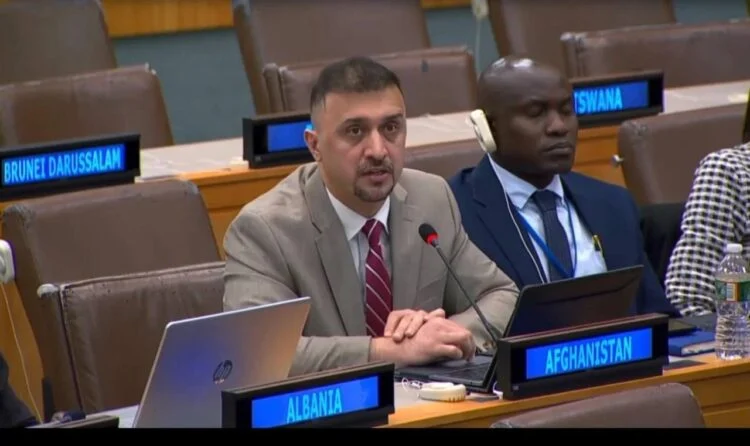
Naseer Ahmad Faieq, chargé d’affaires of Afghanistan’s Permanent Mission to the United Nations, has said that freedom of religion and belief faces serious and growing restrictions under Taliban rule.
Afghanistan’s Permanent Mission to the UN published the statement on Thursday, October 22. It was delivered to the Third Committee of the 81st session of the UN General Assembly.
According to the statement, Faieq said religious and ethnic minorities, particularly Shia Muslims, including Hazaras and Ismailis, continue to face discrimination, restrictions on religious practices, and security threats.
He stressed that restrictions on religious ceremonies and observances, interference in the affairs of religious institutions, and the imposition of a single interpretation of religion undermine Afghanistan’s longstanding religious and cultural diversity.
Faieq also expressed concern over the Taliban’s use of religious interpretations to justify systematic discrimination against women and girls, including depriving them of education, employment, and participation in public life.
“The Taliban’s discriminatory policies must not be equated with Islam or Afghan culture. The Taliban’s denial of people’s fundamental rights stands in clear contradiction to Islamic principles of justice, human dignity, and the pursuit of knowledge,” Faieq said.
Since the Taliban returned to power, religious freedoms and practices that conflict with the group’s interpretation of religious texts have faced serious restrictions and discrimination across Afghanistan.