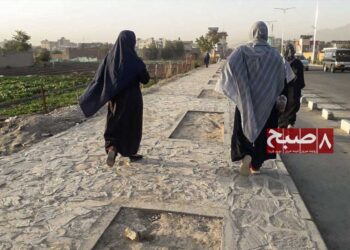
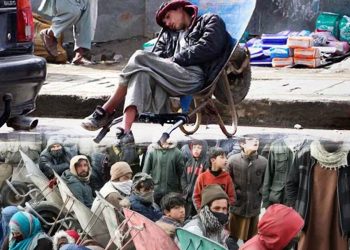
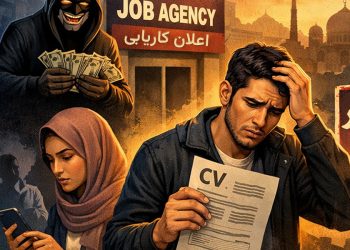
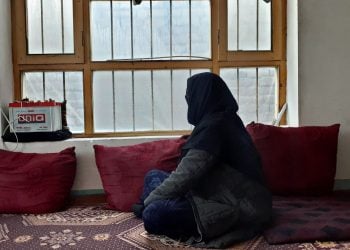
Several girls in Kabul complain about the rise of fake job-search pages on social media. They say the operators of these pages misuse the names of international organizations, demand money from applicants, and in some cases even threaten them. These girls state that after the Taliban regained control of Afghanistan, many women lost their jobs and became the primary targets of these fraudsters.
Several of these girls, in conversations with the Hasht-e Subh Daily, say the operators of these pages create accounts under the names of organizations such as UNICEF, the World Health Organization (WHO), and other UN agencies, deceiving people with promises of employment. They urge other women to verify the authenticity of pages and job announcements when applying for jobs online to avoid falling victim to such scams.
Shahira, one of the victims of fake job-search platforms in Kabul, says that the number of such pages on social media is increasing and that no institution exists to track or hold their operators accountable. According to her, these pages collect money from people using the names of international organizations, and after receiving the payment, they block their numbers and accounts.
She describes her experience as follows: “In a Telegram group, I saw a job announcement for UNHCR, which said to message for more information. I sent a message and they told me to send 500 afghanis along with my CV and photos. I sent all the documents and paid the 500 afghanis as a credit card payment, but later I realized they had blocked me everywhere and that it had only been a scam. I was very upset because I had borrowed that money.”
However, Shahira says this was not the only time she was deceived. She believes that fraudsters exploit poverty and unemployment, especially among women who urgently need work. She recounts her second experience: “There was a company called ‘Sadraye Shahr’ that said it would immediately find me a job and charged 250 afghanis for registration. I thought maybe this one was legitimate because it had a physical office and did not appear to be fraudulent. But after receiving the money, they closed their office, and no trace of them remained. People must be very careful and verify the credibility of such cases. People have become poor and, for a piece of bread, they trust quickly. Of course, they are not to blame either, because they are compelled to do so.”
Shahira is not alone; Mahboba has also fallen prey to fake job-search pages on social media. Mahboba says these individuals must be prosecuted, but under the current circumstances and under Taliban rule, such follow-up is impossible. She says girls should expose these pages so others do not get deceived.
Mahboba adds, “I was looking for a job. There was a page under the name of UNICEF. I sent a message; they asked for my CV and all my documents, and even asked for a photo. I did not send a photo, so they insulted me and blocked me, writing that if you do not want a job, do not waste my time. I am active on social media; I shared that page on other platforms so no one would be deceived.”
Mursal, one of the residents of Kabul, says her friend had a worse experience than Mahboba and Shahira. According to her, one of the fake job-search pages asked her friend to send a photo and then threatened that unless she paid money, her photos would be posted on various pages.
Mursal adds: “After the Taliban’s takeover, a large number of women became unemployed and were widely searching for jobs. My friend was one of them and had applied for a position. Through WhatsApp, they requested her photos and documents, and she thought it was an official recruitment process because the individual behaved very formally. But after receiving the photos, he threatened that either she should pay two thousand afghanis or the photos would be published. At a time of high unemployment, my friend could not gather that money, but since the photos were formal, she was not too distressed and eventually blocked that person.”
The largest job-announcement platforms in Afghanistan are “ACBAR” and “Scholarships for Afghanistan”, which most people use to search and apply for jobs. According to girls in Kabul, a large number of fake pages have recently become active in this sector, exploiting people’s needs and unemployment.
The victims are usually women, youth, and families under economic pressure who take any income opportunity seriously. These groups, using the names of reputable organizations, official-looking templates, and requests for documents and money, gain people’s trust and then exploit them.
Some of these pages and channels, with promises of quick employment, high income, and jobs in reputable companies, collect applicants’ personal information and commit financial fraud. These individuals often create pages on social media or design websites resembling legitimate job-search platforms, requesting applicants to send documents or pay money for registration. After receiving the money or identity information, they cut off communication and disappear.
Previously, the Women and Children’s Research and Advocacy Network reported that more than 90 percent of women in Afghanistan lost their jobs after the Taliban’s takeover.
This report, titled “The Impact of Taliban Decrees on Women and Girls in Afghanistan”, was published covering the period from October 2024 to March 2025, and was carried out in ten provinces of the country, including Balkh, Kabul, Badakhshan, Herat, Nangarhar, Wardak, Ghazni, Ghor, Logar, and Bamiyan.
Based on the findings of this research, the decrees and restrictions imposed by the Taliban have extensively deprived women of participation in social, educational, and economic sectors, exposing their lives to multiple psychological, economic, and violent crises.
You can read the Persian version of this report here: