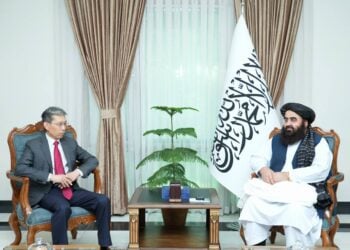
When Kabul fell to the Taliban in August 2021, Afghanistan’s fragile experiment with modern governance collapsed almost overnight. Among the most striking casualties of this transition were the thousands of Afghan graduates educated abroad-particularly in India who had returned home to serve in ministries, universities, and civil service institutions. These professionals, trained in law, public administration, engineering, and medicine, embodied Afghanistan’s attempt to integrate into the global order. Yet, within months of the takeover, they were systematically sidelined. In their place, madrasa-trained cadres-products of religious seminaries of Pakistan emphasizing Quranic memorization, Hadith studies, and Taliban-approved jurisprudence were recruited into the machinery of state.
Between 2001 and 2021, tens of thousands of Afghan students passed through technical institutions and universities across the globe. This massive educational corridor represented a critical pipeline of human capital. While a significant portion of diaspora youth educated in Western countries chose to remain abroad after graduating, the scholars under the Indian Council for Cultural Relations (ICCR) scholarship scheme stood apart. Numbering over 65,000 with an estimated 30 percent female representation, these graduates were distinguished by exceptional academic standing and an overwhelming commitment to return home. Bound by cultural affinity and robust bilateral frameworks, young Afghans voluntarily went back year after year to form the technical backbone of the republic’s civil service, economic ministries, engineering enterprises, diplomatic corps, and social affairs sector.
For decades, India’s massive investment in the education of the young generation of Afghanistan served as a human bridge of trust, development, and democratic capability connecting the two nations. However, this long-term investment was deliberately targeted and broken by Pakistan and its proxy networks in Kabul. By engineering the rapid takeover of the state and forcing a radical shift in leadership, these cross-border networks aimed to systematically erase India’s socio-technical footprint in Afghanistan, destroying a generational bridge built on shared growth and replacing it with ideological dependency.
This administrative educational displacement is the quiet tragedy reshaping Afghanistan. The new regime executed a profound institutional replacement of the state’s own theological system. Overnight, that rich well of human capital, especially women, was neutralized. In its place, the regime engineered an ideological overhaul, conferring sweeping degrees equivalent to those of alumni of traditional religious seminaries. More than 15,000 madrasa graduates received formal credentials in education, judiciary, and administration. Crucially, this wave brought in a heavy influx of cadres schooled in external networks, particularly Pakistani madrasas, who were fast-tracked into high-ranking regulatory, judicial, and academic posts. Men steeped exclusively in medieval jurisprudence and cross-border theological curricula superseded secular technocrats, reducing modern statecraft to an exercise in ideological orthodoxy.
This shift was a deliberate project to reshape public administration that was staffed by skilled graduates from India and other near and far Countries into an ideologically staffed apparatus. The Taliban’s expansion of madrasas from roughly 5,000 before 2021 to more than 30,000 by 2026, enrolling over 3.65 million children, illustrates the scale of this transformation. Public schools and universities were reshaped, curricula rewritten, and secular expertise erased. The message was clear: loyalty matters more than competence, and religious indoctrination was to replace technical knowledge as the foundation of governance.
The human toll of this purge has fractured a generation. Labor monitors and local assessments reveal that more than 20 percent of government professionals who returned from India over the past two decades have completely vanished from the formal economy. Faced with systemic suspicion, surveillance, and a total ban on female employment in public sectors, they live in internal exile. Engineers now haul goods in chaotic markets, former administrators drive unmarked taxis, and thousands have burned their hard-earned degrees to slip across borders into perilous irregular migration streams.
The systemic failure triggered by this brain drain has dealt a catastrophic blow to national survival. According to United Nations Development Programme (UNDP) assessments, the immediate economic fallout has shaved 20 to 27 percent off the country’s GDP trajectory within the first few years, wiping out an estimated $5 billion in licit economic activity and destroying nearly 700,000 jobs. Financial monitors calculate that barring women and secular experts from professional life drains the struggling economy of over $1.5 billion annually. With public infrastructure left unmanaged by unspecialized cadres, trade deficits soaring, and over 70 percent of the population sliding into deep subsistence insecurity, poverty has surged to affect nearly three-quarters of all Afghans.
The long-term consequences of swapping technical expertise for cross-border religious dogmatism threaten to permanently hobble the nation. As public health systems fray, infrastructure rots without maintenance, and economic management is abandoned to the unqualified, Afghanistan is cutting itself off from the basic mechanics required to interact with the global community.
Despite the political collapse and visa halts, India refused to entirely sever this vital educational lifeline. Immediately following August 2021, the Indian government ensured that thousands of Afghan students already enrolled in Indian universities were granted visa extensions, financial relief, and scholarship renewals so they could complete their degrees without interruption. Recognizing the severe domestic bans imposed on female literacy and higher education inside Afghanistan, India subsequently adapted its strategy by launching dedicated online scholarship programs through the e-VidyaBharati (e-VB) digital portal. By offering 1,000 fully funded online university slots annually, Indian institutions have allowed Afghan youth, most crucially girls trapped at home, to quietly enroll in undergraduate and postgraduate dyouth, programs in management, computer science, and liberal arts. This digital corridor bypassed border restrictions and domestic bans, keeping the pilot light of Afghan female education burning from afar.
It is true that when a regime systematically changes the demography with an old mindset that is too willing and tries to rebuild it, then it signs away its horizon. The substitution of modern is unwillingly bought with external madrasa minarets has left behind a hollowed-out state, one where competence has been outlawed, and a nation’s brightest minds are forced to watch their country’s future dismantle from the shadows.