Afghanistan today is, above all, trapped in an unfinished transition, from a society shaped by clan loyalty, informal power, and coercion to one built on citizenship, law, and institutions. This is not simply a story of poverty or “rural life.” It is a historical pattern in which social relations still revolve around kinship, custom, group loyalty, and unchecked command, where public institutions, the rule of law, universal education, and equal citizenship have not become the foundations of collective life. What once helped communities survive now produces erosion, stagnation, and the repeated reproduction of violence.
To understand Afghanistan’s reality, we must abandon a common illusion: we cannot assess the country through its cities alone. For now, forget the capital and think about the village, where a large share of Afghans live within local networks, where the state and basic services are weak or absent, and where fear, dependency, and informal power brokers often determine everyday life. Any political plan that does not understand village realities will remain, at best, a paper exercise, another slogan.
Long before modern political science, Ibn Khaldun described a cycle familiar to Afghanistan: groups rise through tight solidarity, build power, and then, if they fail to build durable institutions, they are replaced by another group driven by the same logic. Afghanistan’s history is full of such turnovers, and the Taliban have grown precisely in this institutional gap. Where law is weak, coercion and obedience outweigh citizenship, and when poverty and insecurity deepen, this regression becomes easier and faster.
The conclusion is clear: Afghanistan needs a real transition, but not a rhetorical one. Transition means moving from identity-based politics to equal citizenship, from personal rule to the rule of law, from closed patronage networks to durable institutions. And if this transition does not place village communities and marginalized Afghans at the center, it will fail. A politics trapped among leaders, statements, and identity disputes neither understands the village nor can it mobilize village communities, and without the village, unity cannot become real.
Afghanistan is not living a normal moment. Here, politics is bread, security, and the future. Yet the dominant style of Afghan politics has, for years, become a tired performance: statements, meetings, conferences, and grand promises, without visible change in people’s lives. If we speak plainly, with this method, we will get nowhere. The Taliban continue their authoritarian rule because external actors, in practice, prioritize “minimum stability” and risk management for their own interests more than Afghan freedom. Many external levers, instead of creating serious pressure, function in ways that sustain the status quo: the Taliban remain, society is worn down, migration continues, and the crisis stays “manageable” for outsiders, while never ending for ordinary Afghans.
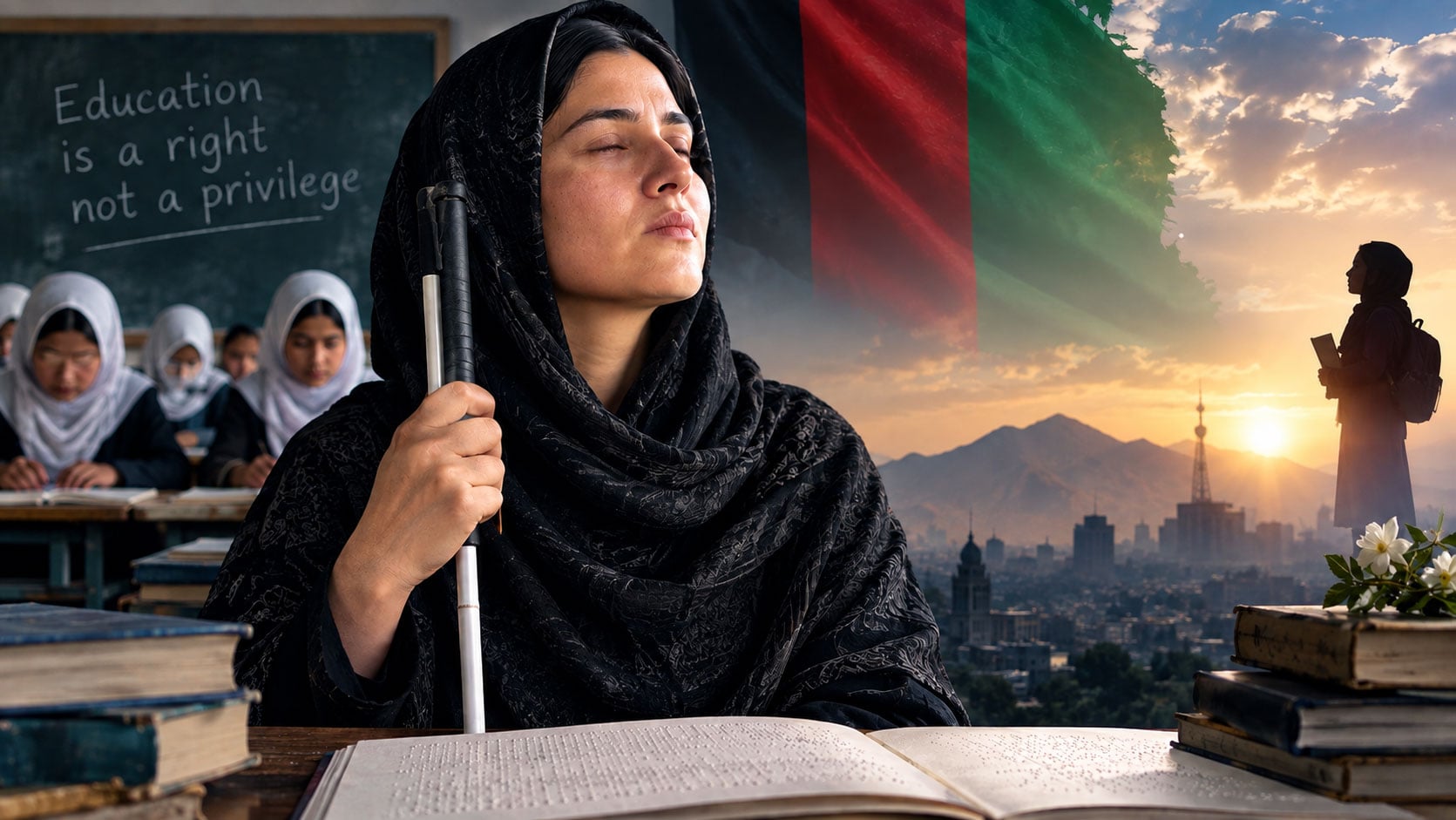
The Taliban do not survive through force alone. They also survive through money, financial channels, trade, and regional arrangements. In this equation, the Taliban do not pay the price; the people do: through deepening poverty, the exclusion of women and girls from education and work, fear-driven silence, the collapse of human capital, and a long-term regression that pushes the country back decades, and in some domains, generations. In recent years, the Taliban have not simply been “strict.” They have turned plunder, repression, and humiliation into daily order: an order of fear, enforced silence, dependency, and social control. When a society is desperate for bread, unprotected in security, and hopeless about the future, many people shift from resistance to mere survival, and this survival mode feeds the machinery of repression.
Alongside this dark picture, however, a new reality has emerged that can become more than the “tragedy of exile”: a large share of Afghanistan’s educated and professional class has been pushed out and now searches for solutions from the diaspora. If this capacity is organized well, it can become a historic opportunity to develop ideas, narratives, tools, and support networks, while inside the country remains under authoritarian rule, where independent activity, especially cultural and political work, is almost entirely prohibited.
So instead of the questions repeated for years, “Who is the leader?” or “Which faction is more legitimate?”, we should ask a more useful one: How do we build real hope, hope people can touch, when trust inside the country is broken, and external actors largely pursue their own preferred stability?
One major reason past “unity” efforts failed is that we defined unity incorrectly. We treated unity as a gathering of leaders, not as practical alignment around a few limited, measurable goals. Afghans do not need more statements; they need impact. Any project that cannot change everyday life will, sooner or later, become just another voice in the noise. Unity today does not mean everyone agrees on everything. It means diverse actors accept a minimum platform and deliver a few concrete actions with discipline, transparency, accountability, and measurable outcomes. Unity becomes hollow when it is only conferences and declarations; it becomes credible when it produces results, and only then can trust return, slowly but genuinely.
But why does society “freeze,” and why do these words so rarely become movement? Because deprivation in Afghanistan is not only a lack of income. Three interconnected pressures operate simultaneously on the lives of the majority, draining bread, security, and willpower, and then reproducing the same conditions again:
1) Economic pressure
Dangerous debt, usury and crushing interest, predatory middlemen, hoarding, extortion, forced sales of land and livestock, and exploitative prices.
Result: Families sell assets to survive, take on worse debt, and become more dependent.
2) Coercion and powerlessness
Constant fear, no credible avenue for complaint, arbitrary orders, social humiliation, and the cutting off of water, land, and work.
Result: Instead of claiming rights, people conclude that silence is the most rational option; silence brings minimal safety, but it entrenches injustice.
3) Psychological and narrative pressure (including the misuse of religious authority)
Rumors, psychological warfare, paralyzing fatalism, blind prejudice, “us vs. them” polarization, and narratives that push people against their own interests.
Result: Society loses judgment, trust, and solidarity; collective efforts collapse before they can grow.
These pressures function like gears: economic stress deepens fear; fear narrows thinking; narrowed thinking returns the economy and society to the same predatory networks. This is where slogan-based politics fails, because it talks about symptoms while avoiding causes.
If unity and hope are to become real, Afghanistan needs an operational method, not another performance:
First, agree on shared minimums: human dignity, basic rights, non-discrimination, the right to education and work, and equal citizenship.
Second, turn talk into usable outputs: short, clear texts, division of responsibilities, reporting mechanisms, and a few simple messages people can repeat.
Third, build legitimacy from inside the country through small, low-risk village networks focused on learning, mutual aid, social support, and solving everyday problems.
Fourth, the outside world cannot be moved by slogans; professional, precise work is required, mapping the Taliban’s revenue routes, intermediaries, front companies, and choke points so the cost of cooperation rises without the first blow falling on ordinary people.
A decisive factor in Afghanistan is religion, not only as private belief, but as a channel of meaning and a field of social power. In many villages, people trust mosques, pulpits, and religious networks more than state institutions or media. Any strategy that ignores religion ignores one of the country’s most important social channels. Religion can function in two ways: as a source of service and justice, or as an instrument of control, and the Taliban have strengthened the latter.
A constructive role for religion appears when it supports justice and service: opposing predatory interest and hoarding, encouraging education and skills, supporting the poor and vulnerable, and anchoring ethics, fairness, and dispute resolution. But in its control-oriented form, religion becomes a tool of boundary-making and obedience: “us vs. them” language, criminalizing questions, sanctifying command, controlling aid, and restricting education and work, locking society into fear. This form thrives where poverty and insecurity are hig,h and law is weak, because it offers “instant psychological security.” The response is not a religious war. It is social: strengthening service-oriented community networks, improving financial and social transparency, expanding functional literacy, and building mutual aid, especially in villages. The more collective capacity and transparency grow, the harder it becomes for control-oriented religion to feed on fear and dependency.
If we ask how hope returns, the answer is straightforward: hope does not return through slogans. It returns through visible honesty and measurable work. Real unity is not built in conferences; it is built through a shared method: agreement on minimums, producing usable outputs, building an internal center of gravity, especially in villages, and doing precise, professional external work.
Afghanistan today needs, more than anything, a path that understands the village and builds institutions from the village outward, a path that moves toward citizenship and the rule of law, not through speeches, but through sustained work, accountability, and results.