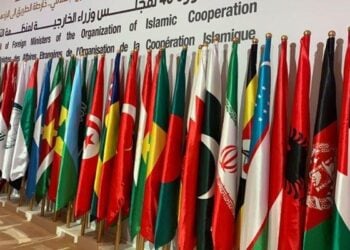
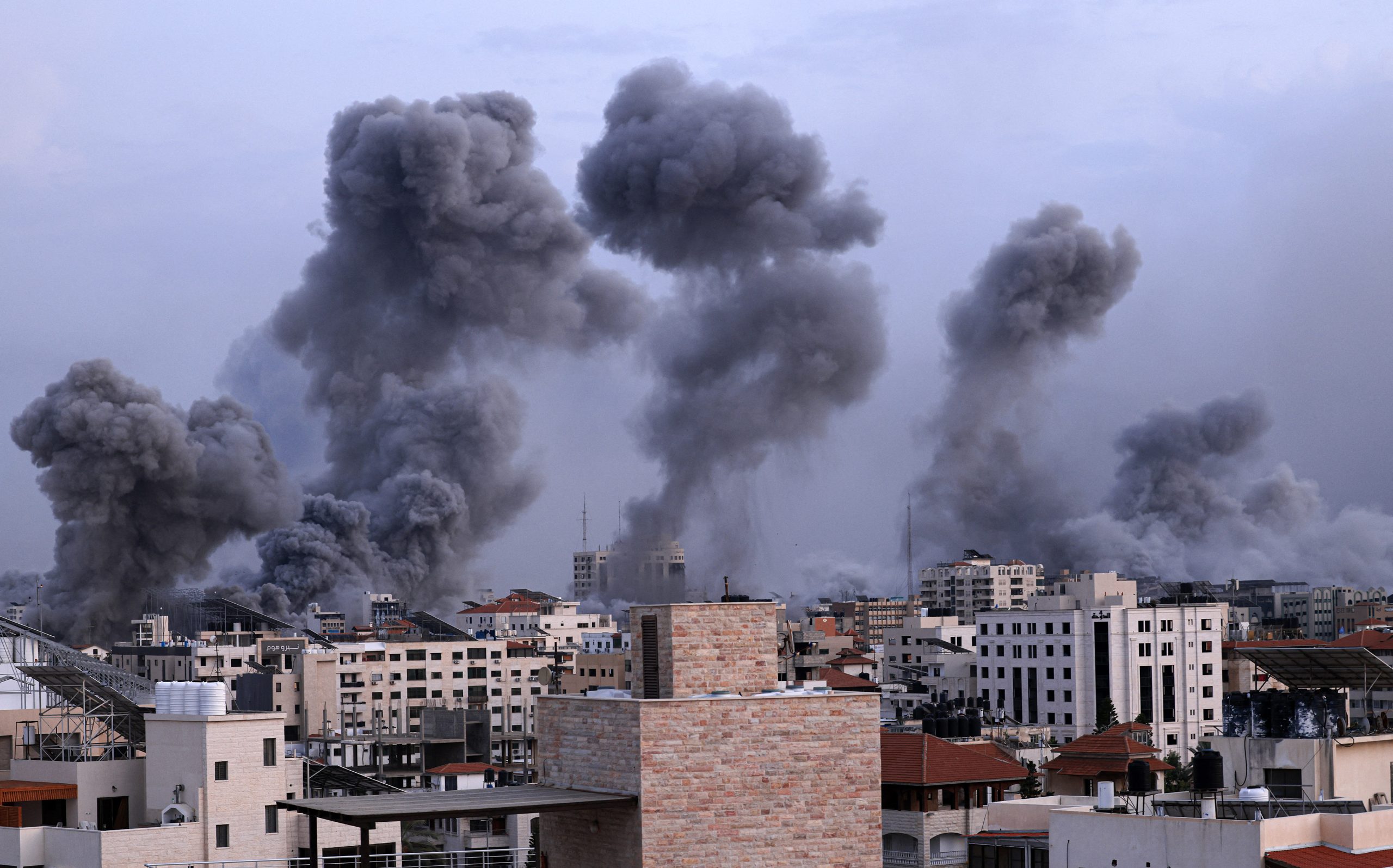
The war in Gaza entered its 38th day. Israel’s ground and air attacks take victims uninterruptedly from the residents of Gaza. There is no news of a permanent ceasefire, but Benjamin Netanyahu’s government announced that it will implement a four-hour ceasefire daily. The most recent event regarding the Gaza war was the holding of an emergency meeting of the Organization of Islamic Cooperation (OIC) in Riyadh, where the participants condemned the Israeli army’s retaliatory attack on Gaza, calling for a permanent ceasefire, which, however, cannot be realized through advice.
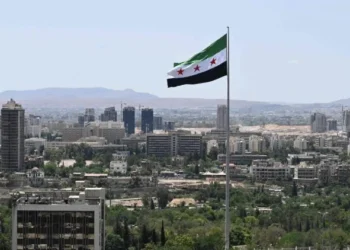
Probing Syria’s position regarding the Gaza war is of utmost importance due to being a member of the so-called “axis of resistance.” Therefore, Syria constitutes a significant part of the story and should enter the arena to support Hamas, which has not happened though. Talking about the third front evokes Lebanon’s Hezbollah, Syria, and the Islamic Republic of Iran, respectively. Assad’s government has not gone beyond diplomatic frameworks in criticizing Israel. Meanwhile, Damascus has severe problems with Tel Aviv. For example, the Golan Heights has been occupied by Israel since 1967 and Syria has not managed to retrieve them. Israel was actively involved in Syria’s internal crisis, attempting to overthrow Bashar al-Assad’s government. Additionally, Syrian soil has witnessed Israeli airstrikes many times.
Syria has not only supported Hamas but has imposed security restrictions on Palestinians who wanted to demonstrate in support of the residents of Gaza. Bashar al-Assad has not yet appeared in the press nor has stated anything about the Gaza war. Hassan Nasrallah, the leader of Lebanon’s Hezbollah, has twice expressed his opinion in the media in support of Hamas. Simultaneously, the Islamic Republic of Iran frequently announces its position. Yemen’s Ansarullah announced its presence by firing rockets towards Israel but Assad is still silent. Even the stance of the Arab statesmen who do not have a good middle ground with the axis of resistance is more serious than al-Assad’s stance towards Israel. However, according to media reports, in a meeting with Iraqi President Abdul Latif Rashid on the sidelines of the Riyadh meeting, Bashar al-Assad said: “What perpetuates the killing machine of the Zionist regime is the West’s complicity with it.”
Considering the aforementioned points, the question is why Bashar al-Assad’s government has remained silent regarding the war in Gaza.
- The al-Assad Government Does Not Have a Good Relationship with Hamas
Syria is not on good terms with Hamas, even though it has hosted the leaders of this group for years. After Khaled Mashal and a group of Hamas leaders were expelled from Jordan in 2004, they took refuge in Syria. At that time, Mashal was the head of Hamas’s political office, working in Damascus until January 2012. When the Syrian civil war broke out, Hamas strongly defended the demands of al-Assad’s opponents, with even Mashal giving a passionate speech in support of them. In response, al-Assad blocked the Hamas office in Damascus, making the group’s leaders take refuge in Qatar.
The Syrian civil war was fateful for al-Assad, and had Russia and the Islamic Republic not intervened, his deposition would have been imminent. Hamas has adopted an active stance against Israel for almost eight years in the territory of Damascus, but in a strained situation, it not only abandoned this country but stood against it. Although the parties seemingly agreed to the normalization of relations in October 2022 with the mediation of the Islamic Republic and Hezbollah, it does not appear that the previous grudge has been adequately resolved.
Considering this background, it is arduous for the Syrian government to go to war with Israel, which is taking revenge hard, to support Hamas which is standing against it at a critical point.
- Syria Is Involved in Internal Problems
Bashar al-Assad’s government survived the devastation of the civil war, but it is still concerned about the looming danger of its aftershocks. The blows inflicted on Syria during the civil war were so devastating that it will take years to recover. For example, not long ago, al-Assad went to China and met with the officials of this country, asking for funds from Beijing to rebuild the destruction caused by the civil war. This was because Syria’s allies, which are Russia and Iran, could not afford such a cost.
For now, al-Assad is expected to prevent the resurgence of internal protests and to rebuild the ruins caused by the war, not to start a new war with Israel, particularly for the benefit of Hamas. Lest Syria gets involved in a conflict with Israel, it will experience a situation worse than a civil war, which will require a substantial amount of time and resources to return to the current situation, which this country and its allies cannot afford. Additionally, the United States, which possesses 30 military bases in Syria and supports the opposition of the Assad government like Israel, cannot remain silent.
Damascus is not in an optimal situation right now. It is reported that the forces loyal to the Islamic Republic of Iran have targeted American military bases in Syria several times, eliciting Washington’s response three times. Moreover, published reports state that Russian soldiers killed 34 armed rebels in Syria and wounded 60 others. Türkiye repeatedly targets northern Syria with airstrikes. Before Israel attacked, the territory of Damascus had almost become a battleground of global and regional powers.
- Syria Is a State, Not a Group
Despite being a member of the ” axis of resistance” led by the Islamic Republic, Syria is a government. Syria cannot be compared with groups such as Hamas, Hezbollah, Hashd al-Shaabi, Ansarullah, and other proxy groups. Being a Syrian government requires that it somewhat act independently in foreign affairs. Syria will not disregard the considerations of its allies, but it will also not go to war with Israel at its request. If Syria is going to enter the war, it will decide based on its internal situation and military power, not necessarily on the advice of others. If the al-Assad government enters the war, it will not act like Ansarullah and Hezbollah since the entry of a government into the battlefield transforms the balance to the benefit of one and the loss of the other. Thus, Israel will react adversely to the minute move by Damascus.
- Syria Conforms to the Opinion of Russia and the Islamic Republic
The government of Bashar al-Assad is a strategic ally of Russia and the Islamic Republic of Iran. These two countries contributed to the survival of the Assad government from the civil war. The safety of Damascus is still of vital importance to Moscow and Tehran. These two countries still have a military base in Syria and they played a clear and effective part in the war against ISIS in this country. Considering Syria’s vulnerabilities, Moscow and Tehran’s expediency may also be based on silence because if it keeps making rhetoric like Hezbollah or launches rockets toward Israel, it will face a sharp reaction from Israel and the United States. The al-Assad government stands out as the most effective force in the Middle East for the Islamic Republic and Russia, and they prefer to engage it in the game intelligently to avoid losses. For instance, if Hamas is weakened, it is feasible to rebuild it since it is an armed group. But if Syria is weakened, its reconstruction will be difficult and time-consuming due to being a government.
- Syria Is under the Observation of the Arab World
Syria did not have diplomatic relations with some Arab governments until recently. The reason was that the Sunni Arab governments, by supporting the Syrian protesters, viewed Bashar al-Assad’s removal from power as the way to end the crisis. The growing hostilities caused Damascus to place blame on countries such as Saudi Arabia and the UAE for the emergence of ISIS and its relocation to Syria. After the relationship between Tehran and Riyadh improved, the relationship between Sunni Arab countries and Syria also shifted. After a 12-year hiatus, Damascus was able to attend the meetings of the Arab League. Additionally, following the earthquake in Syria, Arab countries, particularly Saudi Arabia, sent financial aid to this country.
It can be concluded that the al-Assad’s government behavior may hinge on the behavior of the Arab governments towards the Gaza war. The position of the Arab governments is clear: emphasizing the establishment of a humanitarian ceasefire. Arab countries are not satisfied with the opening of a new front in the region against Israel, deeming the continuation of the war to their detriment. Therefore, if al-Assad enters into a conflict with the suggestion of the Islamic Republic, it will be accused of war-mongering and creating chaos in the region.
On the other hand, al-Assad sees the improvement of relations with conservative Arab governments as an optimal opportunity to compensate for the ruins of his country. Therefore, he does not want to confront the Arab governments again. For example, Syria remained silent about the efforts to normalize the relationship between Saudi Arabia and Israel, but the Islamic Republic reacted sharply, indicating that maintaining relations with Arab countries is important for al-Assad. It can also be argued that Damascus will no longer look at Israel through the lens of the Islamic Republic; something that will become more evident over time.