
Ghazni’s residents raise the alarm over a health system stretched thin: no beds in Giro, biased hiring in Hazara districts, and a mother left struggling to walk after a botched delivery.
Several residents in the center and several districts of Ghazni province are complaining about a lack of health centers, shortages of medicine, equipment and medical staff, and biased hiring practices in their areas. Speaking separately to the Hasht-e Subh Daily, residents described health services in their regions as dire and said they were extremely dissatisfied with the situation.
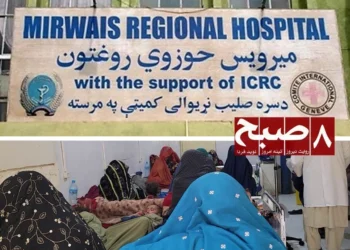
Some patients and their caregivers who sought treatment at public hospitals in Ghazni city also complained about shortages of medicine and professional staff, poor treatment by doctors, and unsanitary conditions at the provincial and regional hospitals.
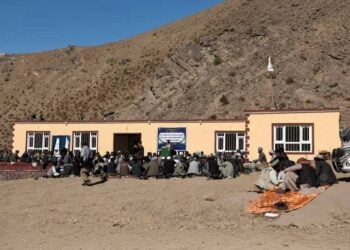
Residents of Giro district said the district does not have a single health center with inpatient beds. Meanwhile, residents of the Hazara-populated districts of Malistan, Jaghori and Nawur pointed to biased hiring, favoritism and the appointment of poorly qualified managers, alongside shortages of medicine and equipment, as major challenges.
Mohammad Asef, a Ghazni city resident whose sister-in-law recently gave birth by cesarean section at Ghazni’s provincial hospital, said she has continued struggling with complications a month after the operation. He told the Hasht-e Subh Daily that negligence by maternity ward staff, including an improperly administered injection, has left her unable to move one of her legs.
“My brother left for Iran four months ago to work,” Asef said. “His wife wasn’t feeling well, and she had an operation at this hospital a month ago. She was admitted for two days. Setting aside everything else we saw during that time, the injection was given in a way that no one with even basic medical training would do. Doctors at a private hospital told us the medicine hadn’t been absorbed and that she needed another operation. Now we’re back here again. We don’t know who to complain to about what happened, or how this next operation on her leg will go. We don’t know if her leg will heal this time or if something else will go wrong. But we have no other choice.”
Lal Gul, a resident of Giro district who brought a relative to Ghazni’s 300-bed regional hospital, said the lack of an adequately equipped health center in his district forced him to travel for hours to reach care. “Our district has a clinic with a small staff,” he said. “It only does checkups. No medicine, no beds. When a patient needs to be hospitalized, they refer us to hospitals in Andar or Ghazni. There aren’t enough facilities here either. We sleep outside because there’s nowhere for caregivers to stay. Dozens of us from Giro travel to distant hospitals for treatment.”
Health challenges in the Hazara-populated districts of Jaghori, Malistan and Nawur take a different shape. Residents there accuse the Public Health Directorate and its partner organizations of biased hiring, bias and discrimination, saying experienced local staff are dismissed under various pretexts and replaced by inexperienced managers in senior, high-paying positions.
A health worker in Jaghori district, speaking on condition of anonymity, told the Hasht-e Subh Daily that clinics in Jaghori and Malistan have been funded over the past year by an organization called Yar. “Unfortunately, this organization lacks the capacity it should have,” the worker said. “Weak leadership within the organization, combined with collusion between Public Health Directorate officials and these individuals, has put unqualified people in key positions. Doctors and health workers from the area were dismissed under various pretexts. Their posts were advertised, and the people appointed were either friends of organization officials or handpicked by the Public Health Directorate.”
The worker added that medicine and supplies once available at health centers across the province have dwindled, as funding for these centers has declined. “The same problem exists in Jaghori, Malistan and Nawur,” the worker said. “These are remote, mountainous areas, and medicine and supplies need to be stocked at health center depots. Unfortunately, this organization isn’t providing what it should. Instead, it focuses more on other areas than on ours.”
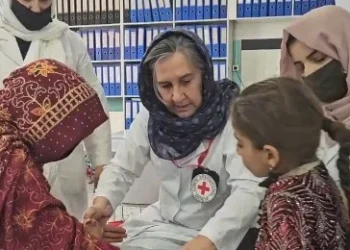
The complaints from Ghazni residents come a week after the International Committee of the Red Cross (ICRC) warned that Afghanistan’s health system risks collapse. The organization said Afghans are struggling to meet basic needs and survive, and that the country’s health system faces a growing risk of breakdown.
Yasmine Praz Dessimoz, the ICRC’s director of operations, told Agence France-Presse that humanitarian needs in Afghanistan remain vast, and that declining international aid has placed additional strain on the population and on health facilities. The organization also warned that restrictions on women’s education and employment could lead to a shortage of female health workers in the future, further limiting women’s and children’s access to health services.
You can read the Persian version of this report here:
کمبود دوا و خدمات صحی؛ مردم غزنی از نرسیدن به بیماران شکایت دارند