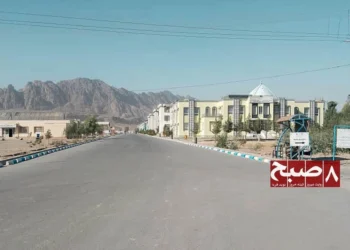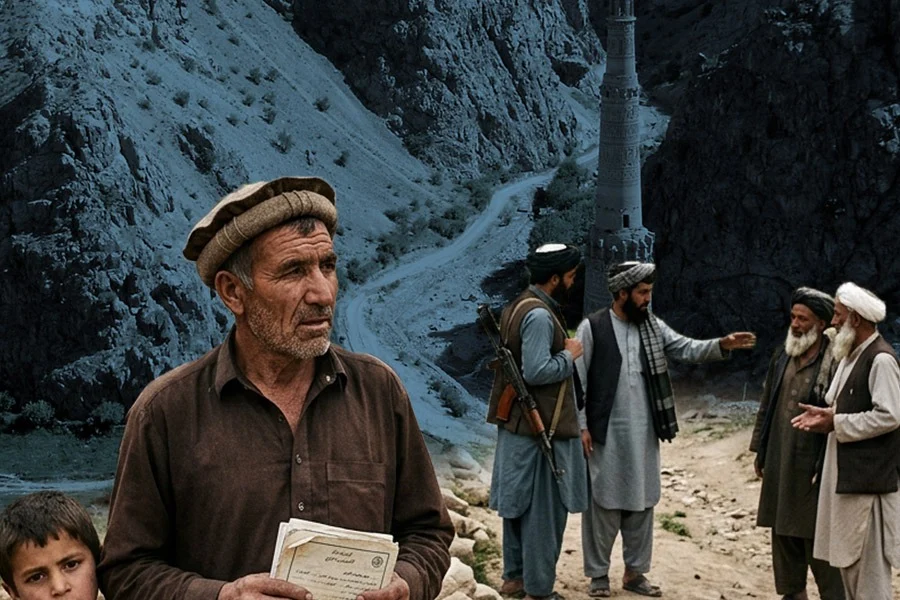
Residents of Firozkoh, the capital of Ghor Province, accuse local Taliban officials in the province of corruption, coercion, and extortion. They say there is no authority to which people can bring their complaints. According to them, the people of Ghor have been worn down over the past five years by the Taliban’s violations of their rights, forced seizures, and pressure, and no one dares to raise their voice out of fear.
In a letter sent to the Hasht-e Subh Daily under the title “Complaint Letter,” these Firozkoh residents stressed that since taking control of the country, the Taliban have looted state property, treated it as “spoils of war,” and plundered it.
Referring to the money collected from the public by Ahmadshah Dindost, the former Taliban governor of Ghor, a number of Firozkoh residents say the fate of the funds collected in the name of building a road is unclear, and there is a possibility that they were embezzled.
The letter states that the money was collected through coercion and by exploiting the sincere feelings of the people. Some people even sold their wives’ jewelry and paid the Taliban in the hope that a road would be built.
Another part of the letter states that, despite the Taliban’s announcement of a general amnesty, dozens of former soldiers and several influential political figures have been killed by the Taliban during this period, and no investigation has been conducted into their cases.
The letter states that the Taliban municipality in Firozkoh has turned into a place for dealing in and seizing state land, and that, in collusion with some other Taliban institutions, they have seized state lands and green spaces.
According to the letter, the Taliban took the former broadcasting area from the people on the pretext of building a market, but distributed it among their own members. This is even though the area had previously been distributed during the former government’s rule, and a number of individuals hold documents known as “Awiz.” Nevertheless, the Taliban municipality redistributed the area without regard for the people’s documents.
These Firozkoh residents say the Taliban municipality does not recognize Awiz documents for the areas behind the Traffic Department and Sara Miasht, and is redistributing these areas, even though people hold Awiz documents issued by the former government. According to these residents, the Taliban municipality told them that this area is one of the best parts of the city and that the former government sold it to the people at a low price. For this reason, they must pay again; otherwise, the areas will be distributed to other people.
The letter states that the Taliban’s Committee for the Prevention of Land Grabbing in the province deals with personal matters and does not accept customary documents or boundary-based documents related to barren lands, demanding Sharia-based deeds from the owners of these lands. The authors of the letter claim that the lands of individuals who do not pay the members of this committee are declared “state-owned.”
In their “Complaint Letter,” these Firozkoh residents wrote that the Taliban municipality’s organization of markets in the city is carried out on the basis of bribery, and those who pay can move food vendors’ sections to a location of their choosing. Referring to the relocation of the grain and produce market from the south of the Harirud River to a place farther from the city, they say this was done without consulting shopkeepers and has created problems for the people.
The residents’ Complaint Letter states that the selection of locations for timber sellers and scrap dealers was based on commitments and payment of money. According to them, positions are also sold according to the wishes of the Taliban and their economic interests.
At the same time, several Ghor residents have expressed concern about corruption and abuse in the hiring of teachers at the Taliban’s Department of Education in the province, saying there is no transparency in the process. According to them, no one is held accountable in this regard, and several individuals were added to the list of hired candidates without taking the exam, and their names were sent to the Taliban’s Ministry of Education.
Previously, a resident of Ghor had also written in a letter that Ahmadshah Dindost, the former Taliban governor of the province, collected large sums of money from the people on the pretext of building a road and a small bridge. According to this resident, part of the money was withdrawn from a money exchange office by one of Dindost’s associates and handed over to him. The author of the letter stressed that, to clarify the truth and refute these claims, the accounts, the documents on the collection of the money, and the details of its expenditure should be transparently made available to the public.
You can read the Persian version of this report here:
«فغاننامه غور»؛ مردم طالبان را به زورگویی و غصب زمین متهم میکنند