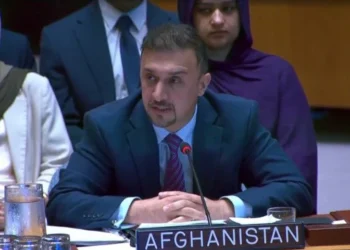

António Guterres, Secretary-General of the United Nations (UN), said in his latest quarterly report to the Security Council that security incidents in Afghanistan increased by more than 57 percent compared to the same period last year.
In the report released on Tuesday, June 9, Guterres stated that at least 3,687 security incidents were recorded across Afghanistan between February 1 and April 30, representing a 57.7 percent increase compared to the corresponding period in 2025.
The report noted that armed groups opposed to the Taliban, including the National Resistance Front, the Afghanistan Freedom Front, the National Mobilization Front, and the Green Trend of Afghanistan, claimed responsibility for 18 attacks in 10 provinces, 16 of which were verified.
The attacks were reported in Badakhshan, Baghlan, Herat, Kabul, Kandahar, Khost, Kunar, Kunduz, Panjshir, and Zabul provinces.
Guterres also warned that despite a decline in attacks carried out by the Islamic State Khorasan Province (ISKP), Security Council assessments indicate that the group has retained its operational and combat capabilities.
According to the report, the United Nations Assistance Mission in Afghanistan (UNAMA) recorded 92 security-related incidents affecting UN personnel during the reporting period, compared to 62 incidents during the same period last year.
The Secretary-General also referred to border tensions between the Taliban and Pakistan, stating that from January 26 to the end of April, at least 379 civilians were killed and 473 others were injured.
The United Nations attributed the majority of these casualties to Pakistani airstrikes and cross-border shelling.
The report identified the attack on the Omid Drug Treatment Hospital in Kabul on March 16 as the deadliest incident during the reporting period, resulting in 269 deaths and 122 injuries.
In another section of the report, Guterres expressed concern over ongoing human rights violations in Afghanistan. He said that between January 26 and March 31, five former military personnel were killed, 20 individuals were arbitrarily detained, and eight cases of torture and ill-treatment of former government employees were documented.
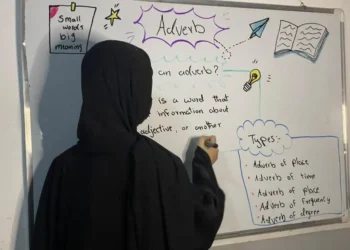
The report also highlighted continuing restrictions on women and girls, an increase in corporal punishment cases, restrictions on media outlets, and the worsening humanitarian crisis across the country.
According to UN estimates, approximately 21.9 million people in Afghanistan will require humanitarian assistance in 2026, while 17.4 million people are facing acute food insecurity.
The United Nations further reported that, as of April 1, around 94,000 people had been displaced by border tensions between the Taliban and Pakistan, with women and children accounting for more than half of those displaced.