• 8AM.MEDIA
  • ویب‌سایت فارسی
  • پښتو ویب‌پاڼه
  • اۉزبېکچه ویب‌سایت
  • Podcast
Friday, October 23, 2026
Hasht-e Subh
  • Home
  • News
    • Afghanistan News
    • World News
  • Opinion
    • Editorial
    • Analysis
  • Reports
    • Daily Reports
    • Investigative Reports
  • Society
    • The story of people
  • Women’s Word
  • Columns
    • Three Years After Afghanistan’s Fall: The Taliban’s Resurgence
    • Towards Equality
    • The Resurgence of the Taliban: Two Years Since Afghanistan’s Fall
    • Hebatullah Report Special Edition
    • Resistance for Education Special Edition
    • Special Column on Taliban’s Education Curriculum
    • Nawroz
  • Interviews
  • Contact Us
    • About Us
    • 8AM MEDIA Annual Awards
    • Submit an Article to Hasht-e-Subh
  • 8am.mediaBack
Subscribe
No Result
View All Result
  • Home
  • News
    • Afghanistan News
    • World News
  • Opinion
    • Editorial
    • Analysis
  • Reports
    • Daily Reports
    • Investigative Reports
  • Society
    • The story of people
  • Women’s Word
  • Columns
    • Three Years After Afghanistan’s Fall: The Taliban’s Resurgence
    • Towards Equality
    • The Resurgence of the Taliban: Two Years Since Afghanistan’s Fall
    • Hebatullah Report Special Edition
    • Resistance for Education Special Edition
    • Special Column on Taliban’s Education Curriculum
    • Nawroz
  • Interviews
  • Contact Us
    • About Us
    • 8AM MEDIA Annual Awards
    • Submit an Article to Hasht-e-Subh
  • 8am.mediaBack
No Result
View All Result
Hasht-e Subh
No Result
View All Result

In Spain, a network of activists, lawyers and midwives break the silence on obstetric violence

By Marta Borraz and Ana Requena Aguilar, elDiario.es (Spain)

By Marta Borraz and Ana Requena Aguilar, elDiario.es (Spain) By Marta Borraz and Ana Requena Aguilar, elDiario.es (Spain)
22 June 2021 - Solar Hijri Date: 1400/04/01 [t_time:1624332695]

Virginia Murialdo, anthropologist and activist with “El Parto es Nuestro" - Credit: Patricia Garcinuño

[box type=”note” align=”” class=”” width=””]The Spanish government recently announced that it will include the term “obstetric violence” in the law as a form of gender violence — a step that comes after dozens of women pushed to spread awareness on the issue, to support those who have suffered it and to change hospital protocols.[/box]

They all thought it had only happened to them and they didn’t know why. It was the feeling of a small group of Spanish women who, twenty years ago, set up an email chain to talk about the negative experiences they had had during their pregnancies and childbirths. Soon after, they started receiving more testimonies from women all over Spain, naming an untold yet systematic and global women’s issue — obstetric violence. Their email group quickly reached 1,000 subscribers. Now it has become a pioneering Spanish association called El Parto es Nuestro (‘Childbirth is Ours’), with local groups in more than twenty Spanish cities offering a space for women to support and listen to each other, as well as to get counselling.

Together with lawyers, midwives, activists and other groups, the association forges a nationwide network of initiatives, whose work has begun in recent years to bear legislative fruit. Recently, the Spanish Ministry of Equality announced that it will include obstetric violence in the law as a type of violence against women — a step welcomed by organisations that hope the move will serve to end this type of violence, which has physical and emotional consequences for both women and their babies.

The negative experiences women more often report, says Virginia Murialdo, anthropologist and activist with El Parto es Nuestro, include unjustified and unconsented episiotomies (cutting of the skin, muscles, nerves and fascia surrounding the vagina) during childbirth, an excessive administration of drugs, a growing trend towards caesarean sections and the so-called ‘Kristeller manoeuvre’ —highly questioned by the World Health Organisation (WHO)— which consists on pressuring the abdomen to push the baby into the birth canal. Beyond these practices, “women also suffer humiliating and abusive attitudes and comments”, says Ms. Murialdo, as well as “actions that do not respect their privacy”, ranging from students being present without consent during vaginal examinations to the impossibility of choosing the birth position, to sexist comments meant to intimidate those who refuse the epidural.
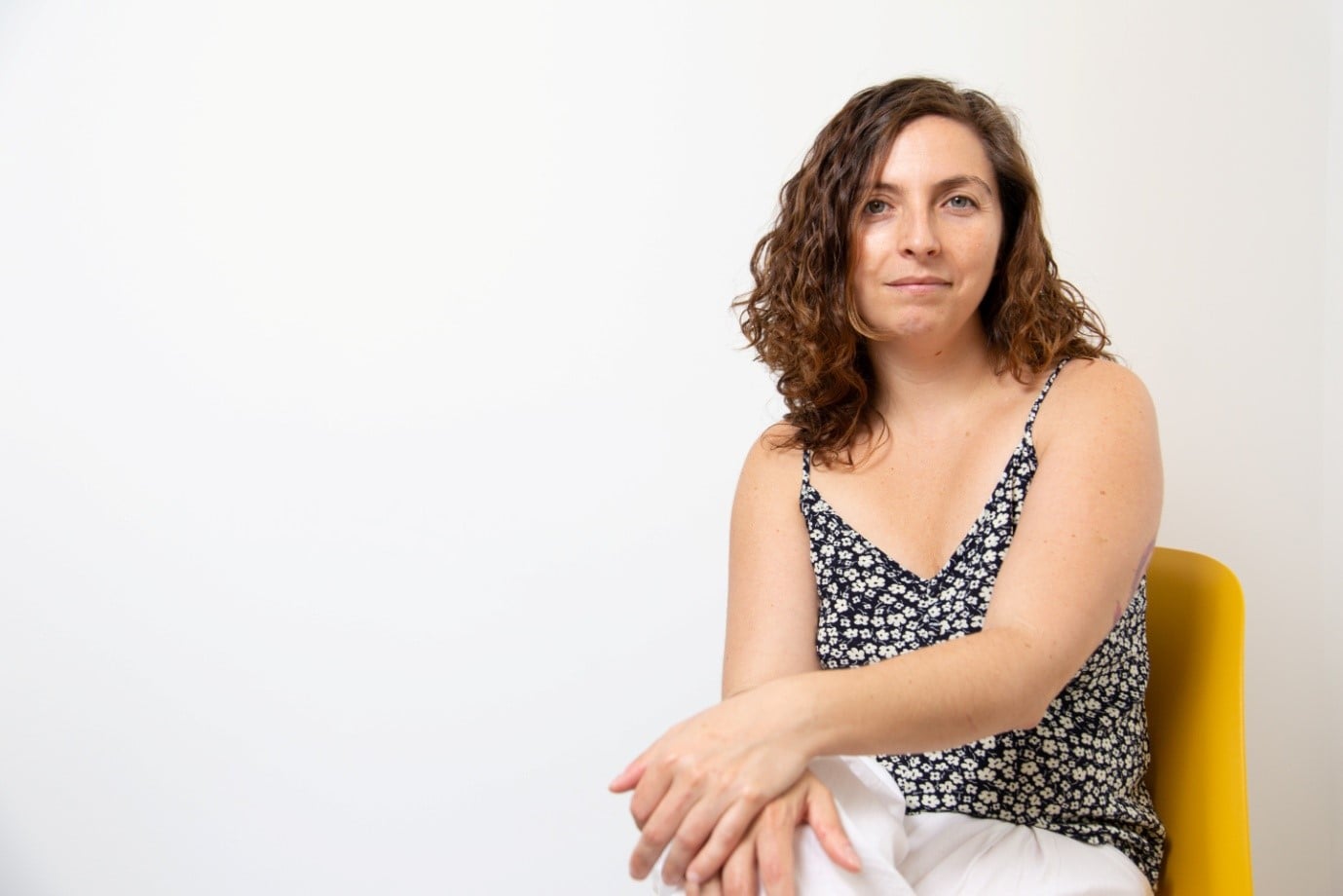
Virginia Murialdo, anthropologist and activist with “El Parto es Nuestro” – Credit: Patricia Garcinuño

These cases are not unusual. The United Nations described obstetric violence in 2019 as a “widespread phenomenon” — one the WHO considers to be “a violation of women’s rights.” Yet women rarely speak about these experiences out loud, due to fear of stigma and shame, or because they downplay their importance. “Many have normalised what happened to them, so the first step is to break the silence and spread awareness,” says Ms. Murialdo.

Specialized in obstetric violence for 18 years now, Spanish lawyer Francisca Fernández Guillén has gone precisely as far as to the UN to defend the cases of four Spanish women whose complaints had been dismissed by Spanish courts. Since she first started working in this field, she says she has seen “a good evolution,” with important rulings that have served to pave the way to ending impunity for this type of violence. “I am getting good rulings in the courts. Before it was much more difficult to get recognition, for instance, of the need to get informed consent from the patient to perform an episiotomy or to induce labour.”

However, some still resist to recognise, medically and judicially, the harm these practices cause to many women. One of the four complaints the lawyer brought before the UN Commission on Human Rights in 2018, was the case of a woman (who wished to remain anonymous and we’ll name ‘S’) who gave birth in the Cruces Hospital in the Spanish Basque country in 2012. “She has behaved poorly”, “She doesn’t deserve the child”, “I should take the child away from you, you have behaved very badly,” were some of the comments S’s heard during childbirth from her midwife, who also performed a non-indicated episiotomy despite S’s refusal. She hadn’t been allowed to drink anything since she was admitted to the hospital, and was forced to remain on her back without moving and alone at all times — not even her baby’s father was allowed in the room. The episiotomy’s consequences later included urinary incontinence and “severe” repercussions on her sexual and couple relations.

The “El Parto es Nuestro” NGO offers a safe space for women to support and listen to each other, and provides counselling for mothers before, during and after their pregnancy. – Credit: Patricia Garcinuño

In 2020, the UN Commission finally reprimanded Spain for the obstetric violence committed against one of Francisca Fernández Guillén’s clients. In its resolution, the Commission stated that the woman had been subjected to several practices, such as labour induction, “without apparent justification” and qualified the events as gender-based violence. However, the introduction of obstetric violence in Spanish law will be for nothing, says the lawyer, unless there is a real commitment to comply with respectful childbirth protocols and regulations, which already advise against many of these practices and require women to be informed.

Many hospitals are already evolving. Soledad Carreguí, who has been a midwife for more than 20 years now at La Plana University Hospital in the eastern Spanish province of Castellón, says much has changed since she first started working there thanks to a group of professionals who began questioning the “excessive medicalisation” of childbirths and started looking into new practices that would humanise the experience, aligning it with new medical evidence.

“Many clinical practices were questioned on a scientific level, but because of the hospital’s own routine they are difficult to change,” she explains. The hospital now has a childbirth protocol in which the staff applies what they have learned: “We encourage women’s mobility while they dilate, ensure they give birth in the most comfortable position, allow them to eat, drink and be accompanied by whoever they want, avoid medication, oxytocin, episiotomies and labour induction when they are unnecessary, and we indicate caesarean-sections on a case-to-case basis.” In short, says Carreguí, it’s a matter of “not working on a whim or according to old and rigid protocols, but putting women and their needs at the centre,” she says. “A humanised birth is absolutely compatible with a safe birth.”

[box type=”info” align=”” class=”” width=””]This article is published as part of “Towards Equality”, an international and collaborative initiative gathering 15 international news outlets to highlight the challenges and solutions to reach gender equality.[/box]

ShareTweetSendSendShare

Related Posts

Gender bias in AI: “We underestimate the human component of these tools”
No category

Gender bias in AI: “We underestimate the human component of these tools”

12 March 2024 [t_time:1710279389]
India’s solar power push delivers an unexpected bonus – empowering rural women
No category

India’s solar power push delivers an unexpected bonus – empowering rural women

12 March 2024 [t_time:1710278475]
Mother’s Tree
No category

Mother’s Tree

12 March 2024 [t_time:1710277932]

Latest

Loading latest news...

Popular stories

  • Donald Trump – U.S. President with Benjamin Netanyahu – Israeli Prime Minister in a gathering of people (Photo: Getty Images) Donald Trump – U.S. President with Benjamin Netanyahu – Israeli Prime Minister in a gathering of people (Photo: Getty Images)

    US Senator Criticizes Netanyahu’s Remarks Justifying War Against Iran

    Share
    Share Tweet
  • US Defense Secretary Warns Iran of “Destruction”

    Share
    Share Tweet
  • UN Report Reveals Shifts in Family Attitudes and Rise in Domestic Violence in Afghanistan

    Share
    Share Tweet
  • Iran’s Revolutionary Guards Say They Are Preparing to Unveil “Father of All Bombs”

    Share
    Share Tweet
  • Trump Calls Iran’s Hope of War Lasting Beyond US Midterm Elections a “Dream”

    Share
    Share Tweet

Podcast

Insights
Insights

Join Lynne O’Donnell for 8AM’s podcast series, Insights.
Lynne talks with generals, diplomats, soldiers, journalists, politicians, activists, people who have front row seats for conflicts around the world, and citizens with a story to tell, happy or sad. For this first series, Afghanistan is the focus. Lynne and her guests talk about the collapse of the republic in August, 2021, and the impact since — for the people of Afghanistan, for the security of the region, for the safety of the world. It’s important, interesting and insightful.

Insights/22: Controlling the Narrative with Mina Sharif
byinsights8am

Controlling the Narrative

Lynne O’Donnell talks with Mina Sharif, author, activist, women’s rights campaigner, educator and mentor. They discuss who controls the narrative and who speaks for Afghanistan’s people when the Taliban appear to have seized control not only of the country but of the message, too.

Have a listen

Insights/22: Controlling the Narrative with Mina Sharif
Episode play icon
Insights/22: Controlling the Narrative with Mina Sharif
Episode Description
Episode play icon
Insights/21: Media Meltdown with Zahra Joya
Episode Description
Episode play icon
Insights/20: Terror Inc with Scott Richards
Episode Description
Episode play icon
Insights/19: Busting Stereotypes with Bushra Gohar
Episode Description
Episode play icon
Insights/18: Media Matters with Waliullah Rahmani
Episode Description
Episode play icon
Insights/17: What Goes Around Comes Around with Sima Samar
Episode Description
Search Results placeholder
Hasht-e Subh

8AM Media, also known as Hasht-e-Subh Daily, stands as Afghanistan's premier independent and non-profit newspaper, resonating as a beacon of journalistic integrity since its establishment in June 2007 by esteemed Afghan journalists and human rights advocates. With a steadfast commitment to citizen journalism and civic education, Hasht-e-Subh Daily has earned its place as the most esteemed publication in the nation.

Publisher: Sanjar Sohail
Email: [email protected]
Executive Director: Parwiz Kawa
Email: [email protected]

Read More

Has the World Grown Accustomed to the Crisis in Afghanistan?

International Criminal Court Wins Sakharov Prize for Freedom of Thought

Guterres Calls for an End to Conflicts Worldwide

UNICEF: Millions of Children in Afghanistan Face Climate Risks

From the Shadows to Finding My Voice: A Story of Struggle and Resilience

Editor’s Choice

Every Saturday morning, 8AM MEDIA English Services Department will guide you through the week’s biggest stories from Afghanistan and the international community.

Subscribe

© 2026 - ©Hasht-e Subh Daily

No Result
View All Result
8am.Media
پښتو ویب‌پاڼه
ویب‌سایت فارسی
اۉزبېکچه ویب‌سایت
  • Home
  • News
    • Afghanistan News
    • World News
  • Opinion
    • Editorial
    • Analysis
  • Reports
    • Daily Reports
    • Investigative Reports
  • Society
    • The story of people
  • Women’s Word
  • Columns
    • Three Years After Afghanistan’s Fall: The Taliban’s Resurgence
    • Towards Equality
    • The Resurgence of the Taliban: Two Years Since Afghanistan’s Fall
    • Hebatullah Report Special Edition
    • Resistance for Education Special Edition
    • Special Column on Taliban’s Education Curriculum
    • Nawroz
  • Interviews
  • Contact Us
    • About Us
    • 8AM MEDIA Annual Awards
    • Submit an Article to Hasht-e-Subh
  • 8am.media

© 2026 - ©Hasht-e Subh Daily