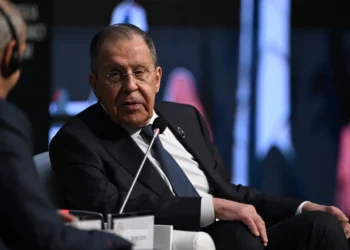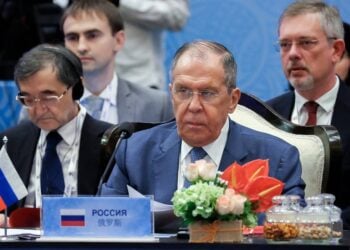

The meeting of the foreign ministers of the Shanghai Cooperation Organization (SCO) in July 2026 once again turned Afghanistan into one of the central topics of regional dialogue. In the statements and remarks of the officials present, the same phrases that have been repeated many times over the past five years were heard once more: fighting terrorism, preventing drug trafficking, continuing humanitarian assistance, and forming an inclusive government. But the fundamental question is to what extent these positions have moved beyond the level of slogans and become an effective policy for changing the situation in Afghanistan.
Nearly five years have passed since the Taliban’s return to power, yet Afghanistan continues to face political isolation, economic collapse, widespread human rights repression, and the presence of numerous terrorist groups. Although SCO has repeatedly held meetings on Afghanistan throughout these years, the practical outcome of these meetings shows that the organization is more focused on managing the security consequences of the Afghan crisis for its members than on resolving the crisis itself. In other words, the primary concern of member states is the security of their own borders, not changing Afghanistan’s internal situation.
At the recent meeting as well, emphasis on forming an inclusive government once again topped the list of member states’ positions, a demand that has been repeated many times by the United Nations, regional countries, and global powers since the earliest days of Taliban rule. However, none of these actors has been willing to pay a political or diplomatic price to bring this demand to fruition. The result is that the inclusive government has shifted from being a political demand to a ceremonial phrase in diplomatic statements.
The evident contradiction in the policies of most SCO member states is also notable. On one hand, they emphasize the participation of all ethnic groups, women, and political movements in Afghanistan’s power structure, but on the other hand, many of these same countries have expanded their political, economic, and security relations with the Taliban without making the realization of an inclusive government a precondition for such engagement. This approach effectively sends a clear message to the Taliban: continued regional cooperation is possible even without political reforms.
This contradiction has left the Taliban with no incentive to change their behavior. A regime that over the past five years has not only failed to move toward political participation but has further monopolized its inner circle of power, excluded women from public life, suppressed the media space, and denied political opponents any form of participation, now faces the reality that the regional cost of such a policy has been quite minimal.
The issue of counterterrorism suffers from the same contradiction. Although India, at the meeting of the organization’s interior ministers held some time ago in Bishkek, had emphasized the creation of a specific mechanism to combat terrorism in the region, this time as well, SCO members spoke of preventing Afghanistan from becoming a haven for terrorist groups, but at the same time offered no clear or binding mechanism to hold the Taliban accountable for the activities of groups such as al-Qaeda, Tehrik-i-Taliban Pakistan, Jaish al-Adl, the East Turkestan Islamic Movement, and other armed networks. As a result, warnings are repeated every year, yet the security threats remain unresolved.
In the economic sphere as well, although countries such as India have consistently tried to facilitate trade relations with the private sector, the gap between rhetoric and reality is evident among many SCO members. Foreign ministers have emphasized rebuilding Afghanistan’s economy, developing infrastructure, and expanding regional cooperation, but achieving such goals is nearly impossible without a legitimate political system accepted by the international community. Major regional investments require legal stability, transparency, political legitimacy, and international trust, elements that Afghanistan currently lacks. Therefore, talk of economic projects without addressing the political root of the crisis resembles wishful thinking more than a practical plan.
Humanitarian assistance is another example of this deadlock. Over the past five years, billions of dollars in international aid have entered Afghanistan, with India taking a leading role at the regional level, but a significant portion of it has either been spent on the administrative costs of aid organizations or has fallen under structures controlled by the Taliban. Under such circumstances, renewed emphasis on increasing humanitarian aid, without establishing transparent mechanisms to prevent misuse and ensure direct access for the people, cannot sustainably reduce the humanitarian crisis.
Amid all this, India’s position on Afghanistan carries particular significance. New Delhi continues to emphasize the formation of an inclusive government, fighting terrorism without discrimination, and preventing the use of Afghanistan’s soil against other countries. From a political standpoint, these positions align with the concerns of many regional countries, but India, like other regional actors, faces an important limitation: it lacks sufficient leverage to compel the Taliban to accept political reforms, and it must inevitably balance security considerations, geopolitical rivalries with China and Pakistan, and its own economic interests.
Despite these limitations, India has taken positive and important steps to improve the living conditions of the people of Afghanistan, beyond regional political calculations. India has actively supported Afghanistan in the health sector, providing medicine, medical equipment, and training for healthcare workers to help combat diseases and improve health infrastructure.
In the field of education as well, India has made significant efforts to support the country’s students, particularly women, despite Taliban restrictions. Through online education platforms and distance learning programs, India has provided access to education for thousands of girls and women in Afghanistan who are barred from attending schools and universities. This commitment to empowering women through education reflects India’s broader humanitarian approach. India’s initiatives also include technical and vocational training programs and the granting of scholarships to young people of Afghanistan, aimed at strengthening the skills and economic self-sufficiency of the younger generation. These efforts demonstrate India’s commitment to Afghanistan’s social development, separate from the region’s geopolitical dynamics.
The reality is that Afghanistan’s crisis is no longer merely a security crisis that can be managed through regional meetings. The root of the crisis lies in the monopolization of power, the systematic exclusion of women, the lack of political legitimacy, the suppression of civil liberties, and the absence of a system representing all citizens. Until regional countries are willing to condition their engagement with the Taliban on real changes in these areas, the demand for an inclusive government will remain confined to the level of diplomatic rhetoric.
The Shanghai Cooperation Organization meeting once again showed that its members largely agree in identifying Afghanistan’s problem, but remain hesitant and cautious when it comes to the political will to resolve it. Five years of repeating the same demand without any practical outcome raises the question of whether an inclusive government is still a political goal or merely a phrase used to fill the closing statements of regional meetings. If this trend continues, the SCO, like many other international initiatives, will become more of an institution for managing Afghanistan’s crisis than one for resolving it.
Nevertheless, India’s continued humanitarian and educational efforts stand out as genuine, positive signals for the people of Afghanistan, separate from regional politics. These efforts demonstrate India’s real commitment to the welfare and development of citizens of Afghanistan and offer a hopeful path amid complex geopolitical challenges.
You can read the Persian version of this report here:
حکومت فراگیر؛ مطالبه تکراری سازمان همکاری شانگهای و تناقض سیاست منطقه در قبال افغانستان