While Afghanistan is enduring one of the most critical periods in its modern history, the Taliban Supreme Leader has issued a new decree severely restricting millions of citizens’ access to the internet in an unprecedented move. Citizens say this action not only targets the country’s communication and economic infrastructure but also systematically disrupts education, information access, and individual freedoms. According to them, the ban on wireless (Wi-Fi) internet is a clear example of the Taliban’s repressive policies aimed at isolating society and silencing dissent.
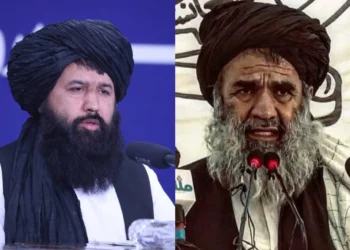
At the same time, sources report that tensions between Mohammad Yousuf Wafa, the Taliban governor of Balkh Province, and Hamdullah Noomani, the group’s minister of communications and information technology, led to the disruption of fiber optic internet in several provinces of Afghanistan. According to these sources, following the dispute, Hibatullah Akhundzada, instead of accepting his minister’s resignation, yielded to Wafa’s demand and ordered the shutdown of fiber optic services. Citizens, however, note that Afghanistan already ranks at the bottom globally in terms of internet speed and quality, and this latest Taliban decision represents yet another step toward a darker future for the country.
Hibatullah Akhundzada, in continuation of wide-ranging bans against citizens—particularly women and girls—has, in his latest move, decreed the prohibition of fiber optic internet services in the provinces of Balkh, Kandahar, Uruzgan, Zabul, and Nimruz.
Meanwhile, informed sources say the fiber optic shutdown resulted from tensions between Mohammad Yousuf Wafa and Hamdullah Noomani, the Taliban’s minister of communications and information technology. Sources specify that Wafa told Hibatullah that he must choose between him and fiber optic internet.
According to sources, a few days earlier, Wafa cut off fiber optic internet in Hairatan and even pulled out and destroyed the fiber cables. They add that the Taliban minister of communications attempted to restore the service but was blocked by the governor.
These sources say that after this standoff, the Taliban minister announced his intention to resign. However, after a three-day delay, Hibatullah, instead of accepting his resignation, yielded to Wafa’s warning and ordered the nationwide shutdown of fiber optic internet.
The same sources report that access to fiber optic internet is set to be suspended across Afghanistan, with no government office permitted to use the service. Wireless internet (commonly known as Wi-Fi), which is provided through wireless devices, is also under threat of being cut off.
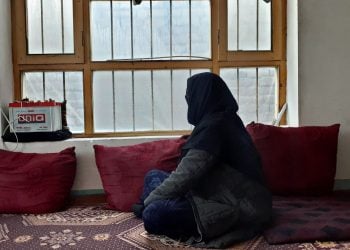
A source in Mazar-e-Sharif, the provincial capital of Balkh, who wished to remain anonymous, said the shutdown of Wi-Fi has disrupted people’s lives, leaving residents with access only to weak mobile internet services. Another source said that on Monday, all home and office internet providers (cable and Wi-Fi) halted their services following the Taliban supreme leader’s order. According to him, at present, only the mobile network internet remains active in Mazar-e-Sharif.
The Balkh resident said the internet shutdown has created serious difficulties for the province’s inhabitants. With online classes and resources cut off, education has been disrupted, while banking transactions, trade, and communications have been severely restricted. He added that with the halt of information flow, people can no longer easily stay informed about current events.
Sources in Kandahar say that fiber optic internet was cut in the province at the same time as in Balkh, with services also blocked in Zabul and Uruzgan. They confirm that internet access through all mobile networks in Kandahar has been shut down, with only the Salam network functioning, and even that at a very weak level.
A source in Kandahar, who asked not to be named due to security threats, said that the majority of people are deeply “choked” by this latest Taliban restriction. He added, “May God wipe them [the Taliban] off the face of the earth. If the internet is cut, I have no path left but suicide.”
A source in Herat also reported that, under Taliban orders, internet companies have been halted. He said that even the state-run Afghan Telecom DSL service has been shut down. He claimed that in the next stage, Taliban-controlled telecom firms will begin offering only restricted services.
The shutdown has triggered widespread reactions on social media from Afghanistan citizens living abroad, while those inside the country have remained largely silent due to security fears. Some users, posting videos and images of a young Nepali who, with a fiery speech, sparked nationwide protests that eventually toppled the government, asked why such a movement could not take shape in Afghanistan. Users also pointed to Nepal’s “Gen #Z Movement,” which, despite social media restrictions, organized mass protests that led to the collapse of that government.
Sayed Najibullah, a Facebook user, wrote: “The internet shutdown in several provinces of Afghanistan by the Taliban is not merely a technical measure but a declaration of war against the people’s awareness. Today, the internet is not only a communication tool but the vital artery of our society’s intellectual, cultural, and economic life. When this group severs that artery, it aims to cut people off from the world, silence their cries for justice, and leave their oppression unanswered.”
He further added: “This move shows that they fear the truth more than anything else—what people see with their own eyes, read, and convey to the world. Fear of the internet is fear of an awakened generation, not fear of technology.”
Data from Ookla, the internet speed testing platform, shows that Afghanistan has one of the slowest internet services in the world, ranking 150th globally. This comes as halting or throttling high-speed internet will further deteriorate the quality of life, particularly in cities where daily living is closely tied to online services.
The sweeping restrictions on internet access will have grave economic, educational, and social consequences, further curtailing citizens’ ability to access information and participate in modern life.
Haji Zaid, spokesperson for the Taliban governor in Balkh, confirmed that fiber optic internet use in the province has been banned under the Taliban supreme leader’s order. He added, “To prevent immoralities, fiber optic services will no longer be used,” stressing that they are seeking alternatives.
This measure comes even though the internet is a vital necessity in the modern world, underpinning essential functions such as online shopping, academic research, and remote work.
You can read the Persian version of this report here:
قطع انترنت در جدال والی و وزیر طالبان: هبتالله به سایه خود تمکین کرد