• 8AM.MEDIA
  • ویب‌سایت فارسی
  • پښتو ویب‌پاڼه
  • اۉزبېکچه ویب‌سایت
  • Podcast
Saturday, October 10, 2026
Hasht-e Subh
  • Home
  • News
    • Afghanistan News
    • World News
  • Opinion
    • Editorial
    • Analysis
  • Reports
    • Daily Reports
    • Investigative Reports
  • Society
    • The story of people
  • Women’s Word
  • Columns
    • Three Years After Afghanistan’s Fall: The Taliban’s Resurgence
    • Towards Equality
    • The Resurgence of the Taliban: Two Years Since Afghanistan’s Fall
    • Hebatullah Report Special Edition
    • Resistance for Education Special Edition
    • Special Column on Taliban’s Education Curriculum
    • Nawroz
  • Interviews
  • Contact Us
    • About Us
    • 8AM MEDIA Annual Awards
    • Submit an Article to Hasht-e-Subh
  • 8am.mediaBack
Subscribe
No Result
View All Result
  • Home
  • News
    • Afghanistan News
    • World News
  • Opinion
    • Editorial
    • Analysis
  • Reports
    • Daily Reports
    • Investigative Reports
  • Society
    • The story of people
  • Women’s Word
  • Columns
    • Three Years After Afghanistan’s Fall: The Taliban’s Resurgence
    • Towards Equality
    • The Resurgence of the Taliban: Two Years Since Afghanistan’s Fall
    • Hebatullah Report Special Edition
    • Resistance for Education Special Edition
    • Special Column on Taliban’s Education Curriculum
    • Nawroz
  • Interviews
  • Contact Us
    • About Us
    • 8AM MEDIA Annual Awards
    • Submit an Article to Hasht-e-Subh
  • 8am.mediaBack
No Result
View All Result
Hasht-e Subh
No Result
View All Result

Kabul Residents Decry Rising LPG Prices, Uneven Rates and Weak Market Oversight

Translated by Farhad Farhaad | Originally reported in Persian by Ilya

Mohammad Farhaad Mohammad Farhaad
10 October 2026 - Solar Hijri Date: 1405/07/18 [t_time:1791639049]
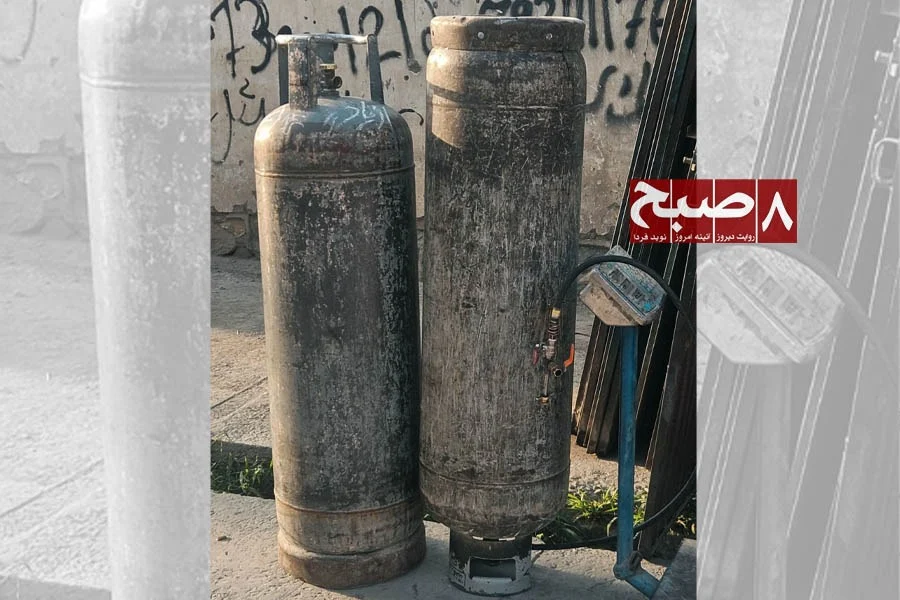
Two worn liquefied gas cylinders stand on a Kabul street as residents complain about rising LPG prices and uneven market rates. (Photo credit: 8am.media)

8am.media

Several Kabul residents are complaining about rising liquefied petroleum gas (LPG) prices and the differences in its rates across the city’s markets. They say the price increase has pushed up the cost of living and made it harder for families to meet their daily needs. According to the residents, a kilogram of LPG in Kabul’s markets costs between 65, 67 and 71 Afghanis. They add that despite the price list set by the Taliban-controlled Kabul Municipality, gas is sold at different rates in the markets and there is no effective monitoring of prices. The residents say that increasing gas production and processing inside the country could reduce Afghanistan’s dependence on imports and limit the impact of developments in foreign markets on fuel prices.

Zarmina, a teacher in Kabul who supports a family of seven, says that she can barely cover her family’s living costs on a teacher’s salary, and the rise in fuel prices has put even more economic pressure on her. She adds that gas is one of the basic needs of families and its use cannot easily be set aside. According to Zarmina, the increase in gas prices has forced her to buy even a small charcoal stove so that she can cook meals that need longer cooking times over charcoal.

The teacher says: “I barely get by on a teacher’s salary, and I cannot replace gas with anything else. If the price of petrol goes up, we can stop using the car or stay at home, but we need gas for cooking and daily chores. We cook three meals a day, and we barely manage to control our gas use. Out of desperation, I have even bought a small charcoal stove to prepare the dishes that take longer to cook over charcoal. Our salary does not increase, but living costs grow every day.”

Sutoda, another Kabul resident, says that in addition to the rise in gas prices, the difference in rates across the market has also created problems for people. According to him, some supplying companies sell each kilogram of LPG for 67 afghanis, while in some local shops the price reaches 70 afghanis.

He considers the lack of effective market monitoring to be one of the factors that has allowed gas to be sold at different rates. Sutoda calls on officials to monitor the price of this fuel and take practical steps to reduce its cost.

The Kabul resident says: “In the current situation, many aspects of life depend on gas, and its price must come down. What have the people done wrong that they must bear the cost of every development in other countries? By God, we are tired; something happens in another country, but we pay the price. Afghanistan has many mines, and investment should be made in them so that people can be freed from this misery and hardship. We have the Yatimtaq and Khwaja Gogerdak gas fields; these resources should be extracted, and the gas produced should be made available to the people at a reasonable price.”

Ali Sami, another Kabul resident, says that increased gas consumption, driven by rising petrol prices and the approach of the cold season, could further affect the demand for and price of this fuel. He warns that if prices rise further, families will face even greater economic pressure in the coming winter.

Sami is calling for increased gas imports from neighboring countries and investment in domestic resources. In his view, increasing supply could help ease the pressure caused by demand, and domestic production would also reduce Afghanistan’s dependence on imports in the long term.

The young man says: “With the price of petrol, which has now risen above 90 afghanis per liter, people are trying to use gas. At the same time, the weather is getting colder, and demand for gas is rising. When demand goes up, the price of gas may also increase. As the cold season approaches, traders should increase gas imports from neighboring countries instead of raising prices, because greater supply can reduce the pressure that rising demand puts on prices. Likewise, investing in gas production from domestic sources will benefit the country in the long term.”

Asghar Gul, another Kabul resident, says that the rise in gas prices has pushed up people’s living costs and made it harder for families to meet their daily needs. He adds that LPG is used in various sectors, from cooking in homes to factory operations and transportation, and that a price increase could raise the costs of households and economic activities even further.

Asghar Gul says: “Recently, the price of gas has risen considerably and has directly affected people’s lives. People need gas for cooking at home, for running factories, and for the transportation sector. The increase in the price of this fuel has raised people’s costs, and many families cannot afford these expenses. If this situation continues, it could put even more economic pressure on people.”

Hassan, another Kabul resident, says that the simultaneous rise in electricity and gas costs has made it difficult for families to choose between energy sources. According to him, although the price of gas, which had previously reached 80 afghanis per kilogram, has now dropped to around 65 afghanis, this rate is still high for many families.

Hassan says: “Previously, the price of one kilogram of gas had risen to 80 afghanis and now it has come down to 65 afghanis, but even this price is still beyond the means of many people. The price of electricity has also doubled compared to the past. People do not know how to cover their living costs in this situation; both electricity and gas prices are high. Although some families have turned to solar power, these systems cannot meet all of a household’s electricity needs, and people still need gas for cooking.”

Afghanistan depends on imports to meet part of its fuel needs. Iran, Turkmenistan, Russia, Belarus and Kazakhstan are among the sources of oil and gas supplies for Afghanistan. Price changes in foreign markets, transportation costs and exchange rate fluctuations are among the factors that can affect fuel prices in domestic markets.

The Taliban have previously announced that they are monitoring markets and trying to prevent excessive price increases. However, a number of Kabul residents say that LPG is sold at different rates in the city’s markets, and they are calling for more effective price monitoring. They stress that, alongside market monitoring, investment in the extraction and processing of domestic gas resources should also be a priority so that Afghanistan can reduce its dependence on imports in the long term.


You can read the Persian version of this report here:

افزایش بهای گاز مایع در کابل؛ مردم از تفاوت نرخ‌ها و نبود نظارت موثر شکایت دارند

ShareTweetSendSendShare

Related Posts

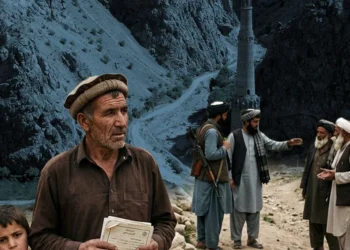
An edited composition shows a man holding land documents as Taliban members and elders talk near a historic minaret in Ghor. (Photo credit: Wikipedia + AI)
Daily Reports

“Complaint Letter from Ghor”: Residents Accuse Taliban of Coercion and Land Grabbing

10 October 2026 [t_time:1791638697]
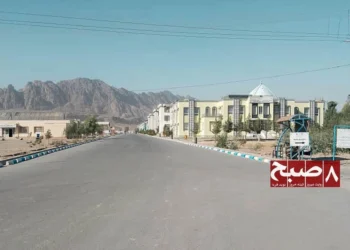
A quiet road leads to academic buildings at Kandahar University, where professors and students report constant monitoring by Taliban Morality Police. (Photo credit: 8am.media)
Daily Reports

Taliban Morality Police Tighten Surveillance of Professors and Students at Kandahar University

10 October 2026 [t_time:1791630140]
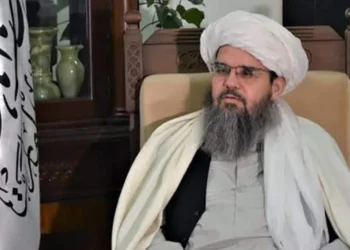
Shahabuddin Delawar, head of the Afghan Red Crescent Society under Taliban control, speaks about women’s rights and the Doha Agreement. (Photo credit: Social Media)
Afghanistan News

Shahabuddin Delawar: Women Were Not Mentioned in Doha Agreement

10 October 2026 [t_time:1791628392]

Latest

Loading latest news...

Popular stories

  • An Afghan woman gazes out of her home, reflecting the isolation and challenges faced by women in Afghanistan under Taliban rule. (Photo Credit: 8am.media)

    UN Report Reveals Shifts in Family Attitudes and Rise in Domestic Violence in Afghanistan

    Share
    Share Tweet
  • Taliban Intelligence Deputy in Faizabad Killed with Two Guards

    Share
    Share Tweet
  • Iraq Reports Export of Two Million Barrels of Crude Oil Through Strait of Hormuz

    Share
    Share Tweet
  • Al-Qaeda Releases Hamza bin Laden Message on 9/11 Anniversary

    Share
    Share Tweet
  • Taliban Shoot Young Man from Herat After Torturing Him with Hands Tied

    Share
    Share Tweet

Podcast

Insights
Insights

Join Lynne O’Donnell for 8AM’s podcast series, Insights.
Lynne talks with generals, diplomats, soldiers, journalists, politicians, activists, people who have front row seats for conflicts around the world, and citizens with a story to tell, happy or sad. For this first series, Afghanistan is the focus. Lynne and her guests talk about the collapse of the republic in August, 2021, and the impact since — for the people of Afghanistan, for the security of the region, for the safety of the world. It’s important, interesting and insightful.

Insights/22: Controlling the Narrative with Mina Sharif
byinsights8am

Controlling the Narrative

Lynne O’Donnell talks with Mina Sharif, author, activist, women’s rights campaigner, educator and mentor. They discuss who controls the narrative and who speaks for Afghanistan’s people when the Taliban appear to have seized control not only of the country but of the message, too.

Have a listen

Insights/22: Controlling the Narrative with Mina Sharif
Episode play icon
Insights/22: Controlling the Narrative with Mina Sharif
Episode Description
Episode play icon
Insights/21: Media Meltdown with Zahra Joya
Episode Description
Episode play icon
Insights/20: Terror Inc with Scott Richards
Episode Description
Episode play icon
Insights/19: Busting Stereotypes with Bushra Gohar
Episode Description
Episode play icon
Insights/18: Media Matters with Waliullah Rahmani
Episode Description
Episode play icon
Insights/17: What Goes Around Comes Around with Sima Samar
Episode Description
Search Results placeholder
Hasht-e Subh

8AM Media, also known as Hasht-e-Subh Daily, stands as Afghanistan's premier independent and non-profit newspaper, resonating as a beacon of journalistic integrity since its establishment in June 2007 by esteemed Afghan journalists and human rights advocates. With a steadfast commitment to citizen journalism and civic education, Hasht-e-Subh Daily has earned its place as the most esteemed publication in the nation.

Publisher: Sanjar Sohail
Email: [email protected]
Executive Director: Parwiz Kawa
Email: [email protected]

Read More

Kabul Residents Decry Rising LPG Prices, Uneven Rates and Weak Market Oversight

“Complaint Letter from Ghor”: Residents Accuse Taliban of Coercion and Land Grabbing

Richard Bennett Urges Continuation of ICC Investigation into Afghanistan

Faiq: Rule of Law in Afghanistan Requires a Legitimate and Accountable Government

Taliban Morality Police Tighten Surveillance of Professors and Students at Kandahar University

Editor’s Choice

Every Saturday morning, 8AM MEDIA English Services Department will guide you through the week’s biggest stories from Afghanistan and the international community.

Subscribe

© 2026 - ©Hasht-e Subh Daily

No Result
View All Result
8am.Media
پښتو ویب‌پاڼه
ویب‌سایت فارسی
اۉزبېکچه ویب‌سایت
  • Home
  • News
    • Afghanistan News
    • World News
  • Opinion
    • Editorial
    • Analysis
  • Reports
    • Daily Reports
    • Investigative Reports
  • Society
    • The story of people
  • Women’s Word
  • Columns
    • Three Years After Afghanistan’s Fall: The Taliban’s Resurgence
    • Towards Equality
    • The Resurgence of the Taliban: Two Years Since Afghanistan’s Fall
    • Hebatullah Report Special Edition
    • Resistance for Education Special Edition
    • Special Column on Taliban’s Education Curriculum
    • Nawroz
  • Interviews
  • Contact Us
    • About Us
    • 8AM MEDIA Annual Awards
    • Submit an Article to Hasht-e-Subh
  • 8am.media

© 2026 - ©Hasht-e Subh Daily