Several women entrepreneurs in Kabul are complaining about a slump in their businesses in recent months. They say rising raw material prices, reduced purchasing power among the public, and Taliban restrictions on women’s activities have cut their sales and income. According to these women, higher production costs and falling sales have made it difficult to cover the running costs of their businesses, including shop rent and employee salaries. They add that some entrepreneurs have reduced their staff to cut costs, while others have halted production because of a lack of capital and no market for their goods.
These women are calling for support for small businesses, access to raw materials at reasonable prices, and opportunities to take part in domestic and international exhibitions. They warn that if this situation continues, more businesses could be forced to stop operating, and employment opportunities for women could become even more limited.
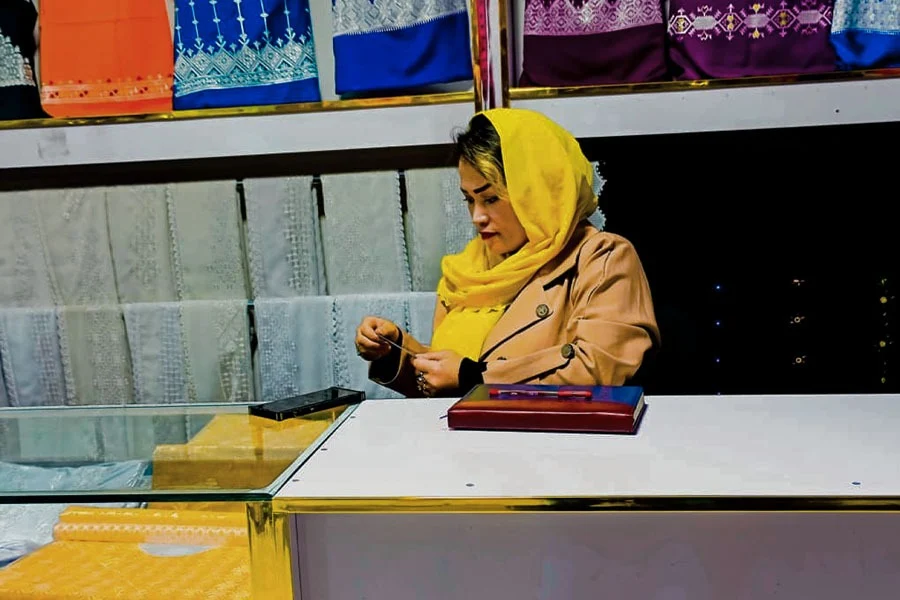
Sediqa Tufan, a woman entrepreneur in Kabul, says that for more than a year her business has been in a slump because of rising raw material prices and the closure of the border with Pakistan. According to her, higher production costs combined with falling sales have reduced her income and made it hard for her to pay shop rent and utility bills.
This woman entrepreneur says: “Previously, we bought one kilogram of raw material for 500 afghanis, but now its price has reached 1,200 afghanis. We buy the materials at a high price, but our sales are low, and no profit is left for us. Many times we cannot even pay the shop rent and utility bills.”
Ms. Tufan also considers the Taliban’s social restrictions on women to be among the factors behind the decline in sales of her products. According to her, women’s fear of encounters with Taliban officials from the Ministry for the Propagation of Virtue and Prevention of Vice (MPVPV) reduces the number of female customers visiting shops and also makes it difficult for female employees to attend their workplaces.
Tufan says: “When it is announced that the Propagation of Virtue officials have come and are detaining women, women are not seen in the shops for several weeks, and our business suffers. Neither the women who want to buy materials can come, nor can the women who work with us come to the shop easily. Even I go to the shop with fear and trembling.”
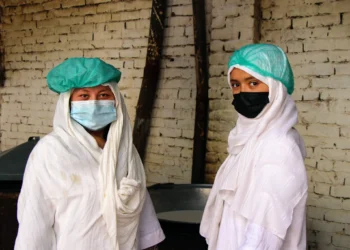
Forozan Kohestani, another woman entrepreneur in Kabul, says that rising raw material prices and reduced public purchasing power have lowered sales at her factory and affected its income. According to her, most of the raw materials the factory needs are imported from Iran and Pakistan, and the cost of obtaining them has risen since the trade routes were closed. Kohestani adds that 15 women and men currently work at her factory, but most of the income from product sales goes toward paying employee salaries and production costs, leaving little profit for her.
Kohestani says: “In the beginning, our business was going well, and demand for our products was high. For this reason, we expanded the factory and bought machinery in partnership with others. But in the past two years, the economic situation has changed, and our business has shrunk compared to the past. Most of our raw materials are imported from Iran and Pakistan, and after the roads were closed, their prices went up.”
Kohestani adds: “For now, our sales are continuing and we are trying to keep our work going, but our income is not satisfactory. Most of the money we earn is spent on paying employee salaries and factory costs, and not much benefit is left for us. We hope these economic problems will ease and we can expand our work.”
Alongside the women facing rising costs and falling sales, others have stopped their economic activities altogether.
Nahid Bahram, another woman entrepreneur in Kabul who used to produce pickles and jam, says her business has shut down because of a lack of capital, rising raw material prices, and reduced public purchasing power. She adds that this year she has not produced even one kilogram of pickles or jam, and because of higher production costs and the public’s reduced ability to buy, she can no longer restart her activities.
Ms. Bahram says: “Because we had no capital, our business was completely paralyzed. This year we did not produce even one kilogram of product, and for now our work is closed. Raw materials have become expensive, and people’s purchasing power has dropped. People are struggling to afford even dry bread, and when they cannot afford the basic materials for their livelihood, pickles and jam are not a priority for them.”
While women entrepreneurs in Kabul complain about rising production costs, falling sales, and the difficulty of continuing their economic activities, the United Nations Development Programme (UNDP) and UN Women announced on September 24 the launch of a $1.7 million programme to support around 1,500 women entrepreneurs in Afghanistan. The programme, which includes training in financial and digital literacy, business management advice, and help for women to access markets, is also expected to indirectly benefit more than 14,000 people.
However, the problems faced by women entrepreneurs in Kabul show that, for small businesses to continue operating, access to raw materials at reasonable prices, more sales opportunities, and fewer obstacles to women’s economic activity are also important.
You can read the Persian version of this report here:
زنان کارآفرین در کابل؛ فلجشدن کار و بار در سایه فقر و محدودیتهای طالبان