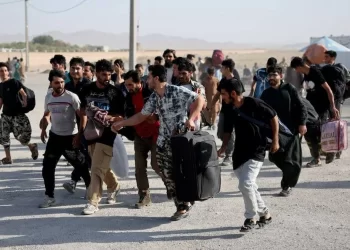

Watching the television series ‘Kabul’ on Yle Areena, which vividly depicts the chaotic and terrifying events of August 15, 2021, acts as a grim reminder of a tragedy that continues to unfold today. As U.S.-led international forces withdrew from Kabul, the Taliban swept across the nation, forcing thousands into desperate flight to escape impending retribution. A chaotic humanitarian effort ensued amidst the looming shadow of ISIS-K terror attacks. Today, in 2026, that initial chaos has crystallized into a systemic nightmare. Afghanistan has become a cemetery of human rights, where women have been reduced to mere objects designed to serve men at home.
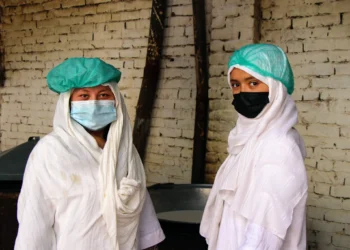
When the Taliban retook power, they deliberately presented a moderate face to the international community, explicitly promising to protect women’s rights to education, employment, and career advancement within the framework of Islamic law. These promises were systemic lies. Step by step, the regime has orchestrated the complete erasure of women from public life. Women are now barred from attending universities, and girls are prohibited from receiving any education past the sixth grade. In various provinces, local religious leaders aggressively suppress even this minimal elementary schooling, cutting off young girls from the outside world completely.
The economic indicators of Afghanistan reflect this institutionalized oppression. Currently, in 2026, the national budget hovers around three billion euros, which represents less than half of what the previous government operated with before 2021. Yet, a massive portion of these scarce state revenues is directed straight into funding the Taliban’s internal security apparatus and military forces rather than addressing the humanitarian crisis. While Afghanistan’s economy technically reports a minor growth rate of around three percent per year, nearly two-thirds of the population lives in absolute poverty. This economic collapse is directly tied to the exclusion of women. In countries like Finland, every individual is granted the foundational right to educate themselves, build a career, and earn an independent livelihood. Denying half of the Afghan workforce the right to contribute inherently drives the entire nation into systemic poverty and famine.
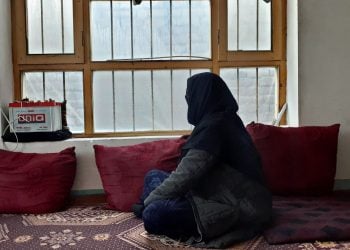
The everyday restrictions imposed on Afghan women are suffocating and resemble a form of gender apartheid. Women are prohibited from traveling any significant distance or even entering a hospital without a close male relative, known as a mahram, acting as a chaperone. They are forced to completely cover their bodies and faces in public with strict traditional garments. The spaces available to them have shrunken to nothing; the regime has banned women from entering public parks, traditional bathhouses, and fitness centers. Since the introduction of the broad morality decrees in 2024, it has become illegal for women to speak, read aloud, or sing in public, effectively silencing their voices entirely. Furthermore, the Taliban has banned television and cinema, systematically dismantling cultural life.
Human rights organizations have repeatedly sounded the alarm over a drastic surge in child and forced marriages. Young, underage girls who are still growing are being married off to adult men without their consent. An individual under the age of 18 is neither emotionally nor physically mature enough for marriage, yet this practice has become a desperate survival mechanism for families starving under the regime. Unsurprisingly, women are entirely excluded from political decision-making, ensuring they have no legal channel to protest their subjugation.
The legal framework of the country has now institutionalized this domestic tyranny. A new criminal code enforced in 2026 formally permits violence against women, effectively granting a husband the explicit legal right to physically beat his wife and enforce harsh punishments for perceived disobedience without facing criminal prosecution. This dangerous progression is happening out in the open, while the international community looks on with closed eyes.
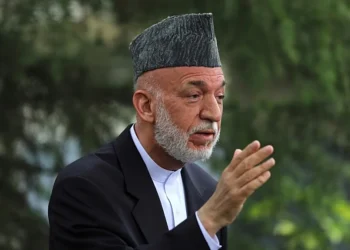
The international community spent nearly twenty years in Afghanistan trying to build a stable democracy. However, the foreign forces and the government they supported failed to dismantle the Taliban insurgency. In 2020, the United States signed a peace agreement with the Taliban to end two decades of war, committing to a total withdrawal of U.S. and NATO forces. The result of that exit is the absolute betrayal of Afghan women, who are left to suffer under a regime that views them as having fewer rights than animals. The world must stop averting its gaze and hold the Taliban accountable for this ongoing crime against humanity.