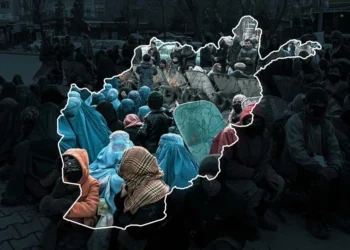
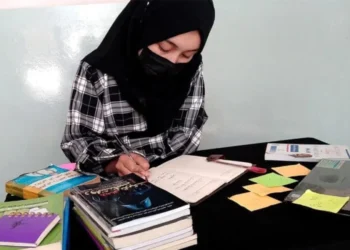
In the heart of summer days, when the sun still blazed mercilessly over the city, a girl walked in the shadows to remain safe from the sun’s harm. She wore heavy clothing on her body—black and somber garments that absorbed several times the scorching heat of the sun, but she had to endure it. Her face had taken on a sorrowful expression that revealed her inner pain. The air was ruthless and suffocating, but something harder than that confined her from all sides: a black grief that had taken root in her heart for four years—the fear of going outside, the fear of being seen, and the fear of gazes that hunted in the streets, from which no one could escape.
The black clothing, the black chador, the mask, and even the black gloves were not things she had chosen. These were nothing but compulsion and terror. Clothing she had to wear to stay safe from the danger of gazes from those who waited to arrest and imprison her. Her fears intensified with each passing day: fear of seeing Taliban forces, fear of getting lost among verbal harassment and merciless threats, fear of being kidnapped, fear of being dishonored, and fears from which she found no relief even at home.
Even when she sat at home, this feeling never disappeared. It seemed as if the sound of Taliban footsteps echoed in the alleys and streets, even when they weren’t there. She sensed their heavy breathing in every corner. Nothing was like before, and a fear had overtaken everywhere that couldn’t be described—especially when the alleys and streets had witnessed the kidnapping of many girls from their midst. After that, walking in familiar alleys had become a risk. Any clothing, any wrong movement could cost a human being their life. A human being who, after being kidnapped, would be rejected by their family, isolated, or would kill themselves.
Sometimes she thinks that life outside the home is prison, and home is the only safe place she can endure. Everywhere, hands are at work, wanting to control everything. Even when a way remained to go outside, one had to step with fear and in hiding so as not to be seen, so as not to speak a word, so as not to attract anyone’s attention. These were hidden sentences that circled in her mind—sentences that had become part of daily life.
In every corner, there was oppression and reproach that never stopped. The Taliban not only ruled over the streets and her days, but had also taken hold of the heart of every girl and woman, in every mind, which all came down to one thing: fear. These restrictions were no longer only in the streets but had also infiltrated homes. They even had to avoid talking to others in the streets. They no longer had the right to have a loud voice for themselves. Freedom at home had also become limited. A place where you could once speak with peace of mind about the flow of life and social events now ruled by silence.
This life no longer resembles the past at all. Living in the shadow of fear and restrictions gave each day a color of hopelessness. But despite all this, a spark of hope still shone in her heart. One day these walls will crumble, a day when the prison doors closed upon hearts will open again.
You can read the Persian version of this Afghan woman’s story here: