The Taliban have banned the celebration of World Teacher’s Day in the country, deeming it un-Islamic. Over the past three years, in addition to barring women from work, the group has dismissed numerous teachers due to ideological differences, replacing them with clerics loyal to the Taliban. Despite this, some teachers have defied the ban by expressing their congratulations on social media and calling for the lifting of restrictions, improving teachers’ skills, and enhancing their economic conditions in Afghanistan. They argue that teachers have been marginalized and their roles in managing and leading the country have been ignored. Instead of appreciating teachers’ efforts, the Taliban have further sidelined them. Teachers in Afghanistan assert that their roles in society and decision-making processes have been neglected, resulting in a decline in the quality of education.
Malalai, one of the teachers, expressed her hope that one day this occasion would be celebrated more appropriately while congratulating others on World Teacher’s Day. She noted that teachers are currently marginalized and emphasized, without directly naming the Taliban, that even students are not allowed to observe such celebrations. According to her, a teacher leads students intellectually and has the power to build a country, cleansing society of corruption, destruction, and misguidance as an architect of tomorrow.
Nabi Saqi, a researcher at Oxford University with teaching experience, described teaching as a complex and multidimensional subject in a Facebook post on World Teacher’s Day. He pointed out that teaching involves both knowledge and methodology. Saqi stressed that methodology is more important than knowledge, as it pertains to both the teacher and the educational system. He added, “In my view, the primary responsibility of a teacher is twofold: first, to discover and nurture the visible and hidden talents and self-confidence of the student, and second, to help the learner become a tolerant, peace-loving, inquisitive, responsible, equality-seeking individual with an open mind and critical thinking.”
Many social media users view the celebration of World Teacher’s Day as an opportunity to recognize teachers’ efforts in educating future generations with knowledge and wisdom. They highlight that this day serves as a reminder of the significant role teachers play in shaping the character and future of children and adolescents.
In some schools, students have celebrated World Teacher’s Day within school administrations. A teacher from Fayzabad, the capital of Badakhshan province, noted that they celebrated the day in the school office, with participation from students of previous years. However, due to fear of the Taliban, they could not hold a larger gathering on the school grounds.
Several former senior government officials, including former Afghan President Hamid Karzai, congratulated teachers on social media. Karzai acknowledged the hardships teachers face and stated that despite limited resources, they have always worked hard to educate the country’s children. He urged the Taliban to reopen schools and universities for girls and women.
Similarly, Mirwais Balkhi, the former Afghan Minister of Education, wrote on Facebook: “Throughout Afghanistan’s history, especially during the fifty years of conflict, teachers have always made sacrifices to nurture generations without hesitation.” Balkhi added that various governments’ lack of attention to this hardworking group has led to a decline in the quality of education, ultimately becoming a key factor in Afghanistan’s underdevelopment.
Teachers continue to voice concerns about their difficult economic situation, particularly after Taliban Supreme Leader Hibatullah Akhundzada issued a decree in June that reduced the salaries of all female government employees, including female teachers, to 5,000 Afghanis. This decree has caused significant financial hardship, especially for female teachers who are the primary breadwinners for their families.
On October 5th, World Teacher’s Day, the United Nations Educational, Scientific and Cultural Organization (UNESCO) called for addressing the challenges teachers face worldwide. UNESCO announced that this year’s theme is “Valuing Teacher Voices: Towards a New Social Contract for Education.” The organization emphasized the crucial role teachers play in advancing and building a better future and stated that their potential is vital for the world.
Meanwhile, UN spokesperson Stephane Dujarric highlighted the urgent need to include teachers’ perspectives in educational policies and decision-making processes.
The U.S. Embassy for Afghanistan, which operates from Qatar, also recognized teachers on World Teacher’s Day. On Saturday, October 5th, the embassy posted on its X (formerly Twitter) account that teachers in Afghanistan continue to inspire and improve the education of Afghan boys and girls, despite the challenges they face.
The U.S. Embassy for Afghanistan stated, “Your [teachers’] commitment to providing education for all Afghan citizens is inspiring and lights the way for countless young people in this country.”
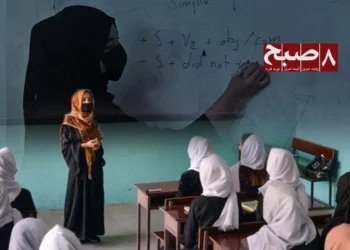
Since the Taliban took power in Afghanistan in 2021, teachers have faced numerous challenges. After the takeover, the Taliban widely barred female teachers from educational activities and closed schools for girls above sixth grade. This crackdown directly impacted girls’ right to education and women’s opportunities to teach. The Taliban’s discriminatory policies have also reduced teachers’ salaries, particularly for female educators, causing economic hardships for many families. As a result, teachers have been marginalized, and their role in society and decision-making processes has been overlooked, leading to a decline in the quality of education.
The dire economic situation and lack of adequate resources have forced many teachers to struggle to meet their basic living needs. Female teachers, in particular, experience psychological distress due to unemployment and their inability to continue their educational careers. This crisis has severely affected Afghanistan’s educational system, especially regarding access for women and girls.
Many teachers report that their passion and motivation for teaching have diminished since the Taliban’s takeover. They attribute this decline to the Taliban’s excessive focus on building religious schools and their failure to employ educated and qualified youth in government positions, which has further disillusioned the public with the educational and academic system.
Previously, Hibatullah Akhundzada approved the creation of 100,000 jobs for religious schools. Last year, the Taliban’s Ministry of Education announced plans to build a large religious school in each provincial capital, with a capacity of 1,000 students, and three to ten religious schools in every district.
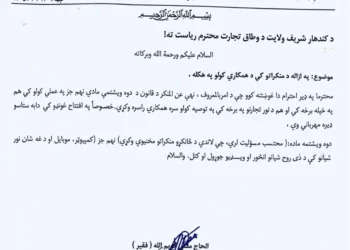
The Taliban’s Ministry of Higher Education has also mentioned plans for a “specialized religious school” in every zone. In a media-circulated letter from the ministry, officials stated that each school would have 79 positions, but they provided no information regarding salaries and benefits for these roles. Last year, the Taliban’s Ministry of Education reported the registration of about 6,000 official religious schools and 15,716 unregistered religious schools and Quranic centers across the country. They even converted the Arg (Presidential Palace) into a religious school.
The group transformed the Presidential Protective Service (PPS) training facility within the Arg compound into a religious school named “Ahsan-ul-Uloom.” However, details about its curriculum remain unavailable, and it is unclear who qualifies to receive religious education at this school.
You can read the Persian version of this daily report here: