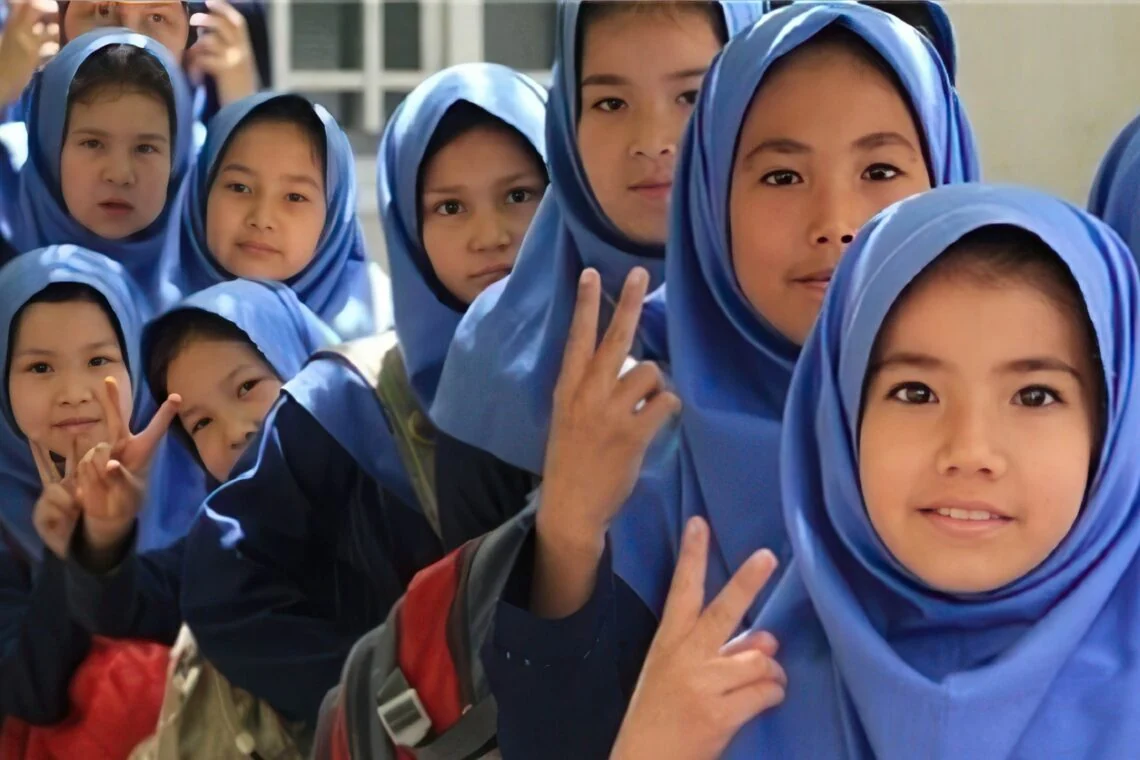
Several citizens of Afghanistan who went to Iran to continue their children’s education, after the Taliban banned education for girls above the sixth grade, have expressed concern over growing restrictions on the enrollment of migrant children in Iranian schools. They say that since last year, Iran has adopted a procedure under which only families who hold Iranian residency documents, or in which one parent is an Iranian citizen, can enroll their children. They add that Iran has made residency documents a basic requirement for enrollment while at the same time refusing to extend migrants’ visas. According to them, additional costs and full school capacity, despite completing complex administrative procedures, also prevent their children from being enrolled. These migrants stress that Iran’s decisions have once again left their children in limbo. They are calling on the Iranian government to facilitate the enrollment of children from Afghanistan in schools and to refrain from imposing restrictions similar to those the Taliban have imposed on education.
Hassan (pseudonym), a migrant from Afghanistan who went to Iran to continue his children’s education, considers Iran’s recent policies on the enrollment of migrant children in schools worrying. He says that since last year, Iran has adopted a procedure under which holding legal residency documents is one of the main requirements for enrolling children in schools, while the country does not extend migrants’ visas.
Hassan says: “We are forced to live illegally in Iran because this country does not extend our visas. For this reason, we have been deprived of many social activities, and our children cannot continue their education either, because legal residency documents are required to study in Iran. We even face problems when going to a hospital. The women of the family are deprived of many social rights and cannot easily go to a hospital.”
Shabir (pseudonym), another migrant from Afghanistan in Iran, says that school officials refuse to admit migrant children under various pretexts. He stresses that children, regardless of their nationality, should enjoy the right to education and that the ground should be prepared for all of them to study. According to him, this situation has left his family uncertain about the future of their children and about continuing life in Iran.
This migrant says: “We went to several schools, but they did not enroll my children because we do not have residency documents and they consider us unauthorized nationals. We went to both public and private schools, but none of them accepted my children. I am very worried and distressed about this situation. It has been two years since my residency permit expired. I applied to renew it last year and tried again this year, but I was not successful. The schools also use the lack of residency as an excuse, and my children cannot study. I am very worried about this uncertainty.”
Seyar (pseudonym), another migrant from Afghanistan in Iran, says that the deprivation of children from education has not only caused them to fall behind in their studies but has also affected their mental health.
Seyar adds: “Our children have been left behind in their education because of the restrictions in Iran, including the non-renewal of visas, red tape, and complex systems. Various documents are requested for their enrollment in schools, and these conditions have prevented our children from continuing their studies. This situation has caused serious psychological harm and great stress for the children. We call on the responsible institutions to address the problems of migrants.”
Shayesta (pseudonym), another migrant from Afghanistan in Iran, says that the demand for numerous documents and the complexity of the school enrollment process have made it difficult for migrant children to access education. According to her, many families are unable to enroll their children in schools because they cannot provide the required documents.
This girl says: “Families go to schools repeatedly to enroll their children, but they face many problems. The first requirement for enrollment is having legal residency documents, and various documents are requested from families. We were forced to come to Iran and had residency documents for a while. My sister studied up to the first grade at an Iranian public school, but after our residency documents expired, she could no longer continue her education.”
Salem (pseudonym), another migrant from Afghanistan in Iran, says that after going through the lengthy process of enrolling their children in schools, migrant families face the rejection of their admission requests. These migrants are calling on the Iranian government to review the conditions for enrolling migrant children and to make it possible for all migrant children from Afghanistan to access education.
This man says: “At the start of the academic year, our children who do not have visas are asked for legal residency documents when they go to schools. If we do not have these documents, they leave us wandering from place to place. To enroll the children, we must obtain a letter, but it is not even clear whether schools will accept this letter or not. We go to different schools to enroll our children, but our efforts remain fruitless. In these circumstances, our children and their educational future suffer the most.”
After taking control of Afghanistan, the Taliban have deprived girls above the sixth grade of the right to education. Following these bans, the doors of universities and higher and semi-higher education institutions were also closed to women and girls. As a result, several families turned to online schools to continue their children’s education, while others left Afghanistan and went to neighboring countries, including Iran and Pakistan.
However, families who migrated to Iran to continue their children’s education now say that their children face restrictions in enrolling in schools there. They cite the lack of legal residency documents, the demand for numerous documents, and full school capacity as the main obstacles to enrolling their children.
This comes as official regulations and circulars of Iran’s Ministry of Education state that education is the right of all children, regardless of their nationality and residency status.
The United Nations Assistance Mission in Afghanistan (UNAMA) also says that about 3.8 million girls aged seven to 18 in Afghanistan are deprived of education, and that about 250,000 more girls are permanently shut out of secondary education each year.
In addition, Iran’s parliament has approved a bill under which foreign nationals and migrants who enter Iran illegally or reside in the country illegally will face fines of up to 10,000 euros and deportation from the country.
You can read the Persian version of this report here:
از ممنوعیت طالبان تا محدودیتهای ایران؛ کودکان مهاجر افغانستان از ادامه آموزش بازماندهاند