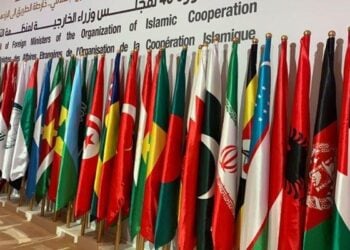
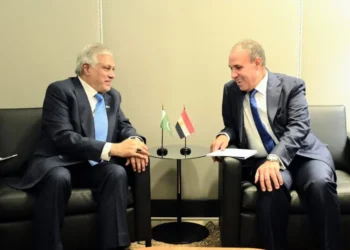
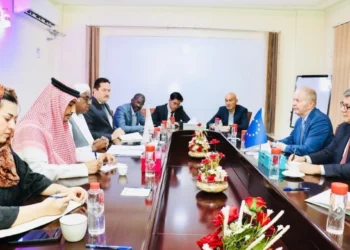
The Organization of Islamic Cooperation (OIC), hosted by Pakistan, held a conference titled “Girls’ Education in Muslim Communities” on January 11-12 in Islamabad. The conference sparked varied reactions due to the absence of the Taliban, despite being invited. Some former diplomats believe Pakistan, leveraging its influence in the OIC, is using such events to pressure the Taliban and achieve its own goals. Meanwhile, some human rights and women’s activists claim the Taliban avoided participation because they lack justification for their actions. Malala Yousafzai, one of the conference speakers, called on attendees to recognize the Taliban’s gender apartheid in Afghanistan. The OIC and the International Union of Muslim Scholars emphasized in their statements the necessity of equal education for boys and girls and called for the provision of educational opportunities for girls in Islamic societies.
The OIC conference on “Girls’ Education in Muslim Communities” was hosted by Pakistan in Islamabad on January 11-12. Pakistan announced that the Taliban had been invited, but no representative from the group attended. The conference, focusing on girls’ education in the Islamic world, especially in the context of the Taliban’s ban on girls’ education in Afghanistan, provoked widespread reactions. Diplomats and political activists linked Pakistan’s hosting of the event and the Taliban’s absence to the recent tensions between Islamabad and the Taliban regime in Kabul. Zalmay Khalilzad, former U.S. envoy for Afghan peace, also noted that Pakistan’s intent with the conference was to embarrass the Taliban.
Mohammad Ebrahim Ghafoori, a former Afghan representative to the OIC, told to the Hasht-e Subh Daily that Pakistan holds significant influence within the OIC and is using it to pressure the Taliban into complying with Islamabad’s demands. He added that most of the statements and resolutions of this organization are influenced by the host countries. He emphasized that Pakistan hosted the OIC conference after heightened tensions with the Taliban to apply pressure on them and to demonstrate Islamabad’s strong position and influence within international and Islamic organizations.
Ghafoori further noted that the OIC traditionally aligns with Arab countries, including Saudi Arabia, and Pakistan, supported by these Arab nations, holds a prominent role in the organization. According to him, Iran might be the only country at the conference to support the Taliban’s stance on girls’ education, while other nations would respond in line with Islamabad’s position. He clarified that most of the conference’s decisions are advisory and not binding.
Zalmay Khalilzad wrote on X (formerly Twitter) that Pakistan should use the conference on Girls’ Education in Muslim Communities to shame the Taliban Supreme Leader for imposing severe restrictions on women’s education. He also described the event as a publicity move amidst the recent tensions between the Taliban and Pakistan.
Meanwhile, some women and girls argued that the Taliban refrained from attending the conference due to embarrassment and their inability to justify their ongoing restrictions. They noted that not only Pakistan but any other Islamic country hosting such a meeting would leave the Taliban with no arguments to defend their misogynistic actions and gender apartheid policies.
Parisan (pseudonym), a protesting Afghan girl, stated that the Taliban have spent the past three years doing everything they can to suppress and marginalize women under various pretexts. She explained that the Taliban know they cannot defend their misogynistic practices and gender apartheid, even within Islamic organizations. Therefore, they prefer to remain silent as they have no valid arguments or justifications for their actions.
Human rights activists also noted that the OIC conference in Pakistan sent a strong message by intellectually disarming the Taliban and rejecting their religious edicts banning women’s and girls’ education. According to them, the conference explicitly condemned the Taliban’s actions as contrary to Islamic values.
Suraya Azizi, a human rights activist, told to the Hasht-e Subh Daily that the Taliban aim to present themselves as the sole authority on religious decrees. She explained that the Taliban use religious edicts and Sharia to legitimize their policies, including their ban on women’s education. Azizi emphasized that participants at the OIC conference declared, based on Islamic teachings, that banning women’s education is a “major sin.” The conference, she said, aimed to strip the Taliban of their claim to monopolize religious decrees.
Azizi added that the Taliban’s participation in the conference would have amplified the message of disarming their ideological claims. Their attendance would have symbolized their direct involvement in delegitimizing their religious edicts.
Malala Yousafzai, Nobel Peace Prize laureate, urged Islamic countries at the conference to recognize the Taliban regime as a perpetrator of gender apartheid. She stated that the Taliban use cultural and religious justifications to mask their actions against women and girls. Yousafzai called on Islamic leaders not to grant legitimacy to the Taliban regime.
Expressing concern over the situation of Afghan women, Yousafzai stressed that the Taliban are erasing an entire generation of girls through their misogynistic policies. She urged Muslim scholars and leaders to prevent the systematic exclusion of women and girls in Afghanistan. Yousafzai stated: “The Taliban’s mission is clear: they want to remove women and girls from every aspect of public life and erase them from society. They have established a system of gender apartheid.”
Hissein Brahim Taha, Secretary-General of the OIC, reiterated the organization’s commitment to ensuring and promoting girls’ education in Islamic societies. He noted that the Islamabad conference, titled “Girls’ Education in Muslim Communities: Challenges and Opportunities,” was jointly organized by Pakistan and the Muslim World League.
The OIC Secretary-General emphasized that educated women are invaluable assets to Muslim societies and that their participation is crucial for development. He added that OIC resolutions at both the summit and ministerial levels have consistently and unequivocally emphasized the importance of girls’ education, prioritizing sustainable policies and sufficient funding.
Simultaneously, Mohammad bin Abdulkarim Issa, Secretary-General of the Muslim World League, stated on the first day of the OIC conference that some groups misuse Islam’s name to hinder girls’ education. He noted that such actions have no place in Islam and pledged efforts to refute the misuse of Islam to justify such practices. Al-Issa added that while misconceptions exist in some Islamic societies, Islamic scholars gathered at the conference have worked to reject these beliefs and issue a joint statement. This statement emphasizes the necessity of women’s education for societal progress and reflects the consensus of Islamic scholars and schools of thought.
Afghanistan is currently the only country in the world where girls and women are deprived of the right to education, learning, and work. Over the past three years, the Taliban have issued more than 80 decrees restricting women and girls, leading to their exclusion from many social, cultural, and economic aspects of life. Despite domestic and international pressure, the Taliban continue to impose restrictions and intensify the suppression of women’s demands.
You can read the Persian version of this report here:
نشست سازمان همکاری اسلامی؛ از شرمساری طالبان تا تشدید فشار علیه این گروه