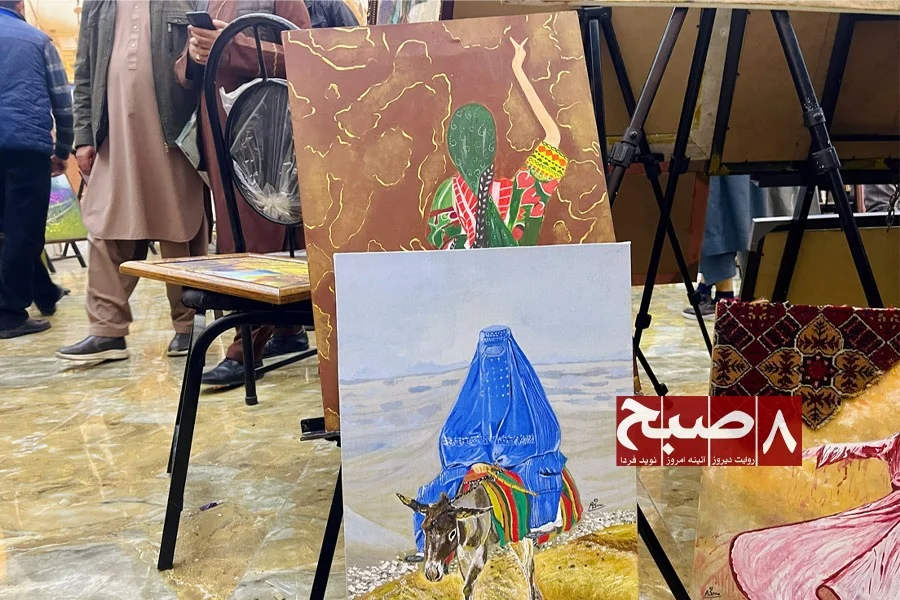
A number of young painters and calligraphers have expressed concern over the lack of a market and customers for their artwork. They say the absence of support and the decline in public interest in buying art have reduced their motivation to continue working. According to them, economic hardship is one of the biggest challenges they face. They add that they do not have enough commissions or art projects, and that suitable exhibitions and markets for displaying and selling their work are also limited.
Zainab (pseudonym), a painter, says she is passionate about portraying the untold stories and problems of society, but the lack of a market for her artwork has left her worried. According to her, the Taliban visited her gallery, barred her from painting living beings, and shut down her gallery for three weeks.
The painter says: “The Taliban do not allow me to paint living beings. On the other hand, our art has no market. Things were better before. We used to receive commissions and sell our work, but now our only source of income is teaching other girls. I earn 600 Afghanis a month by teaching girls.”
Jawid (pseudonym), a calligrapher, says the lack of support for artists and the decline in public interest in buying art have caused artists to lose their motivation to work. He adds: “There is no market for sales, and many of my calligraphy works have been lost. The biggest challenge we artists face is economic hardship. We have no commissions or projects, and there are no suitable exhibitions or markets to sell our work. These are other major challenges we are dealing with.”
Khadija (pseudonym), a painter, also complains about the lack of a market for selling her artwork. According to her, the art market was in better shape in the past, but she has now turned to online platforms to sell her paintings.
This painter says: “I have been painting for eight years. In the final years of the Republic, people’s attitude toward painting had improved greatly, and we received commissions and our work sold. But after the Taliban came to power, along with other sectors, the art of drawing and painting was also upended and lost its customers and market. Now we have no customers in the gallery, and I am trying to sell my paintings online.”
Ayesha (pseudonym), who is studying drawing, says that after the doors of schools and universities were closed to her and thousands of other girls, she was forced to find another way to express her thoughts and demands.
The girl adds: “I turned to painting because I did not want to stay silent and simply wait for the universities to reopen. I wanted to create; especially when the colors were taken from my life, I decided to repaint my life with colors. For me, drawing is not just about sketching lines. It is a place where I can still hold a brush, create, and speak, and in this way carry the voice of the girls of Afghanistan to the people of the world.”
This comes as, following the Taliban’s takeover and the closure of the doors of education and equal opportunities for women and girls, the art of painting in Afghanistan has become an arena of protest and resistance. Girls who have been deprived of education portray their pain, restrictions, and suffering with brush and color.
You can read the Persian version of this report here:
نقاشان و خطاطان در تنگنای محدودیت و نبود بازار؛ هنر واپسین نفسهایش را میکشد