• 8AM.MEDIA
  • ویب‌سایت فارسی
  • پښتو ویب‌پاڼه
  • اۉزبېکچه ویب‌سایت
  • Podcast
Wednesday, November 11, 2026
Hasht-e Subh
  • Home
  • News
    • Afghanistan News
    • World News
  • Opinion
    • Editorial
    • Analysis
  • Reports
    • Daily Reports
    • Investigative Reports
  • Society
    • The story of people
  • Women’s Word
  • Columns
    • Three Years After Afghanistan’s Fall: The Taliban’s Resurgence
    • Towards Equality
    • The Resurgence of the Taliban: Two Years Since Afghanistan’s Fall
    • Hebatullah Report Special Edition
    • Resistance for Education Special Edition
    • Special Column on Taliban’s Education Curriculum
    • Nawroz
  • Interviews
  • Contact Us
    • About Us
    • 8AM MEDIA Annual Awards
    • Submit an Article to Hasht-e-Subh
  • 8am.mediaBack
Subscribe
No Result
View All Result
  • Home
  • News
    • Afghanistan News
    • World News
  • Opinion
    • Editorial
    • Analysis
  • Reports
    • Daily Reports
    • Investigative Reports
  • Society
    • The story of people
  • Women’s Word
  • Columns
    • Three Years After Afghanistan’s Fall: The Taliban’s Resurgence
    • Towards Equality
    • The Resurgence of the Taliban: Two Years Since Afghanistan’s Fall
    • Hebatullah Report Special Edition
    • Resistance for Education Special Edition
    • Special Column on Taliban’s Education Curriculum
    • Nawroz
  • Interviews
  • Contact Us
    • About Us
    • 8AM MEDIA Annual Awards
    • Submit an Article to Hasht-e-Subh
  • 8am.mediaBack
No Result
View All Result
Hasht-e Subh
No Result
View All Result

Part Four: Education Under the Shadow of Fear

Translated by Farida Fazili | Originally written in Persian by Behniya

8AM Media 8AM Media
11 November 2026 - Solar Hijri Date: 1405/08/20 [t_time:1794397070]
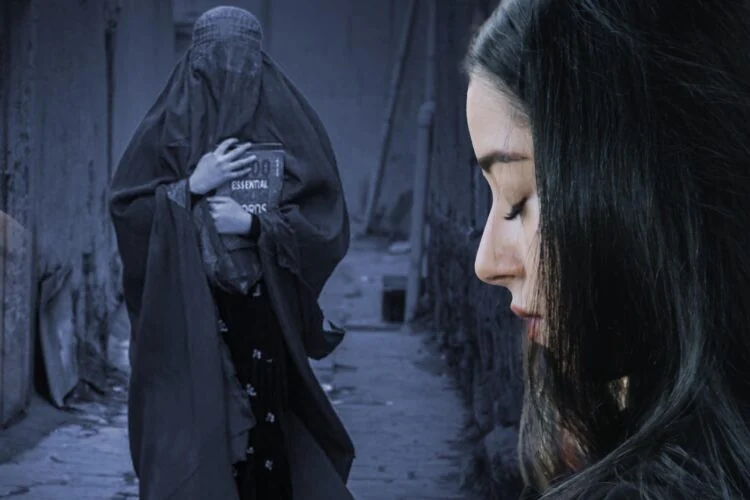
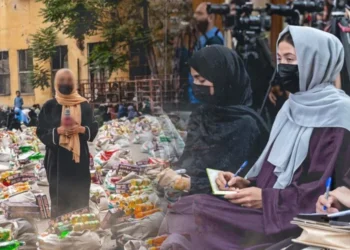
An Afghan woman in a burqa holds a book in a narrow alley, while another young woman stands in the foreground, reflecting the challenges women face in accessing education and living under restrictions (Photo: Pexels+Zaifa Mohammadi)

Pexels+Zaifa Mohammadi

Continuing our studies for nine months in an extremely restrictive environment was a difficult experience. We had been deprived of almost everything, and the only thing we could do was listen to lecturers imposed on us by our professors. Every day, new rules and discriminatory regulations were imposed on students. Class schedules were changed, and the number of credits assigned to the Culture course was increased several times compared with other subjects. We were forced to attend classes without missing a single session and spend hours listening to material that did not align with our wishes or beliefs. Professors also continued teaching with extreme caution, avoiding any opposition to the prevailing situation and working under the shadow of fear and pressure. Students, meanwhile, had no choice but to accept the imposed learning environment. No one was allowed to disagree or freely express their views. Efforts were made to restrict discussion further each day, reducing classes to lectures delivered solely by professors.

Any questions or criticism about the prevailing situation had been prohibited. Students and professors were forced into silence and had no choice but to accept conditions that left everyone struggling to breathe. Courses that had previously followed a student-centred approach were reduced to one-way lectures after the Taliban tightened their control over university life. These lectures dictated the beginning and end of every class. After enduring hours in this suffocating environment, students would leave the university mentally exhausted and carrying a heavy burden of suffering.

The restrictions did not only affect the learning environment and students’ ability to participate actively and critically in class. To prevent information from leaking and details about what was happening inside the university from being exposed, the Taliban had also banned female students from using smartphones. If a student was found carrying a smartphone, she would face disciplinary action, have her phone confiscated and be subjected to insults and humiliation. In such an environment, students were even deprived of the opportunity to document and report what was happening on campus. Everything was placed under the shadow of surveillance, fear and enforced silence.

The university’s public library had once been a quiet and welcoming place for students. Both female and male students went there to work on academic projects, gather information and read books. But that lively and inspiring atmosphere was gone. One of the saddest developments was the removal of books from shelves that had preserved years of history and the collective memory of many writers. On the Taliban’s orders, books that did not align with the group’s views were removed from the shelves and replaced with religious books.

Students were confused by these sudden and deliberate changes. It seemed that something had disappeared from the once vibrant university environment: hope, a vision for the future and ambition, three essential elements that shape a student’s identity and create opportunities for growth. Yet, after the university reopened, none of these qualities could be seen among students. In an extremely restrictive and dictatorial environment where education was built on fear, students had no choice but to accept the conditions and obey strict rules if they wanted to obtain their degrees.

In this suffocating environment, girls’ clothing became a greater concern than anything else. It was not education, ability or academic achievement that mattered, but what female students wore. If a student did not observe the Taliban’s required hijab or wore colourful clothing, she would be barred from attending class and sent away with insults and humiliation. Each of us has painful memories of how we were treated because of our clothing: insults, humiliation, expulsion and even being denied academic certificates. Some students were prevented from attending classes simply because their hijabs had a few small coloured dots. Others faced insults and humiliation and were slapped hard across the face for resisting and arguing in defence of their clothing choices. These were only a few examples among thousands of students who were insulted, humiliated and beaten because of what they wore.

Studying at a university under Taliban rule for nearly nine months was a difficult, bitter and painful experience. The university had become a place where fear replaced freedom, obedience replaced questioning, and restrictions replaced learning opportunities. These restrictions gradually fuelled students’ anger and strengthened their collective sense of resistance against the ruling group. Eventually, that growing sense of protest led to demonstrations, which came at a cost to some students.
ShareTweetSendSendShare

Related Posts

A black and white portrait of a young woman showing half her face (Photo: Pexels)
No category

A Girl’s Dreams and the Cruelty of the World

10 November 2026 [t_time:1794310575]
Afghan women journalists document humanitarian challenges and report on issues affecting women and communities, continuing their work despite growing professional restrictions and challenges (Photo: AFP)
No category

Women Journalists in Afghanistan: Standing Firm Against Silence

9 November 2026 [t_time:1794224137]
A view of the greenery of Badakhshan and a silhouette of a girl looking up (Photo: Wikipedia + Pexels)
No category

A Gift from Badakhshan

8 November 2026 [t_time:1794138668]

Latest

Loading latest news...

Popular stories

  • Iranian Foreign Minister Seyed Abbas Araghchi speaks during a public appearance (Photo: Farsnews)

    Araghchi Warns: US Must Choose Between Accepting Iran’s Proposal and Continuing the War

    Share
    Share Tweet
  • UN Report Reveals Shifts in Family Attitudes and Rise in Domestic Violence in Afghanistan

    Share
    Share Tweet
  • UAE Official: Risk of War Between US and Iran Remains

    Share
    Share Tweet
  • Iranian Media Report Explosions in Southern Iran

    Share
    Share Tweet
  • ISIS-Khorasan: A Real Threat to the People of Afghanistan and a Political Opportunity for the Taliban

    Share
    Share Tweet

Podcast

Insights
Insights

Join Lynne O’Donnell for 8AM’s podcast series, Insights.
Lynne talks with generals, diplomats, soldiers, journalists, politicians, activists, people who have front row seats for conflicts around the world, and citizens with a story to tell, happy or sad. For this first series, Afghanistan is the focus. Lynne and her guests talk about the collapse of the republic in August, 2021, and the impact since — for the people of Afghanistan, for the security of the region, for the safety of the world. It’s important, interesting and insightful.

Insights/22: Controlling the Narrative with Mina Sharif
byinsights8am

Controlling the Narrative

Lynne O’Donnell talks with Mina Sharif, author, activist, women’s rights campaigner, educator and mentor. They discuss who controls the narrative and who speaks for Afghanistan’s people when the Taliban appear to have seized control not only of the country but of the message, too.

Have a listen

Insights/22: Controlling the Narrative with Mina Sharif
Episode play icon
Insights/22: Controlling the Narrative with Mina Sharif
Episode Description
Episode play icon
Insights/21: Media Meltdown with Zahra Joya
Episode Description
Episode play icon
Insights/20: Terror Inc with Scott Richards
Episode Description
Episode play icon
Insights/19: Busting Stereotypes with Bushra Gohar
Episode Description
Episode play icon
Insights/18: Media Matters with Waliullah Rahmani
Episode Description
Episode play icon
Insights/17: What Goes Around Comes Around with Sima Samar
Episode Description
Search Results placeholder
Hasht-e Subh

8AM Media, also known as Hasht-e-Subh Daily, stands as Afghanistan's premier independent and non-profit newspaper, resonating as a beacon of journalistic integrity since its establishment in June 2007 by esteemed Afghan journalists and human rights advocates. With a steadfast commitment to citizen journalism and civic education, Hasht-e-Subh Daily has earned its place as the most esteemed publication in the nation.

Publisher: Sanjar Sohail
Email: [email protected]
Executive Director: Parwiz Kawa
Email: [email protected]

Read More

Part Four: Education Under the Shadow of Fear

FAO Warns Rising Fertilizer Prices Threaten Afghanistan’s Agricultural Production

Akhundzada Orders Offices to Drop “Foreign” Words Such as “Budget” and “System”

“Many People Should Not Read This Book”: Interview with Homeira Qaderi

The Survival Economy in Afghanistan: When Securing Basic Needs Replaces Production and Jobs

Editor’s Choice

Every Saturday morning, 8AM MEDIA English Services Department will guide you through the week’s biggest stories from Afghanistan and the international community.

Subscribe

© 2026 - ©Hasht-e Subh Daily

No Result
View All Result
8am.Media
پښتو ویب‌پاڼه
ویب‌سایت فارسی
اۉزبېکچه ویب‌سایت
  • Home
  • News
    • Afghanistan News
    • World News
  • Opinion
    • Editorial
    • Analysis
  • Reports
    • Daily Reports
    • Investigative Reports
  • Society
    • The story of people
  • Women’s Word
  • Columns
    • Three Years After Afghanistan’s Fall: The Taliban’s Resurgence
    • Towards Equality
    • The Resurgence of the Taliban: Two Years Since Afghanistan’s Fall
    • Hebatullah Report Special Edition
    • Resistance for Education Special Edition
    • Special Column on Taliban’s Education Curriculum
    • Nawroz
  • Interviews
  • Contact Us
    • About Us
    • 8AM MEDIA Annual Awards
    • Submit an Article to Hasht-e-Subh
  • 8am.media

© 2026 - ©Hasht-e Subh Daily