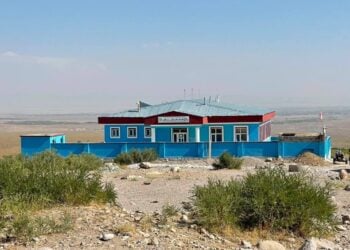
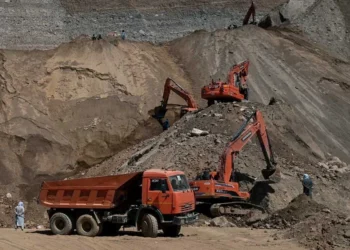
Residents of the Samti area in Chah Ab District of Takhar Province rose in protest, armed with stones and sticks, against Taliban-affiliated companies they accused of plundering gold mines and destroying their water wells. As the demonstrations unfolded, Taliban fighters opened fire on the crowd, killing three local youths. Protesters struck back, killing one Taliban fighter with a shovel. Several residents and Taliban fighters suffered injuries. In the chaos, protesters burned company equipment, and the miners fled the area. Sources say two residents of Kandahar, involved in looting the mines and working as commission agents for Chinese companies, have been forcibly seizing local land. As a result of land grabbing and excavation, drinking water wells in the area have dried up.
Yesterday, tensions escalated when residents of the Samti area clashed directly with Taliban-affiliated companies extracting gold in the district. The confrontation left three residents and one Taliban fighter dead. Local sources say that after the three residents were killed, people poured into the streets and protested, forcing Taliban fighters who had fired on civilians in defense of the companies to retreat.
Local sources confirm that Taliban gunfire killed three youths named Fahimullah, Misdaqullah, and Qari Hamid, while nearly 20 others were wounded. One source added that another wounded person later died in the hospital, though his identity remains unknown. Residents buried the dead yesterday, while the Taliban surrounded the area. Sources also report that residents killed one Taliban member with a shovel and sticks, and injured two other fighters.
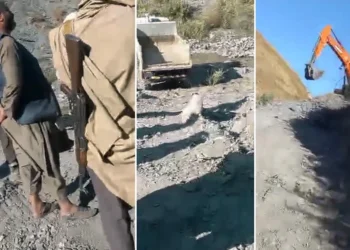
Meanwhile, images and videos shared on social media show protesters attacking the company with sticks, pickaxes, and stones, chasing the miners toward nearby mountains and hills.
One resident of Chah Ab District told the Hasht-e Subh Daily that people opposed gold extraction not only because it took place on private land, but also because mining had dried up their water wells, leaving the community facing severe shortages. He said residents repeatedly approached Taliban institutions to seek a solution, but received no meaningful response. According to him, the companies, owned by residents of Kandahar Province with partners from Baghlan and Kunduz, continued their operations despite local opposition.
“The water in our wells has completely dried up,” the resident said. “We went many times to complain, but neither the companies nor the Taliban paid attention. People had no choice but to protest and attack with stones and sticks, and that is when the company owners fled.”
Another resident of Chah Ab District, who asked not to be named, said non-local miners had troubled the community for some time. “In recent days, the miners destroyed an area that supplied our drinking water,” he said. “That is why residents stood up against them with stones and sticks. The miners have now fled, and Taliban forces have surrounded the district.”
Sources identify the companies as belonging to Haji Mohib and Haji Ruhullah Ruhani from Kandahar Province. They are described as commission agents for Chinese companies who seize people’s land and sell the areas to Chinese firms. Sources say that a few days ago, workers from these companies began digging on private land without informing residents or local Taliban institutions, triggering a strong backlash from the community.
Earlier, the Taliban had also clashed with residents in the Shahr-e Buzurg and Raghistan districts of Badakhshan, leaving several people killed and wounded.
As these protests continue, strong reactions have spread across social media from citizens of Afghanistan living abroad. They have accused the Taliban of seizing people’s land and property and have urged other citizens of Afghanistan, particularly those in Badakhshan Province, to stand up. They say dozens of Taliban-affiliated companies are illegally extracting minerals in the province, causing serious damage to the environment and natural resources.
Earlier, Foreign Policy magazine reported, citing a confidential diplomatic document, that the Taliban provide al-Qaeda commanders and operatives with support ranging from weapons to women, housing, and passports. The report said the Taliban helped al-Qaeda access a vast network described as a heroin empire.
According to another Foreign Policy report, al-Qaeda has earned a total of 194.4 million dollars since mining operations began in early 2022. The report states that, under Taliban protection, the al-Qaeda network has employed tens of thousands of workers for illegal mining in Badakhshan and Takhar, earning tens of millions of dollars each week from gold mines in the two provinces.
You can read the Persian version of this report here:
غارت معادن و قطع آب؛ باشندهگان تخار با چوب در برابر تفنگ ایستادند