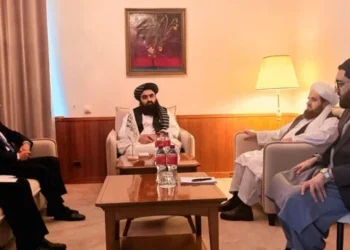
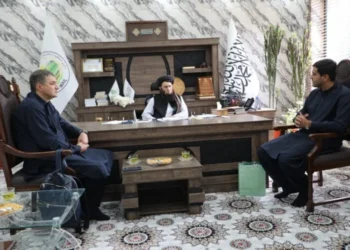
With the collapse of the Afghan Republic in August 2021, the Taliban once again seized control of Afghanistan. The group’s founding philosophy has been rooted in imposing Islamic values through force. Rigid in their doctrinal beliefs drawn from religious texts, the Taliban reject any other Islamic group that does not mirror their ideology. While they may not always express overt opposition, they have consistently and harshly suppressed ideological rivals behind the scenes. Nearly four years have passed since the Taliban’s return to power, yet aside from Russia, no country has officially recognized their regime. Lacking both domestic and international legitimacy, the Taliban have been striving to establish diplomatic ties with regional and transregional powers. At the same time, global and regional actors have sought to maintain strategic engagement with the Taliban for their interests.
Among the key regional players, Qatar has played a pivotal role in facilitating the Taliban’s diplomatic resurgence. The opening of the Taliban’s political office in Doha in 2013 marked their initial entry into the diplomatic arena, while the war in Afghanistan still raged. This office was tasked with managing political affairs and engaging with the international community, particularly the United States. One of its most consequential achievements, realized through the active involvement of Qatari and Pakistani officials, was bringing the Taliban to the negotiating table with the U.S. Qatar’s contribution to the Taliban’s diplomatic success can be analyzed across several dimensions:
First
Qatar provided the platform for the Taliban to open their political office, enabling them to initiate formal dialogue and diplomatic engagement with other nations. This move was undoubtedly coordinated with the United States. In 2018, Qatar signed a Strategic Partnership Agreement with the U.S. and is considered one of Washington’s key non-NATO allies. In addition to hosting approximately 10,000 American troops at Al Udeid Air Base, Qatar plays an active role in securing broader U.S. interests in the region. As such, the opening of the Taliban’s political office did not conflict with U.S. strategic objectives. Qatar played a central role in brokering the U.S.-Taliban Agreement, a deal that would not have materialized without Pakistan’s involvement. Through these efforts, Qatar has been instrumental in legitimizing the Taliban on the international stage.
Second
Since the Taliban’s return to power, much of the international engagement with Afghanistan has been channeled through Qatar. The country has provided a venue for meetings between Taliban officials and foreign representatives, and has repeatedly hosted summits on Afghanistan, serving as the backdrop for both overt and covert interactions between the Taliban and Western diplomats.
Third
Many countries currently lack embassies in Afghanistan and instead communicate with Taliban representatives through their diplomatic missions in Doha. In effect, Qatar has become a bridge between the West and the Taliban, facilitating dialogue in the absence of formal diplomatic recognition.
Fourth
Qatar has actively lobbied on behalf of the Taliban to improve their relations with the international community, especially with major powers like the United States. Although Qatar remains a close U.S. ally, its role in facilitating Taliban diplomacy has undoubtedly yielded strategic benefits for Doha as well. The U.S. maintains strong ties with the UAE, Qatar, and Saudi Arabia, three nations engaged in a quiet competition for Washington’s favor. In this rivalry, Qatar has managed to earn a higher degree of trust from the United States than its regional counterparts, thereby carving out a more influential role in regional affairs.
This raises a key question: Why are countries engaging with the Taliban?
Given the ongoing developments in the Middle East, many countries have opted for engagement over confrontation to protect their interests. The nature of this engagement varies, depending on each country’s strategic goals and calculations. Nearly four years after the Taliban’s return to power, only a handful of nations have initiated direct talks with the group. This reflects the fact that regional and global actors have largely waited for the United States to take a clear position on the Taliban. Now that the group’s presence in power is increasingly seen as aligning with Washington’s broader regional interests, other countries have followed suit by expanding their diplomatic engagement with the Taliban.
Overall, Qatar has played a decisive role in advancing the Taliban’s diplomatic ambitions as one of the most active and U.S.-aligned actors in the region. It facilitated high-level meetings between senior American officials and Taliban leaders, including engagements involving key Taliban ministers and the CIA director. Furthermore, Qatar has been instrumental in enabling the Taliban to gain access to Afghanistan’s diplomatic institutions in Europe and elsewhere in the region. For instance, Germany recently accepted two Taliban representatives at the Afghan consulate in the country, a move that Taliban Foreign Minister Amir Khan Muttaqi credited to Qatar’s efforts. This illustrates that the Taliban’s diplomatic breakthroughs would have been highly unlikely without Qatar’s mediation.
Nevertheless, the Taliban continue to rule Afghanistan through force. History has shown that regimes built on clandestine deals and lacking legitimacy do not endure. The Taliban, too, will eventually be relegated to the past.
You can read the Persian version of this anlysis here: