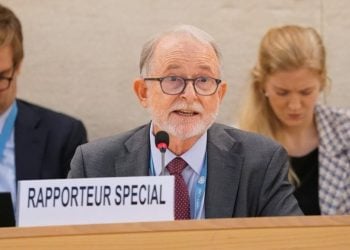
Richard Bennett, the United Nations Special Rapporteur on Human Rights, presented a report to the Third Committee of the UN General Assembly regarding the human rights situation in Afghanistan. This report highlights issues such as gender repression by the Taliban, the repercussions of their “Law for the Propagation of Virtue and Prevention of Vice,” discrimination against ethnic groups—especially the Hazara community—denial of access to justice, and violations of equality, the rule of law, civil space, and media freedom. It also addresses the rise in corporal punishment, child abuse, non-compliance with the rights of sexual minorities, and other human rights abuses.
In his speech, Bennett argued that the international community’s weak and disunited response has emboldened the Taliban. He urged global leaders to develop and implement a comprehensive action plan focused on human rights and gender issues in Afghanistan. He emphasized the importance of employing all international mechanisms, including the International Court of Justice (ICJ) in The Hague, to hold the Taliban accountable.
The UN Special Rapporteur expressed optimism that referring the Taliban’s discriminatory policies against women, with the backing of four countries, to the International Criminal Court would amplify the voices of all victims in Afghanistan. He noted that Afghanistan is currently experiencing an unprecedented and escalating human rights crisis, where media, civil society members, and ethnic minorities are under threat. He stressed that access to social, economic, and cultural rights has drastically decreased.
According to his report to the Third Committee, not only are girls and women in Afghanistan stripped of their rights to work and education, but boys also find themselves in a constrained learning environment that hinders their ability to gain the knowledge essential for today’s world.
During his address, the UN Special Rapporteur discussed practical tools and strategies to hold the Taliban accountable, asserting that countries should leverage their authority from the UN Security Council and General Assembly against the group. He highlighted the exclusion of women, who constitute half of Afghanistan’s population, from society.
At a press conference in New York last Friday, Mr. Bennett stated, “The inaction of the world has emboldened the Taliban. They must understand that widespread human rights violations will have consequences.” He added, “We must clearly communicate to current Taliban officials that there will be no normalization of relations or international legitimacy until there is significant improvement in the human rights situation.”
The UN Special Rapporteur announced that the International Criminal Court has initiated investigations into human rights violations in Afghanistan. He proposed that governments should prosecute Taliban officials involved in these abuses in their own courts, based on the principle of “universal jurisdiction.”
This request comes as the foreign ministers of Germany, Australia, Canada, and the Netherlands recently warned that if the situation for women and girls in Afghanistan does not improve and restrictions are not lifted, they will file a complaint against the Taliban with the International Court of Justice. Subsequently, over 23 countries worldwide have endorsed this initiative.
Last Friday, the UN Special Rapporteur shared his latest findings on the human rights situation with members of the UN General Assembly, underscoring the detrimental impacts of the Taliban’s “Law for the Propagation of Virtue and Prevention of Vice” on women and girls in Afghanistan. He noted that these human rights violations have prompted calls for stronger sanctions against Taliban leaders.
Simultaneously, Mr. Bennett criticized the conditionality of humanitarian aid to Afghanistan as harmful to its people. He reported a decline in aid levels and warned that attaching conditions to international humanitarian assistance would exacerbate the suffering of the population. He advocated for increased oversight of humanitarian aid distribution in Afghanistan instead of imposing conditions.
This criticism follows reports from the U.S. Special Inspector General for Afghanistan Reconstruction (SIGAR) and the United Nations Office for the Coordination of Humanitarian Affairs (OCHA), indicating extensive Taliban interference in humanitarian efforts. SIGAR’s report states that humanitarian aid is being diverted to the Taliban, while OCHA noted that this interference has temporarily suspended certain humanitarian projects in Afghanistan. The Hasht-e Subh Daily has also reported that the Taliban have heavily influenced the humanitarian aid process, attempting to divert international contracts through the establishment of private organizations for their gain.
On the other hand, the UN Special Rapporteur has documented widespread human rights violations committed by the Taliban, noting that Hazaras face violence from ISIS and discrimination from the Taliban. He has expressed profound concern for the plight of ethnic and religious minorities, particularly the Hazaras, emphasizing that many Hazaras, who are Shia Muslims, have faced unjust restrictions on their religious practices, particularly during the month of Muharram. He underscored the urgent need for accountability and effective protective measures against violence and discrimination directed at Hazaras and other threatened ethnic and religious groups.
The UN Special Rapporteur indicated that his recent report emphasizes the necessity for practical unity and global coherence to foster effective change after three years of Taliban rule. In an interview with UN Radio regarding his report to the UN General Assembly, he reiterated the main objective of this report is to reignite the commitment of countries toward Afghanistan, which he believes has been forgotten. He mentioned that the human rights situation and humanitarian crisis are worsening, warning that if left unaddressed, these issues could lead to mass migrations and transnational security threats.
Mr. Bennett expressed alarm over the increasing number of citizens migrating to escape fears of retaliation and security threats, stating, “Afghanistan is currently experiencing a major loss of skilled professionals. Engineers, judges, prosecutors, and many who served in the previous government have had to leave their homeland due to threats or concerns for their children’s education. They wish to return to a peaceful and stable Afghanistan.”
In this radio interview, the UN Special Rapporteur emphasized the importance of developing a roadmap and practical plan for Afghanistan’s future that includes women, civil society, and even the Taliban, referencing recommendations and proposals from Feridun Sinirlioğlu, the UN Special Coordinator.
Meanwhile, Naseer Ahmad Faiq, Afghanistan’s acting permanent representative to the United Nations, stated at the Third Committee of the UN General Assembly that the Taliban ignore the demands and will of the Afghan people. He asserted that the pressures and restrictions imposed by the Taliban on citizens have intensified. He noted that the Taliban have systematically targeted women and ethnic and religious minorities, continuously suppressing, torturing, and killing former military personnel over the past three years. He stressed that the Taliban are failing to uphold their international commitments and that their new laws have infringed upon all individual and collective freedoms of the Afghan people.
The UN Special Rapporteur has previously stated that the gender apartheid imposed by the Taliban against women in Afghanistan could constitute crimes against humanity. However, Barbara Woodward, the Permanent Representative of the United Kingdom to the United Nations and the current President of the UN Security Council remarked at the Third Committee of the UN General Assembly that recognizing gender apartheid in Afghanistan could detract from global efforts to support women.
While acknowledging the dire situation of women in Afghanistan as “very bad,” the British Ambassador did not endorse the activists’ campaign in Afghanistan or the calls from international figures for recognition of gender apartheid, dismissing it as a “theoretical discussion” that, in her view, distracts from efforts to assist women.
This concern has arisen as Malala Yousafzai, a Nobel Peace Prize laureate, urged Britain on Wednesday, October 30, to acknowledge gender apartheid in Afghanistan. During a meeting with a group of British parliamentary representatives, she emphasized the need to hold the Taliban accountable for their crimes against women.
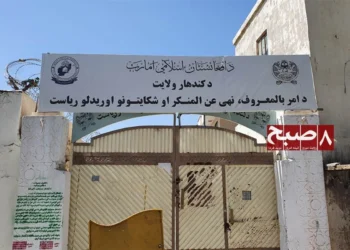
These issues have surfaced amid reports that the Taliban’s Acting Minister for the Propagation of Virtue and Prevention of Vice has recently declared it impermissible for one woman to hear “Alhamdulillah” and “Subhanallah” from another woman. In a voice recording, he discussed the Taliban’s new law prohibiting women from reciting poetry and religious texts, stating that it is forbidden for an adult woman to be heard by another adult woman.
You can read the Persian version of this daily report here: