In the contemporary world, relations between political systems and the people are defined through a specific legal and political interaction known as the “nation-state” relationship. This relationship rests on the principle that a country’s political system must be formed on the basis of the will and consent of the people. In such a system, the people are the source of the government’s legitimacy and have the right to demand that their rights be guaranteed and that the government be held accountable. In turn, governments consider themselves accountable to the people and responsible for protecting their rights.
In Afghanistan, the Taliban group has held power for more than five years without relying on the will of the people or a free political choice to obtain it. Taliban rule not only does not originate from the direct will and choice of the people, but the group also has no clear approach to accepting its political, legal, and constitutional responsibility toward the people. Likewise, the legal “nation-state” relationship, on which the legitimacy of government, accountability, and the guarantee of citizens’ rights depend, faces a serious challenge.
In the structure of Taliban rule, the use of force, coercion, and decree-based governance is considered one of the important features of the group’s political conduct. Instead of political participation and public consent, the Taliban use structures and institutions to consolidate their power that have become instruments for controlling and imposing restrictions on various segments of society.
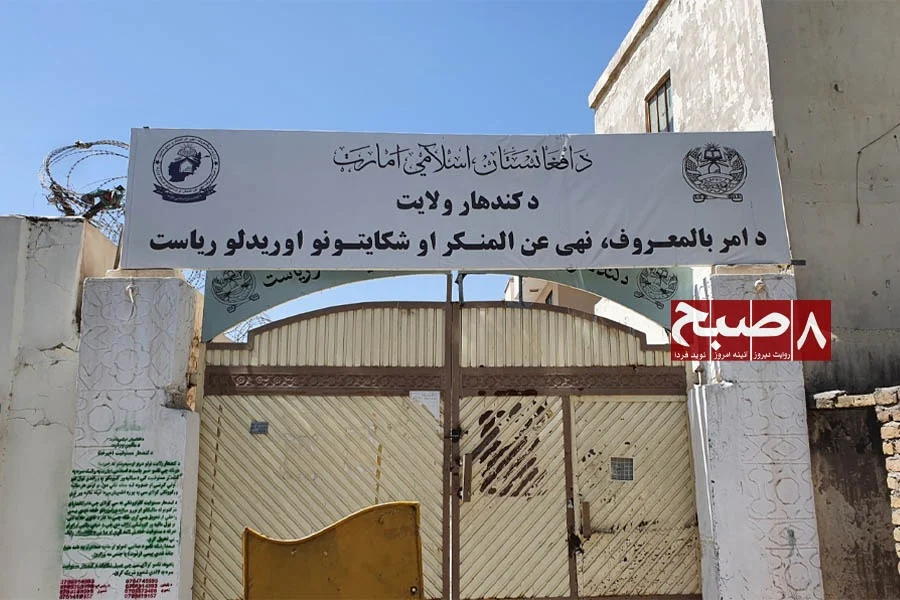
The creation of the Ministry for the Propagation of Virtue and Prevention of Vice is also an important part of this same policy. Ostensibly, this institution operates in the name of reforming society, encouraging good conduct, and preventing wrongful acts. However, numerous criticisms and reports about the performance of the Morality Police of this department show that a significant portion of their enforcement actions is linked to controlling people’s personal and social lives, imposing restrictions, and raising concerns over human rights violations.
Accordingly, the structure of the Propagation of Virtue and Prevention of Vice cannot be assessed merely as an institution for social reform. Rather, within the current structure of Taliban rule, this department is tied to a broad policy of controlling society, imposing obedience on the people, and consolidating the group’s illegitimate rule. The expansion of restrictions on people’s daily lives by the Morality Police of this department shows that, under the umbrella of “reform,” the institution is being used to exert force and consolidate the power of an unaccountable and unanswerable authority.
The Taliban are essentially trying to impose their extremist ideology on Afghanistan’s society through force and pressure. The Department for the Propagation of Virtue and Prevention of Vice is considered one of the important instruments of this policy.
In the Taliban’s model of governance, the principle of obedience and compliance has taken priority over the demands and fundamental rights of the people. The people demand answers from the Taliban on security, education, health, employment, economic opportunities, and other public services. Yet the widespread presence and interference of the Morality Police of the Ministry for the Propagation of Virtue and Prevention of Vice, instead of strengthening the people’s demands and questions, is used to impose restrictions on their personal and social lives.
During Taliban rule, the space for people to demand the fulfillment of their rights, or to raise the responsibility of the rulers regarding women’s education and employment, freedom of expression, and other human, civil, and social rights, has become more limited.
The Taliban are trying to keep the people’s demands regarding human, political, civil, social, and other rights out of the discussion of governance, to avoid the responsibility of being accountable to the people’s demands. However, this approach simultaneously confronts the Taliban with numerous social and political contradictions, because increasing pressure instead of responding to the people’s demands, instead of eliminating discontent, paves the way for it to deepen.
The activity of the Morality Police of the Ministry for the Propagation of Virtue and Prevention of Vice is not seen to the same extent in all provinces and regions. Based on the security, social, political, and economic conditions of each region, the Taliban use this department as an instrument for consolidating power. Wherever public discontent is greater, the level of social control and pressure also increases. In this way, a kind of inverse relationship has formed between public discontent and the pressure exerted by the Morality Police: the more public discontent grows, the more extensive the interference and pressure of the Ministry for the Propagation of Virtue and Prevention of Vice becomes.
The meaning of this situation is that, for the Taliban, public discontent is not a sign of the need for reform and accountability. Rather, it is interpreted as a sign of the need for more control and pressure. In such a system, instead of trust, consent, and mutual responsibility between the government and the people, a relationship based on fear, obedience, and forced control is strengthened. This very situation has further weakened the foundations of the legal “nation-state” relationship and has transformed the Ministry for the Propagation of Virtue and Prevention of Vice from a social institution into an important instrument for maintaining and consolidating power.
Kandahar: An Example of Increased Pressure and Social Control
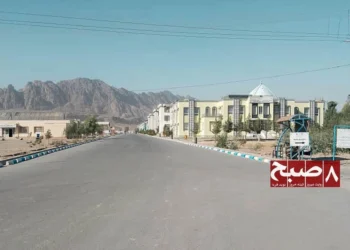
To clarify this situation, we examine Kandahar Province as an example. After returning to power, the Taliban did not exert extensive social and administrative pressure on the residents of Kandahar during the first two years, at least not to the extent we have witnessed since 2024. During this period, the presence and interference of the Morality Police were also less than at present, and people were able, to some extent, to manage their daily affairs using the administrative and commercial structures left behind by the former republic.
Several factors can be seen behind the increase in pressure. On the one hand, Kandahar’s geographic location, and on the other, the social structure and political experience of the province’s people, have created a situation in which easy acceptance of Taliban policies is difficult. The residents of Kandahar, who have long experience with the political, administrative, and commercial structures of past governments, seek stability, trade, and relative freedom in managing their daily affairs. Therefore, public resistance and discontent are also considerable.
However, with the expansion of the Taliban’s harsh policies, this relative situation gradually changed. On the one hand, extensive restrictions were imposed on the education and employment of girls and women, and on the other, restrictions on Kandahar’s commercial and economic situation also increased. At the same time, the expansion of the activities of the Ministry for the Propagation of Virtue and Prevention of Vice has provoked serious public concern.
Meanwhile, the residents of Kandahar are demanding the fulfillment and protection of their human rights, but the Taliban have raised more questions and restrictions toward them regarding beards, turbans, clothing, the way wedding celebrations are held, and other personal matters. In doing so, they are trying to turn peripheral issues into the main focus of public debate and divert people’s attention from the fundamental standards of governance.
The Structure of the Ministry for the Propagation of Virtue and Prevention of Vice and Its Link to Consolidating Power
One of the important differences between the previous and current periods of Taliban rule lies in the structure and manner of operation of the Ministry for the Propagation of Virtue and Prevention of Vice, and the professionalization and specialization of this institution. Since 2021, using the extensive administrative, technical, and logistical resources left behind by the former republic, the Taliban have built a larger and more orderly organizational structure within the Ministry for the Propagation of Virtue and Prevention of Vice. As a result, the activity of the Morality Police has shifted from individual and scattered interventions to more organized activity, and the geography and intensity of their operations have become linked to the social and political conditions of each region. In areas where questions, protests, and public discontent over Taliban policies increase, the Morality Police are used for social control and consolidation of power regularly and systematically.
As a result, it can be said that the Taliban use the Ministry for the Propagation of Virtue and Prevention of Vice as an instrument for controlling people’s personal lives to consolidate their illegitimate rule. In this vein, by granting extensive powers to the Morality Police of this department, it is used as an instrument for applying pressure, under the banner of social order and religious values, in regions where people raise questions about the economic and political situation.
In this way, the Ministry for the Propagation of Virtue and Prevention of Vice has become a harsh structure loyal to the views of Hibatullah Akhundzada, the Taliban Supreme Leader. It is a structure that has turned peripheral and personal matters into governance priorities and deliberately disregards the fundamental and human rights of the people.
You can read the Persian version of this analysis article here:
زیر سایه امر به معروف؛ تلاش طالبان برای تحکیم حاکمیت نامشروع