• 8AM.MEDIA
  • ویب‌سایت فارسی
  • پښتو ویب‌پاڼه
  • اۉزبېکچه ویب‌سایت
  • Podcast
Saturday, October 24, 2026
Hasht-e Subh
  • Home
  • News
    • Afghanistan News
    • World News
  • Opinion
    • Editorial
    • Analysis
  • Reports
    • Daily Reports
    • Investigative Reports
  • Society
    • The story of people
  • Women’s Word
  • Columns
    • Three Years After Afghanistan’s Fall: The Taliban’s Resurgence
    • Towards Equality
    • The Resurgence of the Taliban: Two Years Since Afghanistan’s Fall
    • Hebatullah Report Special Edition
    • Resistance for Education Special Edition
    • Special Column on Taliban’s Education Curriculum
    • Nawroz
  • Interviews
  • Contact Us
    • About Us
    • 8AM MEDIA Annual Awards
    • Submit an Article to Hasht-e-Subh
  • 8am.mediaBack
Subscribe
No Result
View All Result
  • Home
  • News
    • Afghanistan News
    • World News
  • Opinion
    • Editorial
    • Analysis
  • Reports
    • Daily Reports
    • Investigative Reports
  • Society
    • The story of people
  • Women’s Word
  • Columns
    • Three Years After Afghanistan’s Fall: The Taliban’s Resurgence
    • Towards Equality
    • The Resurgence of the Taliban: Two Years Since Afghanistan’s Fall
    • Hebatullah Report Special Edition
    • Resistance for Education Special Edition
    • Special Column on Taliban’s Education Curriculum
    • Nawroz
  • Interviews
  • Contact Us
    • About Us
    • 8AM MEDIA Annual Awards
    • Submit an Article to Hasht-e-Subh
  • 8am.mediaBack
No Result
View All Result
Hasht-e Subh
No Result
View All Result

Regional Turmoil and a Black Hole Called Afghanistan

Mohammad Farhaad Mohammad Farhaad
20 April 2024 - Solar Hijri Date: 1403/02/01 [t_time:1713615984]
Struggling to Breathe: Afghanistan’s Education System in Crisis

In the past week, the world witnessed a confrontation between the governments of Iran and Israel, escalating concerns significantly. Such an event could potentially lead to widespread regional conflict, affecting numerous countries and directly impacting the lives of their citizens. Failure to contain such events may escalate beyond the regional level, potentially involving major powers, thereby disrupting global equations. In such a scenario, global alignments would shift, alliances would rearrange, and the geopolitical landscape would be redrawn, even if the current borders of nations outwardly remain unchanged.

Calls for restraint and emphasis on avoiding escalating tensions, voiced by various countries worldwide, all reflect genuine concerns and underscore the increasingly fragile conditions, both within the tumultuous Middle East region and beyond. The fragility of situations is not uniform everywhere and is more pronounced in countries grappling with internal challenges. Afghanistan stands as one of the most vulnerable, where any significant regional tension could directly impact its conditions.

What renders Afghanistan more vulnerable to regional and global tensions and transformations than others are several factors. Firstly, it lacks a government emanating from the will of the people. When an armed group seizes control of a country and contemplates perpetuating its dominance by suppressing all parties, groups, institutions, and political and social movements, it lacks internal credibility and legitimacy, with no support from the people. Consequently, such a regime is viewed by other countries as lacking credibility and is recognized as an illegitimate regime, even if they interact with it out of necessity. Systems devoid of popular bases and international legitimacy are the most fragile, susceptible to being engulfed by the whirlwind of events from the East or West and drowning their own country and people in turmoil.

Although Iran’s missile attacks were directly aimed at Israel, they simultaneously demonstrated to regional countries the military and armament capabilities of this government on what scale they exist, and if serious military confrontations arise one day, how far they can go. Afghanistan, previously bordered by two nuclear powers, China and Pakistan, with a slight proximity to India’s nuclear power and a bit further, Russia’s nuclear power, now faces the challenge of dealing with Iran’s powerful missile system on another border, which poses even greater constraints if a confrontation arises. Being in such a position, for a country like Afghanistan, whose situation becomes more precarious with the cessation of external assistance, multiplies its challenges several times over.

While the Taliban outwardly strives to maintain good relations with its neighbors, internally it pursues a tumultuous path that is concerning both for the people of Afghanistan and regional countries. Its approach begins with denying the people and their will in determining their fate, continues with the suppression of various groups, and reaches its peak by disregarding international conventions on human rights, civil liberties, and girls’ education, and ignoring accepted norms in international relations. Hence, it cannot be deemed a legitimate government, and the world views it as an unconventional regime.

When a crisis-ridden country is governed by a regime with these characteristics, its transformation into a security black hole is entirely understandable and justifiable. Regional countries are compelled to contemplate various scenarios and consider different possibilities to safeguard their interests against this black hole and mitigate its dangers. The world patiently observes the events unfolding in Afghanistan, waiting to see whether an acceptable system for its people will emerge, allowing for the participation of all forces, or whether the current situation will further facilitate the rise of extremist groups and terrorist organizations.

Currently, extremist ideologies are being promoted and injected into the fabric of culture, education, and social life throughout Afghanistan. This narrowing of the field severely restricts any other ideological or intellectual movements, especially liberal and freedom-seeking ideas. The absence of alternative ideologies and social and cultural schemes to fill the void inadvertently paves the way for the dissemination of extremist ideologies. This, in turn, facilitates recruitment for ISIS, Hizb ut-Tahrir, and other radical groups, turning Afghanistan into a security black hole.

In times of regional crises intensifying and the potential for wider confrontations among regional powers emerging, the security black hole can rapidly become active and exacerbate the complexity of the situation. In such circumstances, each party seeks to exploit this security black hole to its advantage. For instance, Iranian officials praised the Taliban during tensions with Israel, seeking to align or at least prevent harm to themselves. Pakistan, while supporting the Taliban internationally, is also concerned about its unconventional support for regional militant groups, aiming to avoid greater challenges from this security black hole.

The current situation in Afghanistan benefits neither its people nor regional countries, nor does it contribute to long-term global security and stability. To end these concerns and establish normalcy in Afghanistan, there must be a government based on the will of the people. Such a government can uphold its international commitments and engage with others within accepted global norms. A pluralistic Afghanistan, free from extremism, governed by the rule of law, and possessing a conventional government system, benefits everyone; otherwise, it will be a security black hole fueling regional crises and escalating tensions.


You can read the Persian version of this editorial here:
التهاب‌های منطقه‌ای و سیاه‌چاله افغانستان

ShareTweetSendSendShare

Related Posts

The Hasht-e Subh Daily
Afghanistan News

Afghanistan Media Support Organization: The Hasht-e Subh Daily Is One of Afghanistan’s Leading, Independent, and Influential Media Outlets

23 May 2026 [t_time:1779521790]
The Hasht-e Subh Daily newspaper
Opinion

20 Years of Hasht-e Subh Daily: The Days I Paid My Bus Fare to Buy Dreams

23 May 2026 [t_time:1779517907]
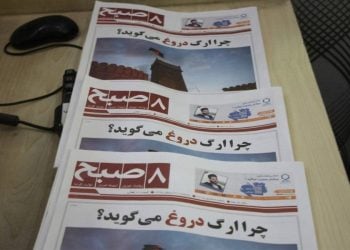
A bunch of the Hasht-e Subh daily newspaper covering the news regarding Arg
Opinion

Firoza Ibrahimkhel Nijrabi: Hasht-e Subh is part of the collective memory of the people

23 May 2026 [t_time:1779515066]

Latest

Loading latest news...

Popular stories

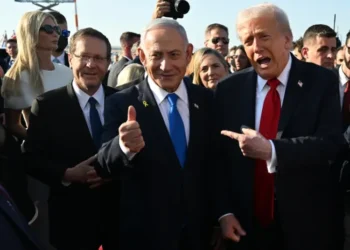
  • Donald Trump – U.S. President with Benjamin Netanyahu – Israeli Prime Minister in a gathering of people (Photo: Getty Images) Donald Trump – U.S. President with Benjamin Netanyahu – Israeli Prime Minister in a gathering of people (Photo: Getty Images)

    US Senator Criticizes Netanyahu’s Remarks Justifying War Against Iran

    Share
    Share Tweet
  • Iran’s Revolutionary Guards Say They Are Preparing to Unveil “Father of All Bombs”

    Share
    Share Tweet
  • US Defense Secretary Warns Iran of “Destruction”

    Share
    Share Tweet
  • UN Report Reveals Shifts in Family Attitudes and Rise in Domestic Violence in Afghanistan

    Share
    Share Tweet
  • Trump Calls Iran’s Hope of War Lasting Beyond US Midterm Elections a “Dream”

    Share
    Share Tweet

Podcast

Insights
Insights

Join Lynne O’Donnell for 8AM’s podcast series, Insights.
Lynne talks with generals, diplomats, soldiers, journalists, politicians, activists, people who have front row seats for conflicts around the world, and citizens with a story to tell, happy or sad. For this first series, Afghanistan is the focus. Lynne and her guests talk about the collapse of the republic in August, 2021, and the impact since — for the people of Afghanistan, for the security of the region, for the safety of the world. It’s important, interesting and insightful.

Insights/22: Controlling the Narrative with Mina Sharif
byinsights8am

Controlling the Narrative

Lynne O’Donnell talks with Mina Sharif, author, activist, women’s rights campaigner, educator and mentor. They discuss who controls the narrative and who speaks for Afghanistan’s people when the Taliban appear to have seized control not only of the country but of the message, too.

Have a listen

Insights/22: Controlling the Narrative with Mina Sharif
Episode play icon
Insights/22: Controlling the Narrative with Mina Sharif
Episode Description
Episode play icon
Insights/21: Media Meltdown with Zahra Joya
Episode Description
Episode play icon
Insights/20: Terror Inc with Scott Richards
Episode Description
Episode play icon
Insights/19: Busting Stereotypes with Bushra Gohar
Episode Description
Episode play icon
Insights/18: Media Matters with Waliullah Rahmani
Episode Description
Episode play icon
Insights/17: What Goes Around Comes Around with Sima Samar
Episode Description
Search Results placeholder
Hasht-e Subh

8AM Media, also known as Hasht-e-Subh Daily, stands as Afghanistan's premier independent and non-profit newspaper, resonating as a beacon of journalistic integrity since its establishment in June 2007 by esteemed Afghan journalists and human rights advocates. With a steadfast commitment to citizen journalism and civic education, Hasht-e-Subh Daily has earned its place as the most esteemed publication in the nation.

Publisher: Sanjar Sohail
Email: [email protected]
Executive Director: Parwiz Kawa
Email: [email protected]

Read More

UN Reaffirms Support for Afghanistan

Sources Report New Taliban Appointments and Dismissals in Badakhshan’s Border Districts

Faieq: Religious Freedom Faces Increasing Restrictions Under Taliban Rule

Has the World Grown Accustomed to the Crisis in Afghanistan?

International Criminal Court Wins Sakharov Prize for Freedom of Thought

Editor’s Choice

Every Saturday morning, 8AM MEDIA English Services Department will guide you through the week’s biggest stories from Afghanistan and the international community.

Subscribe

© 2026 - ©Hasht-e Subh Daily

No Result
View All Result
8am.Media
پښتو ویب‌پاڼه
ویب‌سایت فارسی
اۉزبېکچه ویب‌سایت
  • Home
  • News
    • Afghanistan News
    • World News
  • Opinion
    • Editorial
    • Analysis
  • Reports
    • Daily Reports
    • Investigative Reports
  • Society
    • The story of people
  • Women’s Word
  • Columns
    • Three Years After Afghanistan’s Fall: The Taliban’s Resurgence
    • Towards Equality
    • The Resurgence of the Taliban: Two Years Since Afghanistan’s Fall
    • Hebatullah Report Special Edition
    • Resistance for Education Special Edition
    • Special Column on Taliban’s Education Curriculum
    • Nawroz
  • Interviews
  • Contact Us
    • About Us
    • 8AM MEDIA Annual Awards
    • Submit an Article to Hasht-e-Subh
  • 8am.media

© 2026 - ©Hasht-e Subh Daily