A number of young people are concerned about rising unemployment and increasingly difficult economic conditions. They say that the lack of job opportunities and economic problems have confronted their lives with serious hardships. These young people add that due to the poor economic situation, they have been forced to give up many of their hopes and plans for the future. They also say that finding suitable employment has become one of the biggest challenges of their lives.
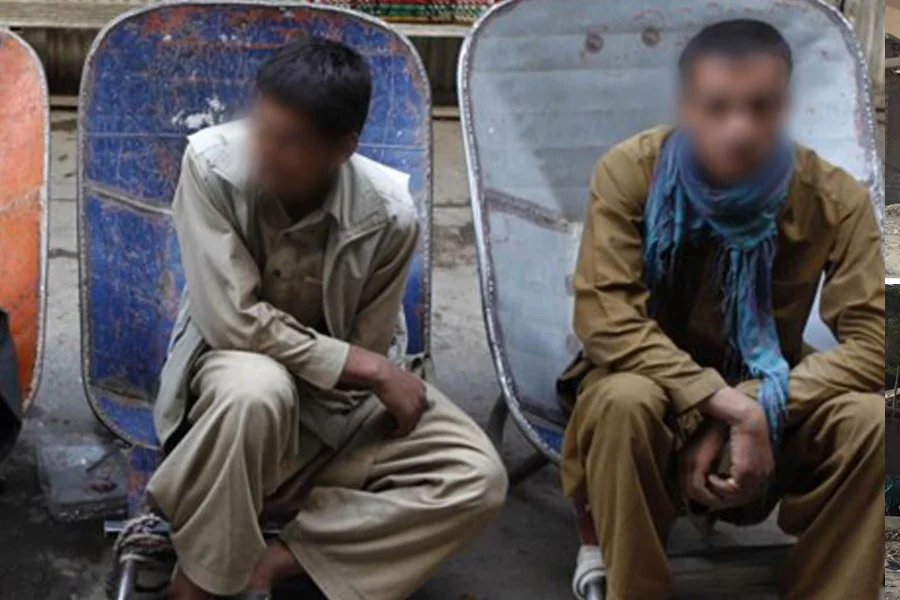
Shaker (pseudonym), one of the young people who studied English literature, says that due to the lack of job opportunities, he has been unemployed for a long time and has been forced to take on daily wage work to meet his living needs.
This young man says: “It has been a long time since I was unemployed. Even if work is found, it is daily wage work that might last one or two months, after which I become unemployed again. I graduated in English literature, but now I do manual labor.”
Shaker says: “Like me, several of my friends and companions are in the same situation. While we young people now need to try harder than ever to build our lives, there is no work, and we are forced to give up many of our hopes and desires. We studied for 16 years, but now I feel that all those years have been wasted.”
Zainab (pseudonym), a daughter-in-law in a family, says that all members of her family are unemployed and they are going through difficult days. She says: “There are nine of us in the family. We have five men at home, and all of them are unemployed. Only my husband, who is the eldest brother, despite being educated, has not been able to find work. Now he has taken someone else’s car and works with it.”
Zainab adds: “In the house we lived in before, because we could not pay the rent on time, the landlord evicted us from the house. We ended up on the street and eventually came to a house in a village. Our life is very difficult. Previously, all the men in our household worked, and we had a good life, but now we are struggling with a poor economic situation.”
Aabed (pseudonym), one of the students, says that unemployment is one of the most significant economic and social problems in Afghanistan, which has particularly affected young people and families. According to him, the shortage of job opportunities, weak economic activity, declining investment, and limited industrial sectors are among the main causes of unemployment.
This student adds: “The growing number of university graduates against limited job opportunities has further worsened the employment problem for young people. In addition to increasing poverty and reducing people’s purchasing power, unemployment can also increase the potential for migration and certain social problems. Supporting domestic production, investment, agriculture, industries, technical training, and entrepreneurship can help create job opportunities and reduce unemployment.”
Meanwhile, Farid (pseudonym), an economic affairs expert, says that the labor market situation in Afghanistan in recent years has faced a deep crisis under the impact of numerous political, economic, and structural shocks. According to him, reduced foreign investment, international restrictions, the freezing of assets, and perspectives on what is permissible and impermissible have minimized demand for labor.
This expert says: “Alongside this, restrictions on women’s work have removed a large portion of society’s active workforce from the production cycle and sharply reduced the economic participation rate. Another important point is the weakness of private sector infrastructure, which has never convinced Afghanistan’s traders that this country is a safe place to invest.”
Farid adds: “With the unemployment we are witnessing, families’ purchasing power has sharply declined, and the majority of families are moving toward absolute poverty. Declining household income has caused food insecurity, and deepening poverty is making it difficult to cover basic healthcare and education costs.”
This comes as some young people in Herat have recently said that a combination of poverty, unemployment, psychological pressures, family problems, and limited educational and social opportunities has created conditions that push some adolescents toward tobacco use.
Meanwhile, the International Labour Organization (ILO) in Afghanistan announced, coinciding with International Youth Day, that the global youth unemployment rate has increased and their access to decent work has become more difficult.
Recently, the Secretary-General of the United Nations (UN) said in a report to the Security Council that approximately 13.8 million people in Afghanistan have faced acute food insecurity at Phase 3 or 4, according to the Integrated Food Security Phase Classification (IPC). In addition, more than 3.7 million children under the age of five and 1.2 million pregnant or breastfeeding women have faced acute malnutrition.
You can read the Persian version of this report here:
افزایش بیکاری؛ جوانان از بسیاری آرزوهایشان چشمپوشی میکنند