What has happened in recent days in relations between Moscow and the Taliban points to a new chapter in ties between the two sides, one in which intelligence and security cooperation sits alongside expanding economic relations. On October 14, Sergei Naryshkin, head of Russia’s Foreign Intelligence Service (SVR), traveled to Afghanistan and met Abdul Haq Wasiq, head of the Taliban’s General Directorate of Intelligence (GDI). Only a few days later, news emerged of an upcoming visit to Afghanistan by a high-level delegation led by Alexei Overchuk, Russia’s Deputy Prime Minister. The stated aim of the trip is to expand economic and trade relations between the two sides, though its exact date has not yet been announced. The close timing of these two events raises an important question: is Russia turning its political engagement with the Taliban into a multilayered strategic relationship, or does this rapprochement stem more from Moscow’s limited options in Afghanistan and the region?
During the Taliban’s twenty-year war against the United States-backed government, Russia pursued an ambiguous policy. Moscow outwardly did not welcome the Western military presence in Afghanistan, but at the same time it could not remain indifferent to the security threats arising from the growing activity of extremist groups in the country. On the one hand, Russia was worried about the spread of American and North Atlantic Treaty Organization (NATO) influence near its security sphere, and on the other, it feared that insecurity and extremism could spill over into Central Asia and Russian territory. In these circumstances, Moscow gradually expanded its contacts with the Taliban, a group that was fighting a Western-backed government but whose ideological and operational ties to extremist movements also heightened Russia’s security concerns. For Moscow, the failure of the American project in Afghanistan mattered geopolitically, but that failure alone could not guarantee regional security.
With the fall of the government of Afghanistan on August 15, 2021, Russia faced a reality it had prepared for in advance: the return of the Taliban to power and the withdrawal of American forces. However, the Taliban did not become a predictable force, accountable to international demands, as some had expected. Sweeping restrictions on women’s rights, the absence of an inclusive government, the human rights situation, and concerns over the activity of terrorist groups remained major obstacles to normalizing the group’s relations with the world. Even so, Moscow continued down the path of engagement and in July 2025 became the first country to formally recognize the Taliban regime. This decision showed that Russia is no longer merely coming to terms with a reality imposed in Afghanistan, but is ready to take more formal steps to consolidate its relations with the Taliban.
Why did the head of Russian intelligence go to Kabul?
The visit by the head of Russia’s Foreign Intelligence Service (SVR) to Taliban-controlled Kabul is significant because, unlike routine diplomatic meetings, it took place directly at the level of the two sides’ intelligence agencies. However, since official details of the talks between Naryshkin and Wasiq have not been published, it cannot be said with certainty what the main agenda of the meeting was. What can be examined is a set of security interests that likely carry considerable weight in Moscow’s calculations.
First, Russia attaches vital importance to the security of Central Asia. Any expansion in the activity of groups such as the Islamic State Khorasan Province (ISKP) and other extremist movements in Afghanistan could threaten the countries of Central Asia and, ultimately, Russia’s own security. To assess these threats, Moscow needs firsthand information about the situation in Afghanistan, the movements of armed groups, and their relations with the Taliban. Direct contact with the Taliban’s intelligence apparatus could be one way of obtaining such information.
Second, Russia wants to know to what extent the Taliban are able or willing to prevent the activity of groups that threaten the security of countries in the region. Moscow may be seeking to distinguish between the Taliban’s promises and their actual conduct toward extremist groups. Of course, intelligence cooperation with the Taliban does not in itself mean that security threats will disappear, and the effectiveness of such cooperation also depends on its practical results.
Third, this meeting could be part of Russia’s effort to increase its political and security influence in Afghanistan. By establishing direct contacts with key Taliban institutions, Moscow is trying to consolidate its position as one of the main parties in Afghanistan’s equations. In this framework, Afghanistan is not merely a neighboring country of Central Asia, but part of Russia’s broader rivalry with the West over influence and the region’s security arrangements.
If Naryshkin’s trip is viewed from a security angle, Overchuk’s upcoming trip should be seen within the framework of Russia’s economic and trade interests. Russian officials have said that the aim of the visit is to expand economic and trade cooperation. According to Zamir Kabulov, the Russian president’s special representative for Afghanistan, trade between the two sides rose significantly in the first half of 2026, and both sides want to continue this trend.
For Russia, Afghanistan could be a gateway for expanding economic relations with South Asia and part of the regional markets. In turn, the Taliban need foreign investment, access to goods and new markets, and expanded trade relations. Afghanistan’s political isolation and economic restrictions have pushed the Taliban to look for new partners, partners who are willing to engage with them without making all relations conditional on political and human rights changes. Still, the economic potential of this relationship should not be exaggerated. An increase in trade volume over a specific period does not by itself show that the Taliban have become an important economic partner for Russia. The banking situation, financial restrictions, political and security uncertainty, weak infrastructure, and the lack of reliable legal frameworks are obstacles that could hinder the expansion of investment. Therefore, the trip by Russia’s Deputy Prime Minister can be seen as a sign of an effort to turn political relations into practical economic cooperation, but whether such an effort will lead to lasting contracts, real investment, and a tangible increase in trade is still unclear.
Now we return to the main question: does Russia truly trust the Taliban, or has it chosen to engage with them because of a lack of better options? To answer this question, one must distinguish between two matters: engaging with a ruling force and trusting it. Russia may consider the Taliban a suitable partner for some of its security and economic goals without accepting all of their policies and behavior. In international relations, countries often cooperate with forces that are neither ideologically close to them nor reliable in every area, because specific interests and security calculations sometimes outweigh political and value differences.
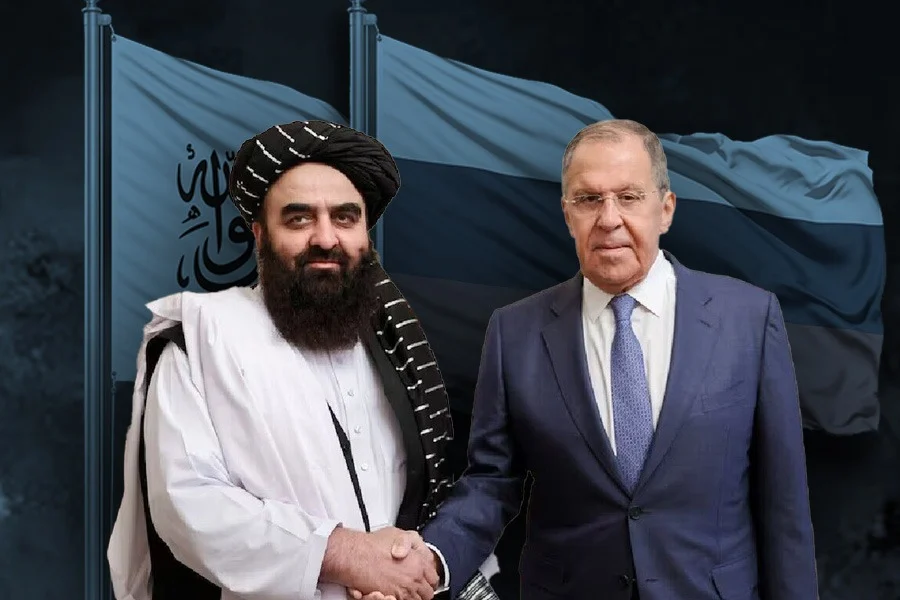
Even so, the absence of a strong political alternative to the Taliban also plays a role in the decision-making of regional countries. The Taliban’s opponents have not yet been able to build a cohesive and organized political force that could become a practical alternative, either inside Afghanistan or at the regional level. Many former political movements also face limits in credibility and capacity. This situation lowers the cost of engaging with the Taliban compared with investing in scattered opposition forces. But Russia’s entire policy cannot be reduced to necessity. The recognition of the Taliban, high-level intelligence meetings, efforts to expand economic cooperation, and Moscow’s emphasis on opposing a NATO military presence in Afghanistan and neighboring countries show that this relationship is also tied to Russia’s strategic calculations. At the recent meeting in Moscow, Sergei Lavrov, Russia’s Foreign Minister, described military and technical cooperation with the Taliban as one of the factors behind progress in combating terrorism and drug trafficking. That claim reflects Moscow’s official narrative of this cooperation, not necessarily independent proof of its effectiveness.
The issue is that engagement with the Taliban may be beneficial for Russia in the short term, but it also carries risks in the long term. If the Taliban are unable to contain security threats emerging from Afghan soil, or if their ties with extremist movements fuel instability in the region, Russia may face the consequences of the very policy it moved closer to the Taliban to manage. Russia’s engagement with the Taliban can be seen neither as merely the result of helplessness nor as a sign of an unlimited strategic alliance. This policy is a mix of pragmatism, geopolitical rivalry, and security calculations, and its success depends on how far the Taliban can, in practice, reduce the security concerns of Russia and the countries of the region. The decisive question is this: if the Taliban cannot meet Moscow’s security expectations, will Russia still be willing to pay the political cost of closeness to them? The answer to this question, more than any diplomatic statement or meeting of senior officials, will clarify the direction of future relations between Moscow and the Taliban.
You can read the Persian version of this analysis article here: