
After more than two months since the commencement of the reconstruction of the Salang Pass, this highway remains closed. Some citizens have complained about the prolonged reconstruction, stating that with the onset of winter and the possibility of snowfall on alternative routes, their transportation will become direly challenging. Travelers and vehicle operators currently commuting through the Shibar Pass and Khawak Pass routes to the northern and northeastern provinces express that these routes are costly and time-consuming, with the rental fees for vehicles having doubled.
Meanwhile, sources within the Afghanistan Chamber of Commerce and Investment (ACCI) assert that the closure of the Salang Pass has adversely affected the prices of essential commodities. According to them, if this pass remains closed, the prices of essential goods will rise in the upcoming winter. The Taliban have stated that the concreting of the first and second sections of the Salang Pass is 98% complete, and the third section is 45% complete. However, they remain silent about the reopening of this highway. Nevertheless, citizens of the country are demanding an expedited reconstruction process and the reopening of the Salang Pass.
It has been over two months since the reconstruction work on the Salang Pass began, and this highway has been closed to any traffic thus far.
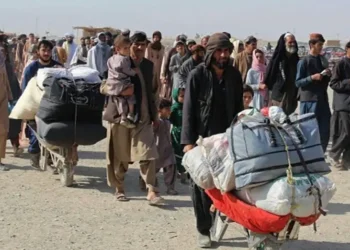
The Taliban-controlled Ministry of Public Works announced on September 10 that it had completely blocked the traffic on this route for the reconstruction of the interior tunnel. With the closure of this highway, the transfer of commercial goods by trailer trucks has come to a complete halt, and travelers are using alternative routes such as Khawak-Panjshir and Shibar-Bamyan.
However, the alternative routes to the Salang Pass, due to their lack of standards, have introduced significant challenges for both travelers and the transportation of commercial goods.
Fahim Forutan, a driver of a “Corolla” passenger car, has been navigating the Kabul-Mazar-e-Sharif route for about 10 years. He states that the closure of the Salang Pass has posed a significant challenge to his daily business.
Speaking to the Hasht-e Subh Daily, he complains about the prolonged reconstruction of this pass, saying, “I am forced to commute through alternative routes on a daily or weekly basis. Due to the length of the journey and the deteriorated condition of the roads, passenger cars face numerous technical issues daily. This incurs considerable costs for drivers.”
Fahim adds that with the onset of winter and the possibility of snowfall on alternative routes, transportation will become much more challenging for them.
Zaki Ahmadi, another driver on the Salang-Baghlan highway, expresses concerns about the increasing challenges and difficulties ahead. He says, “The roads will become icy, and problems will escalate. Even now, the alternative routes are dusty, causing hours of delays every day.”
Simultaneously, some citizens of the country criticize the prolonged reconstruction of the Salang Pass, stating that the alternative routes are costly and time-consuming, and the rental fees for vehicles have doubled.
Noorhamd, a resident of Balkh province, accuses the Taliban of indifference toward the citizens and argues that the group should not have completely closed the Salang Pass. He states, “Until today, what have the Taliban done to address the people’s needs? They should not have entirely closed the highway, and if they intended to do so, they should have repaired alternative routes in advance.”
Mohammad Nabi, another citizen of the country, states, “Currently, the fare for small passenger vehicles from Kabul to Mazar has reached three to three and a half thousand Afghanis. In a situation where there is no work, and people even do not have a piece of bread to eat, where can we find the fare for the journey?”
Meanwhile, sources within the Afghanistan Chamber of Commerce and Investment (ACCI) assert that the closure of the Salang Pass has harmed the prices of essential commodities.
An anonymous source adds that if this pass remains closed, the prices of essential goods will increase in the upcoming winter. He emphasizes, “The current routes selected for the transportation of commercial goods are in poor condition. Vehicles get stuck on these routes for days, incurring damages and escalating the rental fees. Winter is approaching, and these conditions will have a direct impact on the commodities.”
On one hand, the Taliban Ministry of Public Works announced through a press release on October 30 this year that the concreting work on the first and second sections of the Salang Pass is 98% complete, and the third section is 45% complete. However, the ministry has not specified the timeline for the completion of the remaining work on the Salang Pass.
It is noteworthy that the reconstruction work on the first section of the Salang Pass commenced on July 11 this year, with the presence of Mullah Abdul Ghani Baradar, the Deputy Prime Minister for Economic Affairs of the Taliban.
The reconstruction project of this road has been entrusted to two private companies, and it is expected to be operational within a two-year timeframe.
The Salang Pass, connecting nine northern provinces and four major trade ports to Kabul, has been in a state of disrepair for the past seven years.
Previous governments have also repaired the Salang Pass several times, but due to the poor quality of asphalt, the road was again damaged in less than a year.