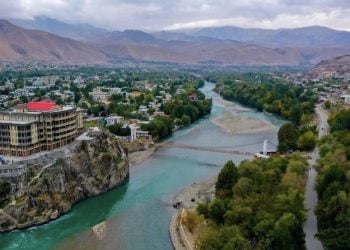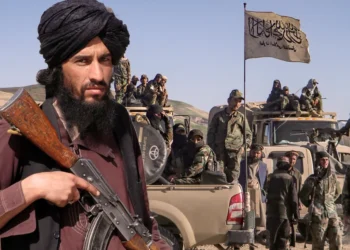

Opposition groups to the Taliban, both political and military, have so far not taken an official or public position on the emergence of the “Sepahiyan-e Mihan” (Soldiers of the Homeland) front and its capture, for several hours, of the Yaftal-e Payan district in Badakhshan, neither in support of it nor in opposition to it. Of course, a scattered few individuals have written comments on social media, though these do not necessarily represent the official position of the Taliban’s opposition currents. Given this, the silence of so many political and military groups regarding one of the most significant military events against the Taliban in nearly five years is certainly puzzling and noteworthy.
The first reason for this silence may lie in the manner in which Sepahiyan-e Mihan emerged. Unlike many Taliban opposition groups, this front announced its existence through a surprise military operation, rather than through a lengthy, grandiose political statement or a press conference held in a country far from Afghanistan. For this reason, the identity and nature of this front are still not fully clear; that is, it is not known exactly how it was formed, where it draws its support from, or what the outlook for its presence and activities will be. It is not even clear whether Sepahiyan-e Mihan is merely a “military core” or whether it also has a “political core.” The only part that has become somewhat apparent so far is its military wing, which is run by a person named Qayum Malang. However, any armed movement, if it hopes to endure, also needs a political arm, one that can speak, negotiate, take positions, and present plans for the future. Regarding Sepahiyan-e Mihan, this part remains shrouded in ambiguity.
This ambiguity has likely made the rest of the Taliban’s opponents cautious. The political and military currents formed over the past nearly five years, with all their ups and downs, are at least known to one another, and their leaders, structures, goals, and even disagreements are more or less clear. But Sepahiyan-e Mihan entered the scene suddenly and without introduction, by capturing a district for several hours, and in a province whose name has constantly been on everyone’s lips for some time: Badakhshan. Naturally, such an emergence provokes surprise and questions more than it prompts an immediate reaction.
It is not unlikely that many of the Taliban’s opposition groups are themselves still trying to understand the identity of Sepahiyan-e Mihan. They may have neither sufficient information about how the front emerged nor a clear picture of its actual capabilities. In such a situation, silence is not necessarily a sign of indifference but could be a sign of caution, caution toward an event that remains unclear as to whether it is a fleeting spark or the beginning of a new chapter in the struggle against the Taliban. For this reason, in the view of the Taliban’s opponents, neither hasty support nor hasty opposition would carry meaning.
Another reason should be sought within the Taliban opposition itself, an opposition that over the past nearly five years has spent more energy on internal rivalries than on building an inclusive front, to the point where each group has presented itself as the main “axis” of resistance and has tried to define others as being within its own “orbit.” In such an environment, the emergence of any new player is viewed not as an opportunity but as a rival. This may be one of the greatest weaknesses of the Taliban’s opponents. Political self-interest, competition over leadership, the pursuit of privilege, and the desire to be the central axis have repeatedly prevented the formation of a unified front, a situation that has worked in the Taliban’s favor. It stands to reason that a regime facing scattered opponents naturally governs more comfortably than one facing a coordinated, unified front. In this context, the silence toward Sepahiyan-e Mihan may not stem solely from ambiguity about the front’s identity but may also reflect these hidden rivalries. Any new formation that manages to capture public attention inevitably claims part of the media and political space for itself, something that raises serious questions for groups that have spent years trying to present themselves as the standard bearers of resistance: is this new player an ally or a rival?
Of course, this situation is not uniform among all of the Taliban’s opponents. It can be assumed that some political and military currents, led by Pashtuns, are, for regional and linguistic reasons, not particularly inclined to support a front that has emerged from Badakhshan. But public expectation is directed above all at groups such as the National Resistance Front (NRF), the Freedom Front, and the High Council of National Resistance for the Salvation of Afghanistan, currents that, at least in their slogans, pursue a shared goal: fighting the Taliban and refusing to surrender to this group. If these groups, too, remain silent in the face of the emergence of a fresh force that shares their objective, it is certainly cause for questioning. Who knows, perhaps these so-called major and well-known currents are also troubled by the emergence of fresh forces, regardless of whether they share the same cause. This political jealousy arises from the nature of politics in traditional, crisis-ridden societies. It should be noted that politics in such societies is not only a field of competition with the enemy but sometimes also a field of competition with one’s closest allies.
More importantly, the new generation embodied by Sepahiyan-e Mihan, which has now entered the field, does not necessarily consider itself bound by the political equations and hierarchies of the past two decades. This generation’s capital is boldness, willingness to take the field, risk-taking, and a readiness to plunge in, rather than political track record. Naturally, the entry of a generation with this nature is, for part of the opposition’s traditional elite, both promising and worrying. Of course, this does not mean that experienced leaders have deliberately blocked the way for the youth, but the history of politics shows that generational transitions never occur without friction. Those who have long been at the center of politics do not easily relinquish their position, and those newly entering the field are usually unwilling to remain mere spectators. Part of today’s silence can be seen in precisely this generational gap and the hidden competition for future leadership.
Regardless of which reason is closer to reality, one point has become clear so far: Sepahiyan-e Mihan not only caught the Taliban off guard, it also placed all of the group’s opponents before a new test, a test that shows just how prepared Afghanistan’s opposition is to accept new players. If this silence continues, perhaps its greatest consequence will fall not on Sepahiyan-e Mihan but on the opposition itself, because any newly emerged force that feels, from the very beginning, that it has no place among the opposition will go its own way. In that case, the gap that now exists among the Taliban’s opponents will grow deeper than before, and the only winner of this situation will be the Taliban regime.
You can read the Persian version of this report here: