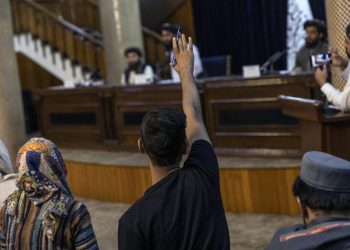
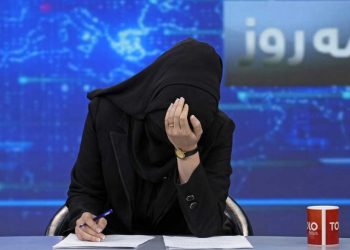
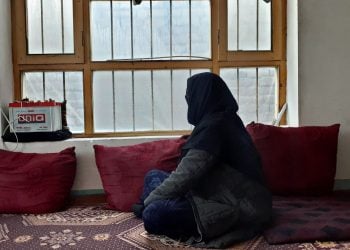
The Taliban’s pressure on Afghan citizens, especially women and journalists, has intensified. Many are increasingly alarmed by the Taliban’s ongoing interrogations and arrests, with citizens noting that various factions of the group are simultaneously harassing and detaining people. In a recent incident, the Taliban arrested a journalist from the Dasht-e Barchi area in western Kabul. This marks the second journalist detained in a week. Additionally, a video surfaced showing Taliban morality police taking four women from Kabul on charges of “moral corruption.” Afghans report that they are vulnerable to Taliban retribution, and the situation is dire even in neighboring countries like Pakistan and Iran. Thousands are forcibly expelled from these countries daily, and citizens inside Afghanistan have no means to escape or survive. Afghan human rights activists and civil society organizations sent an open letter to the United Nations Secretary-General, describing the Taliban’s actions as enforced disappearances and severe human rights violations.
Many armed robberies and mysterious murders are blamed on unidentified gunmen, though the Taliban frequently claim to maintain national security. However, some citizens assert that most of these crimes are committed by Taliban fighters, and people either stay silent out of fear or blame these incidents on unidentified gunmen.
In a recent case, Taliban fighters shot and killed a mentally ill man who tried to block their entry into his home. According to sources, the Taliban had attempted to forcibly take the 22-year-old man to their outpost. This incident occurred on Sunday, October 6, in Alley 13 of District 11 in Kabul’s Khairkhana area. Witnesses confirmed that the Taliban ignored the man’s mental condition, insulted him after shooting him, and laughed at his bloodied body.
As journalist arrests continue, the Free Speech Hub reported that the Taliban detained Mahdi Ansari, a journalist from the Afghan News Agency, in Kabul’s Dasht-e Barchi area. No information has been provided regarding his whereabouts or condition. This follows the Taliban’s arrest of Hikmat Aryan, the director of Khushal Radio, in Ghazni Province a week earlier, with no details about his location either. The Taliban have also continued imposing restrictions in this province, recently arresting two girls for filming a wedding ceremony. According to sources, on Thursday, October 3, Taliban morality police detained the girls in the Khwaja Omari district and released them after several hours. The Taliban confiscated their cameras and filming equipment.
A widely circulated video on social media shows Taliban morality police detaining several women off the streets. Sources indicated that on Saturday, October 5, Taliban police took multiple women from Kabul’s New Kabul project area. Meanwhile, the Ministry for Propagation of Virtue and Prevention of Vice announced that six people had been arrested on charges of “unethical and illicit relationships” and will be referred to Taliban judicial institutions.
Recently, the Taliban arrested political analyst Jawed Kohistani from the Saray-e Shamali area of Kabul and took him to an undisclosed location. His family, concerned for his well-being, told the Hasht-e Subh Daily that they have no information about his location or health. They are particularly worried because Kohistani has heart problems and high blood pressure, calling for his immediate release.
In response to these events, Afghan human rights activists and civil society representatives have issued an open letter to the UN Secretary-General, urging immediate attention to the human rights situation in Afghanistan and the systematic violation of citizens’ rights by the Taliban. The letter highlights arbitrary detentions, kidnappings, and enforced disappearances of activists from various fields.
The letter states: “The Taliban’s actions go beyond arrests and disappearances. They systematically violate the civil, political, economic, social, and cultural rights of the Afghan people.” It also mentions Kohistani’s detention, noting that he was taken without any specific charges. Activists added that Kohistani’s family has no information on his location, and he has no access to legal representation. They emphasized that such actions clearly amount to enforced disappearances, which are severe violations of international human rights law.
Afghan human rights and civil society activists have called on the United Nations and its Afghanistan office to take immediate steps for Kohistani’s release, noting that he is awaiting heart surgery and lacks access to necessary medical care. They stress that his mistreatment and possible torture constitute violations of Article 7 of the International Covenant on Civil and Political Rights and the Convention Against Torture.
The activists also remind the UN that, under its charter, the organization has both moral and legal obligations to protect the rights of individuals and populations in crisis areas. They urged the UN Human Rights Commissioner to increase monitoring of human rights conditions in Afghanistan and report violations directly to the UN Security Council. The letter also calls for the UN Security Council to strengthen diplomatic, economic, and travel sanctions against individuals responsible for human rights violations.
It is worth noting that Taliban oppression and violence have escalated to such an extent that even members of the group are now speaking out against it. Abdul Salam Zaeef, a former Taliban ambassador to Pakistan, has criticized the regime’s despotism, hereditary power structures, impunity for officials, and suppression of free speech. Without naming specific individuals, he stated that Taliban leaders see themselves as above the law and that the prevailing tyranny has silenced the people’s courage to speak the truth.
You can read the Persian version of this daily report here:
تشدید سرکوبگری طالبان و بیصدایی شهروندان؛ ناپدیدسازی اجباری مصداق جنایت علیه بشریت است