
Since the Taliban took over Afghanistan, they have replaced experienced and seasoned government officials with their fighters in most state departments. Alongside these individuals’ combat backgrounds, ethnic, positional, and local ties have deepened corruption within the Taliban administration, leading many members to engage in financial misconduct.
One key department involved in this corruption, along with customs offices in border provinces, is the Food and Drug Authority, particularly in border areas like Nimruz.
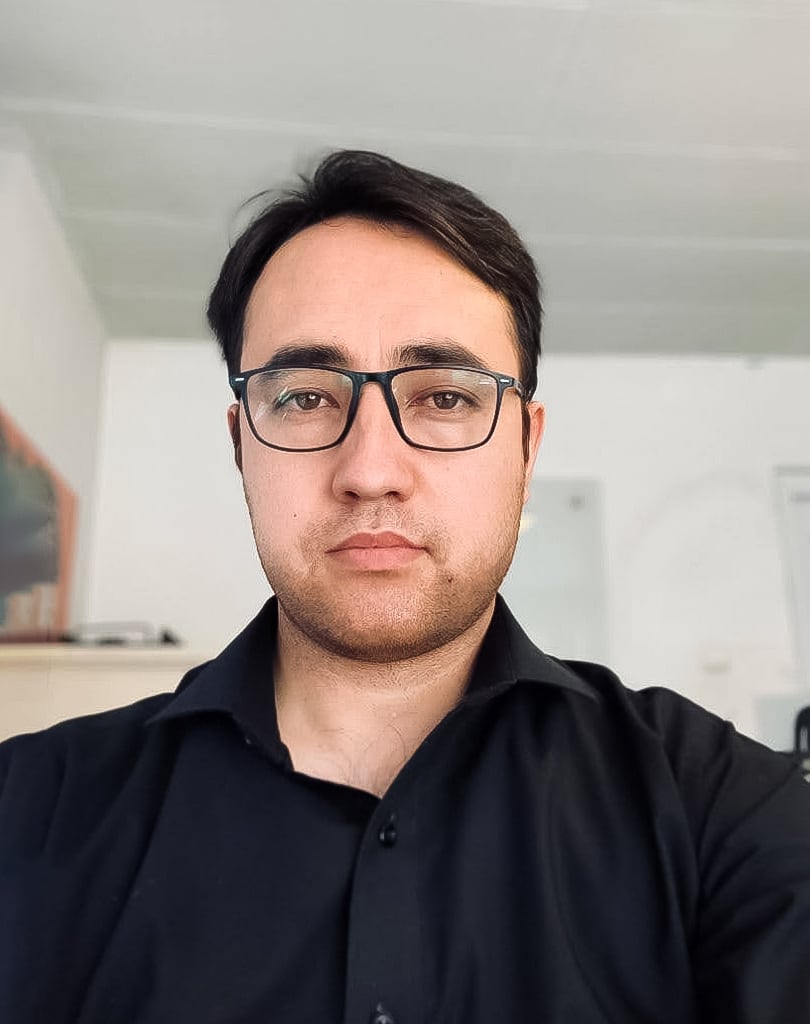
This report reveals that Kabir Sarhadi, the former head of the Taliban’s Food and Drug Authority in Nimruz Province, was implicated in financial corruption at the province’s customs office. His actions prompted an investigation by the Taliban’s South Zone Purification Commission in Nimruz. Despite this, he was appointed to the Procurement Department of Da Afghanistan Breshna Sherkat (DAB), the Afghanistan Electricity Company.
The report indicates that before the Purification Commission could complete its investigation, Ibrahim Shaheen, the head of the Taliban governor’s office in Nimruz, approved Sarhadi’s transfer to DAB. Subsequently, Sarhadi fled the province.
Sources state that the Taliban’s Purification Commission, working with the group’s Intelligence Directorate in Nimruz, uncovered extensive corruption linked to Sarhadi and issued an arrest warrant for him. However, instead of being detained, he was given a position in DAB, widely regarded as one of the Taliban’s most corrupt institutions.
An informed source, who requested anonymity, shared that the Intelligence Directorate in Nimruz sent an official letter to central authorities requesting Sarhadi’s arrest and return to Nimruz for prosecution. Despite this, he was neither arrested nor held accountable.
According to a source in Nimruz, Sarhadi embezzled thousands of dollars with the full support of the Nimruz governor’s office. The source explained, “Dr. Kabir Sarhadi visited the governor’s office daily and received significant authority from the province. When food and drug shipments were delayed at customs, he openly took bribes to release them. No department head in Nimruz had such unrestricted access to the governor, but Dr. Kabir could meet him anytime without prior coordination.”
The source also disclosed that when the Taliban Supreme Leader decreed the merger of the Food and Drug Authority into the Ministry of Public Health, Sarhadi sought to head the Public Health Department in Nimruz. However, he faced resistance from local Taliban commanders and officials. The source further accused the governor’s office of financial corruption and nepotism.
Meanwhile, pharmaceutical importers in Nimruz, who requested anonymity, reported rampant corruption during Sarhadi’s tenure. They claimed that the corruption under his leadership was worse than during the Republic era. Taliban security and judicial bodies were aware of the misconduct but did not intervene due to the unconditional support Sarhadi received from the Nimruz governor’s office.
Hamidullah Habibi (pseudonym), one such importer, said, “Whenever we brought in medicine, the Drug Department would seize it under various pretexts. They kept it at customs until we were forced to pay bribes. We hoped for fairness, but instead, they took half of our profit for no valid reason.” He added, “All drug sellers had to notify an employee at the Drug Department before bringing in medicine, just like at customs, and pay their share to the department.”
Nimruz, due to its border with Iran and proximity to smuggling routes to Pakistan, is also a major transit point for illegal drug shipments. This has made the province a hotspot for corruption and extortion by the Food and Drug Authority, particularly regarding illicit goods.
According to the report, narcotics such as Methylenedioxymethamphetamine (MDMA), Tramadol, Zik-Up, and other intoxicating drugs have thriving markets in Nimruz. These drugs are not only consumed locally but also transported to other provinces, including Kabul.
Sources claim that each shipment of these high-value narcotics involved bribes of up to $10,000 to the Food and Drug Authority under Sarhadi’s leadership.
Ezat Mohammadi (pseudonym), a narcotics dealer, stated that when authorities seized drugs, they handed them over to the Food and Drug Authority, which released them after receiving substantial bribes. Mohammadi recounted, “Once, 25 cartons of medicine I was transporting were seized and held for 23 days. With the help of a Drug Department employee, I paid $7,500 to get them back.” He added, “When returning narcotics, the Food and Drug Authority would often destroy a small quantity of cheap medicine to claim they had burned the shipment.” For larger shipments, Sarhadi’s team sometimes demanded bribes as high as $10,000.
Although the Taliban frequently claim to combat financial corruption, reports from Nimruz indicate their officials are deeply involved in it. Recently, the Taliban dismissed the head of the Mines Department in Herat and the head of the Helmand provincial hospital due to administrative corruption.
You can read the Persian version of this daily report here:
چرخه سیستماتیک فساد طالبان؛ متهمان فساد به جای محاکمه، ارتقا مییابند | روزنامه ۸صبح