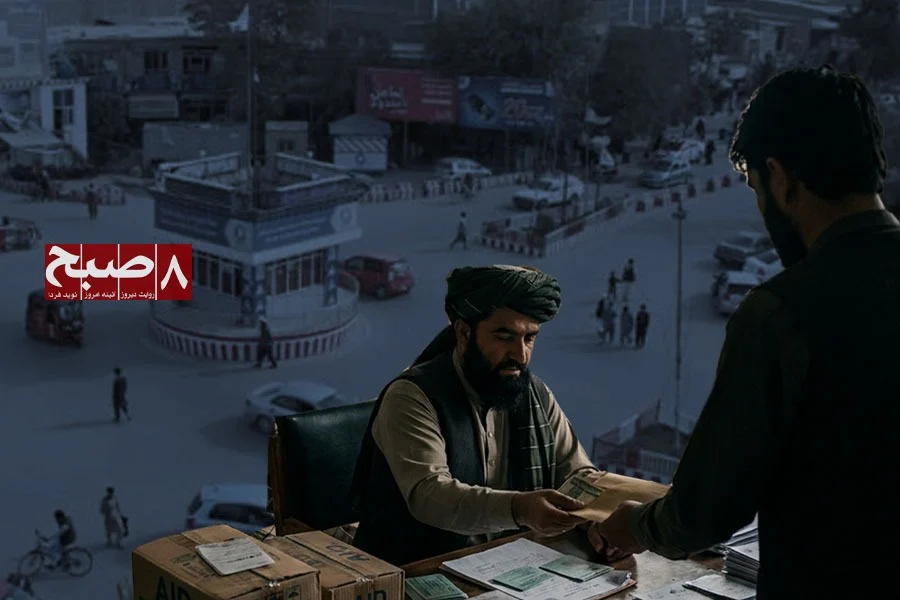
Sources in Kunduz are revealing corruption and abuse by some Taliban officials and individuals affiliated with the group. They say these individuals have reached into the pockets of the poorest people and demand a share of the assistance provided by charitable organizations and relief agencies. According to the sources, some brokers and individuals affiliated with the Taliban include people’s names in land and aid distribution programs without their knowledge, simply because they hold a “migration card,” and then give them only a small portion of the assistance. They also sell the land registered in these people’s names, either to themselves or to others.
Some recipients of humanitarian aid say that a large number of Taliban members working in the group’s Directorate of Refugees and Returnees Affairs in Kunduz, or in other directorates connected with aid organizations and relief agencies, are involved in widespread corruption, and that no list is handed over to relief agencies without Taliban approval. According to them, the Taliban include their own affiliates and fighters on the list of those in need, and the group’s brokers then obtain commitments from these individuals, outside official channels, that in exchange for having their names included on the list, they will return half of the aid they receive back to the Taliban.
Aid recipients have expressed serious concern about Taliban officials in the group’s Directorate of Refugees and Returnees Affairs in Kunduz, saying the office is widely involved in corruption, nepotism, and embezzlement of aid meant for those in need, and that there is no authority to which complaints can be reported or registered.
At the same time, sources add that one individual affiliated with the Taliban buys migrants’ cards at low prices and repurchases land that had been distributed to returnees for building homes, again at very low prices, before reselling it to others. According to the sources, in some cases he has even made sexual demands in exchange for these services.
The sources in Kunduz say that some individuals in the Directorate of Refugees and Returnees Affairs and people connected to them outside the office buy migrants’ cards from their holders under various pretexts at very low prices, then resell them to others at higher prices.
One source said: “One of the Taliban brokers buys migrants’ cards at very low prices. At the same time, his brother buys land that had previously been distributed for home construction and then resells it.”
The source added: “There are also fictitious and fabricated lists. For example, they talk to certain people outside and tell them they will include them on the list of aid recipients and later distribute the aid, or give them a small share. This way, they obtain the land and aid, and afterward, if they feel like it, they hand it over to the people; otherwise, they simply take photos and videos of them on the day of distribution and nothing more.”
Another source stressed that out of desperation and unemployment, people settle for the small amount of aid that remains after the Taliban’s share is deducted, and that there is no authority to address their complaints. According to this source, the Taliban themselves even say: “If they take back all the aid from you, who will you complain to?”
Another source said: “The brokers have included people on the list who were never migrants or in need. They now buy migration cards from some people for around 15,000 Afghanis and sell them to others at exorbitant prices. Since land is distributed to returning migrants, they use these cards to obtain land and have built a business for themselves this way.”
One individual who did not want his name mentioned in the report said: “Land was registered in my name without my knowledge. Then they told me that if I bought this land, they would sell it to me. They first bought the land in my name and then resold that same land to me.”
Previously, sources in Kunduz had said that the Taliban keep half of the aid distributed to those in need for themselves. Sources had confirmed that after taking photographs and filming, the Taliban distribute the remaining aid among the people.
Likewise, the United Nations Assistance Mission in Afghanistan (UNAMA) has confirmed in its reports that, as a result of Taliban interference, the distribution of humanitarian aid has faced challenges over the past five years, and that in some cases, the operations of several relief organizations have been suspended following such interference.
Previously, the Special Inspector General for Afghanistan Reconstruction (SIGAR) had reported that the Taliban use force to seize international aid and appropriate it for their own benefit. The report stated that the Taliban, in collusion with some United Nations officials, extort money from relief projects. SIGAR also added: “UN officials take bribes from organizations that receive contracts and split them with the Taliban.”
According to this report, only 30 to 40 percent of the total aid sent to Afghanistan has reached those who genuinely need it. The report stated: “The Taliban use every means, including force, to ensure that aid reaches the destination they want, rather than the one designated by the donors.”
Previously, the Hasht-e Subh Daily had also found, in multiple reports, that the Taliban play a widespread role in embezzling and diverting humanitarian aid for the benefit of themselves and their affiliates, and that they try to ensure aid reaches areas aligned with the group or under the control of Taliban members.
You can read the Persian version of this report here:
خریدوفروش کمکها؛ در ریاست امور مهاجرین و عودتکنندهگان طالبان در کندز چه میگذرد؟