Residents of the Chaharrah area in Tulak district of Ghor province have complained that unemployed local youths are not being hired in the extraction of the area’s gypsum mine. They say the company to which the Taliban have handed over the mine’s extraction has recruited several workers from Herat province instead of hiring local youths. According to the residents, before extraction began, the contracting company had promised to provide job opportunities for young people in the area, invest in public welfare projects, and meet a number of the local community’s needs. They add that two years after the company began operating, these promises have not been fulfilled. The residents are calling for unemployed local youths to be hired in the mining operation and for the contracting company to honor its commitments. They also demand that the company answer for failing to keep its promises to the local people.
Ahmad (pseudonym), a resident of Ghor province, complains that local youths have not been hired at the province’s gypsum mine. He says that before extraction began, the contracting company had promised to hire local youths, build a mosque, and help with the area’s development. According to him, two years later, these promises have not been fulfilled, and the company has recruited workers from Herat to work at the mine.
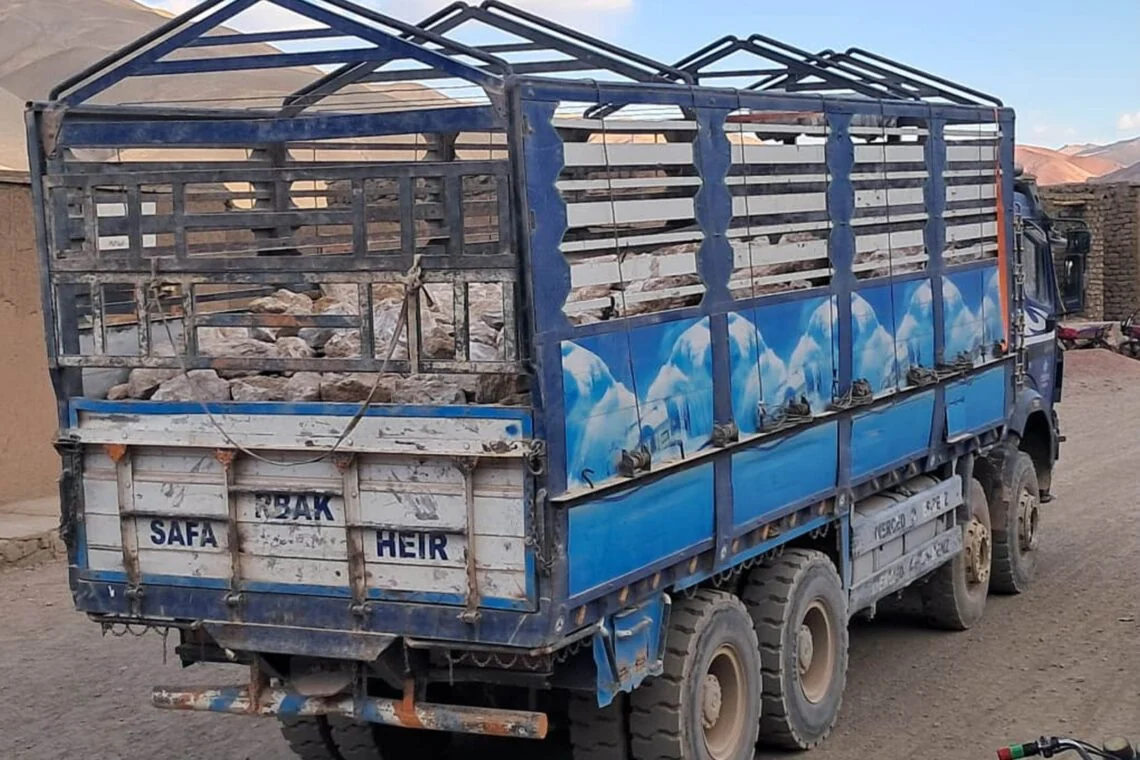
The man says: “Before extraction began, the company promised the local people that it would hire the area’s unemployed youths, build a mosque, and help with the area’s development. But two years later, not one of these promises has been fulfilled. Despite the unemployment among local youths, workers have been brought from Herat to work at the mine. The raw gypsum from this mine is transported from the Chaharrah area to Herat and processed there, while the local people have no share in the mine’s benefits. Even trucks load and transport the gypsum during the night. We demand that local youths be given priority in hiring, that the people’s share of the mine’s benefits be defined, and that the company honor the promises it made to the people.”
Hazrat (pseudonym), another resident of Ghor province, says that the contracting company of the gypsum mine had previously hired a number of residents in different sections of the mine, but has now dismissed these employees. He adds that despite the extraction of the area’s natural resources, the local people have no share in job opportunities or the development process, and are only facing consequences such as environmental destruction and increased dust. According to Hazrat, the Taliban and the contracting company are currently benefiting from this mine, while the share of the residents is unclear.
This young man says: “In its contract, the Afghan Tarin company had pledged to extract three thousand tons of gypsum, but it is now extracting more than 100 tons of raw gypsum from the area, transporting it to Herat, and processing it there. The company had promised to build schools, a mosque, roads, and small bridges for the local people, but it has not fulfilled these promises so far. It now hires neither workers nor professional staff from the area itself, and instead brings in labor from Herat, even though the local youths need work.”
Jahandad (pseudonym), another resident of Ghor province, says that despite the extraction of the area’s natural resources, residents have no share in the revenues and job opportunities of the gypsum mine. He accuses the Taliban of disregarding the demands of the local people and says that the interests of the people of the area have not been taken into account in the mine’s extraction.
This resident of Ghor province says: “In the past, the extracted gypsum was processed in this same area, and a number of the professional staff, cooks, and night guards were local people. But after beginning its operations, the Afghan Tarin company dismissed these employees, and it now transports the gypsum by truck to Herat, even late at night, to be processed there. The local people want a share in this mine because these natural resources belong to the area, and while the people face unemployment and economic hardship, the area has still not received the development it needs.”
Meanwhile, a number of economic experts say that, alongside extracting natural resources, contracting companies must create employment opportunities for local youths and workers and take part in public welfare projects. They stress that hiring labor from among the residents of the area and establishing processing plants at the extraction site could help raise people’s incomes and boost the region’s economic growth.
Abdul Nasir Reshtia, an economic expert, says that mining contracts must include provisions on hiring local employees and investing in public welfare projects. According to him, transferring raw materials from one province to another takes job opportunities and part of the economic benefits away from the area where the mine is located. He stresses that, in addition to hiring local labor, contracting companies must invest in areas such as road construction, clinics, and schools so that residents feel they have a stake in the project’s benefits.
Mr. Reshtia says: “Mining contracts must include important provisions such as hiring local employees and companies’ participation in public welfare projects. Companies that extract the natural resources of an area are obliged to invest in areas such as building roads, clinics, and schools, because this both helps the development of the area and makes the people feel they are partners in these projects.”
This expert says: “Transferring raw materials from one province to another is not unnatural in itself, and sometimes it is done because of a lack of processing facilities. But such a process can take job opportunities and economic benefits away from the area where the mine is located. It is better for all stages, from extraction to processing, to be carried out in the same province. If this is not possible, companies must secure the local people’s share by hiring local employees and investing in public welfare projects.”
Qutbuddin Yaqoobi, another economic expert, says that focusing mining activities on extraction and the transfer of raw materials, without creating processing infrastructure on site, prevents the formation of related industries in mineral-rich provinces. In his view, establishing processing plants in Ghor could pave the way for investment in the mining industry and free the province from depending on other provinces to process its natural resources.
This expert says: “When raw gypsum is transferred from Ghor to Herat, most of its added value, especially the opportunities that arise in processing and job creation, does not remain in the same province. With the transfer of these materials to Herat, the opportunity to create manufacturing industries and jobs is also transferred to that province, and Ghor’s economic share of its own natural resources remains limited. Ghor is among the provinces where the level of development and local income is low. Therefore, it is better to provide the groundwork for processing minerals in the province itself so that the local people can also benefit from their added value and job opportunities.”
These complaints come as the Taliban’s Ministry of Mines and Petroleum (MoMP) announced last month, on its X account, that a delegation from the ministry had visited the gypsum mine in Ghor province to inspect its operations. Nevertheless, residents continue to complain about the transfer of raw gypsum to Herat, the failure to hire local workers, and the contracting company’s unfulfilled commitments. They are calling for oversight of the mine’s extraction and for the local people’s share of the benefits of these natural resources to be clarified.
You can read the Persian version of this report here:
استخراج معادن در غور؛ باشندهگان محل: از منافع آن سهمی نداریم