• 8AM.MEDIA
  • ویب‌سایت فارسی
  • پښتو ویب‌پاڼه
  • اۉزبېکچه ویب‌سایت
  • Podcast
Saturday, September 12, 2026
Hasht-e Subh
  • Home
  • News
    • Afghanistan News
    • World News
  • Opinion
    • Editorial
    • Analysis
  • Reports
    • Daily Reports
    • Investigative Reports
  • Society
    • The story of people
  • Women’s Word
  • Columns
    • Three Years After Afghanistan’s Fall: The Taliban’s Resurgence
    • Towards Equality
    • The Resurgence of the Taliban: Two Years Since Afghanistan’s Fall
    • Hebatullah Report Special Edition
    • Resistance for Education Special Edition
    • Special Column on Taliban’s Education Curriculum
    • Nawroz
  • Interviews
  • Contact Us
    • About Us
    • 8AM MEDIA Annual Awards
    • Submit an Article to Hasht-e-Subh
  • 8am.mediaBack
Subscribe
No Result
View All Result
  • Home
  • News
    • Afghanistan News
    • World News
  • Opinion
    • Editorial
    • Analysis
  • Reports
    • Daily Reports
    • Investigative Reports
  • Society
    • The story of people
  • Women’s Word
  • Columns
    • Three Years After Afghanistan’s Fall: The Taliban’s Resurgence
    • Towards Equality
    • The Resurgence of the Taliban: Two Years Since Afghanistan’s Fall
    • Hebatullah Report Special Edition
    • Resistance for Education Special Edition
    • Special Column on Taliban’s Education Curriculum
    • Nawroz
  • Interviews
  • Contact Us
    • About Us
    • 8AM MEDIA Annual Awards
    • Submit an Article to Hasht-e-Subh
  • 8am.mediaBack
No Result
View All Result
Hasht-e Subh
No Result
View All Result

Taliban’s Organizational Guideline: A Pretext to Cut Teaching Positions and Fuel Bribery

Translated by Farhad Farhaad | Originally reported in Persian by Nima

Mohammad Mohammad
29 August 2026 - Solar Hijri Date: 1405/06/07 [t_time:1788027925]
Copies of the Taliban Ministry of Education's organizational guideline detail new criteria for teacher positions and school staffing. (Photo credit: 8am.media)

8am.media

A copy of the Taliban Ministry of Education’s “Guideline for Resolving Problems of Imbalance and Shortage in the Organizational Structure of Teachers and Instructors at Educational Centers” has reached the Hasht-e Subh Daily. It confirms an imbalance in the ministry’s current organizational structure. The Taliban say the guideline was created to solve this problem, but it has raised concerns among teachers, particularly female teachers who teach below sixth grade. They say the Taliban are using it as a pretext to transfer remaining female teachers to remote areas, or to replace them with their own affiliated appointees in the name of restoring balance.

The Taliban Ministry of Education says the guideline aims to distribute educational services more evenly and improve teaching quality. It says schools and teaching positions across the country are currently out of balance. According to the guideline, the main goals of the organizational review are to prevent unnecessary positions, identify vacant capacity, move personnel to areas in need, and restructure schools based on student numbers.

Class sizes will be adjusted by education level, with maximum capacity set at 40 students in primary school, 35 in middle school, and 30 in high school.

Teaching hours will also vary by role. Primary school teachers in grades one through three will teach 24 hours a week, middle and high school teachers 28 to 30 hours, and assistant teachers 15 hours. Head teachers and disciplinary supervisors will teach 12 hours a week, while librarians and physical education teachers will teach 18 hours a week.

Reduction of Surplus Positions and Teacher Transfers

The guideline sets criteria for identifying teachers considered unnecessary at a school. Vacant positions are reviewed first, followed by factors such as teaching outside one’s specialization, weak adherence to administrative discipline, shorter work experience, and lower education levels relative to colleagues in the same field.

Teachers who request a transfer themselves are also considered. If no position is available in their district, they may be transferred to a vacant post elsewhere in the province, or placed on a reserve list for future appointments as a last resort.

This process has raised concerns about abuse and bribery. Some teachers say the Taliban use various pretexts to dismiss them or send them to remote areas where their salaries do not even cover commuting costs.

One teacher, who asked not to be named, said: “They dismiss teachers under various pretexts and replace them with one of their own mullahs. If you don’t follow their orders, you’re dismissed on the spot. And if you do follow them, the salary doesn’t even cover your commute. We don’t know what to do anymore.”

Under the guideline, schools with 251 to 500 students will have two disciplinary supervisor positions, with one more added for every additional 250 students. Middle and high schools will also have assistant teaching positions based on class and student numbers, though primary schools will not.

On the administrative side, schools with 10 to 40 staff will have one executive manager, and those with 41 to 80 staff will have an additional executive officer.

The guideline also sets standards for service staff: one cleaner position for every 10 active departments or rooms, meaning schools with only one or two departments will not qualify for a cleaner. Schools with green space or farmland will be allocated a gardener position based on land size, while librarian and inventory custodian positions will depend on the number of books and assets on hand.

The Taliban Ministry of Education says provincial education directorates will need accurate data on student numbers, classes, teachers, vacant positions, administrative staff, and school facilities for the plan to succeed. Without reliable statistics, well-resourced schools could retain surplus staff while underserved schools continue to face shortages.

The guideline also calls for a centralized database to track organizational changes, along with monthly reporting and provincial review teams responsible for verifying the accuracy of the data.

Experts say organizational review can only advance educational equity if decisions on transferring positions and staff are based on measurable data and the actual needs of schools. Cutting surplus positions at one school without reassigning them elsewhere does not amount to structural reform on its own. Likewise, expanding capacity at underserved schools without accounting for real student numbers, building conditions, classroom availability, and access to qualified teachers risks distributing resources just as unevenly.


You can read the Persian version of this report here:

رهنمود تشکیلاتی طالبان؛ بهانه‌ای برای حذف بست‌های معلمان و گسترش زمینه‌های رشوه‌ستانی

ShareTweetSendSendShare

Related Posts

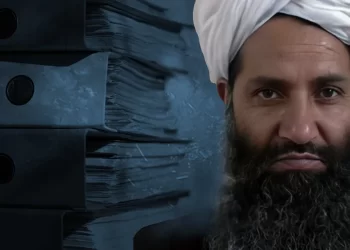
A composite image shows a Taliban leader beside stacks of case files, symbolizing years of unresolved judicial backlogs under Taliban courts. (Photo credit: Wikipedia + Magnific)
Daily Reports

Under Akhundzada’s Shadow: Justice Delayed for Years in Taliban Courts

10 September 2026 [t_time:1789047621]
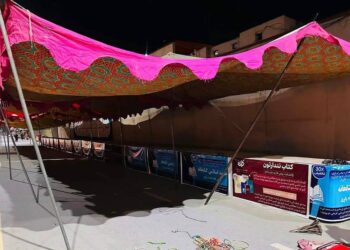
Journalists in Khost face detention and confiscation of their work equipment by the Taliban’s Morality Police. (Photo credit: Exclusive)
Afghanistan News

Reporters Without Borders Condemns Taliban Detention of Journalists in Khost

8 September 2026 [t_time:1788893971]
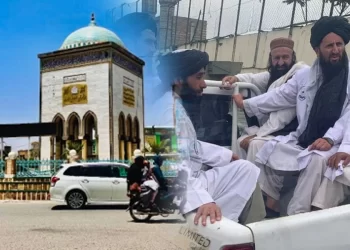
Taliban fighters patrol a street in Kandahar, where residents say beard checks and phone searches have intensified. (Photo credit: 8am.media + BBC)
Daily Reports

From Beard Checks to Phone Searches: What Kandahar’s Youth Are Saying

6 September 2026 [t_time:1788717842]

Latest

Loading latest news...

Popular stories

  • Hamza bin Laden - the son of Osama bin Laden (Photo: Social Media)

    Al-Qaeda Releases Hamza bin Laden Message on 9/11 Anniversary

    Share
    Share Tweet
  • Taliban Shoot Young Man from Herat After Torturing Him with Hands Tied

    Share
    Share Tweet
  • UN Women: Ban on Women’s Entry to UN Offices in Afghanistan Enters Second Year

    Share
    Share Tweet
  • Iran Foreign Ministry: US Attacks on Commercial Vessels Constitute Economic War Against Iran

    Share
    Share Tweet
  • Sajjad Haider Khan: Those with Valid Visas Will Continue Their Studies in Pakistan

    Share
    Share Tweet

Podcast

Insights
Insights

Join Lynne O’Donnell for 8AM’s podcast series, Insights.
Lynne talks with generals, diplomats, soldiers, journalists, politicians, activists, people who have front row seats for conflicts around the world, and citizens with a story to tell, happy or sad. For this first series, Afghanistan is the focus. Lynne and her guests talk about the collapse of the republic in August, 2021, and the impact since — for the people of Afghanistan, for the security of the region, for the safety of the world. It’s important, interesting and insightful.

Insights/22: Controlling the Narrative with Mina Sharif
byinsights8am

Controlling the Narrative

Lynne O’Donnell talks with Mina Sharif, author, activist, women’s rights campaigner, educator and mentor. They discuss who controls the narrative and who speaks for Afghanistan’s people when the Taliban appear to have seized control not only of the country but of the message, too.

Have a listen

Insights/22: Controlling the Narrative with Mina Sharif
Episode play icon
Insights/22: Controlling the Narrative with Mina Sharif
Episode Description
Episode play icon
Insights/21: Media Meltdown with Zahra Joya
Episode Description
Episode play icon
Insights/20: Terror Inc with Scott Richards
Episode Description
Episode play icon
Insights/19: Busting Stereotypes with Bushra Gohar
Episode Description
Episode play icon
Insights/18: Media Matters with Waliullah Rahmani
Episode Description
Episode play icon
Insights/17: What Goes Around Comes Around with Sima Samar
Episode Description
Search Results placeholder
Hasht-e Subh

8AM Media, also known as Hasht-e-Subh Daily, stands as Afghanistan's premier independent and non-profit newspaper, resonating as a beacon of journalistic integrity since its establishment in June 2007 by esteemed Afghan journalists and human rights advocates. With a steadfast commitment to citizen journalism and civic education, Hasht-e-Subh Daily has earned its place as the most esteemed publication in the nation.

Publisher: Sanjar Sohail
Email: [email protected]
Executive Director: Parwiz Kawa
Email: [email protected]

Read More

Badakhshan: From a Legacy of Resistance to a Role in Afghanistan’s Political Transition and the Building of an Inclusive National State

Woman Online University: Civil Resistance Redefines Education in Afghanistan’s Age of Closure

Taliban’s Propaganda Tactics: Sowing Discord Among Opposition Fronts and Stoking Fear of Civil War

Taliban Revenge: Critics Arrested Upon Return to Afghanistan from Abroad

Mullah Hafiz: How a Taxi Driver Became a Taliban Governor

Editor’s Choice

Every Saturday morning, 8AM MEDIA English Services Department will guide you through the week’s biggest stories from Afghanistan and the international community.

Subscribe

© 2026 - ©Hasht-e Subh Daily

No Result
View All Result
8am.Media
پښتو ویب‌پاڼه
ویب‌سایت فارسی
اۉزبېکچه ویب‌سایت
  • Home
  • News
    • Afghanistan News
    • World News
  • Opinion
    • Editorial
    • Analysis
  • Reports
    • Daily Reports
    • Investigative Reports
  • Society
    • The story of people
  • Women’s Word
  • Columns
    • Three Years After Afghanistan’s Fall: The Taliban’s Resurgence
    • Towards Equality
    • The Resurgence of the Taliban: Two Years Since Afghanistan’s Fall
    • Hebatullah Report Special Edition
    • Resistance for Education Special Edition
    • Special Column on Taliban’s Education Curriculum
    • Nawroz
  • Interviews
  • Contact Us
    • About Us
    • 8AM MEDIA Annual Awards
    • Submit an Article to Hasht-e-Subh
  • 8am.media

© 2026 - ©Hasht-e Subh Daily